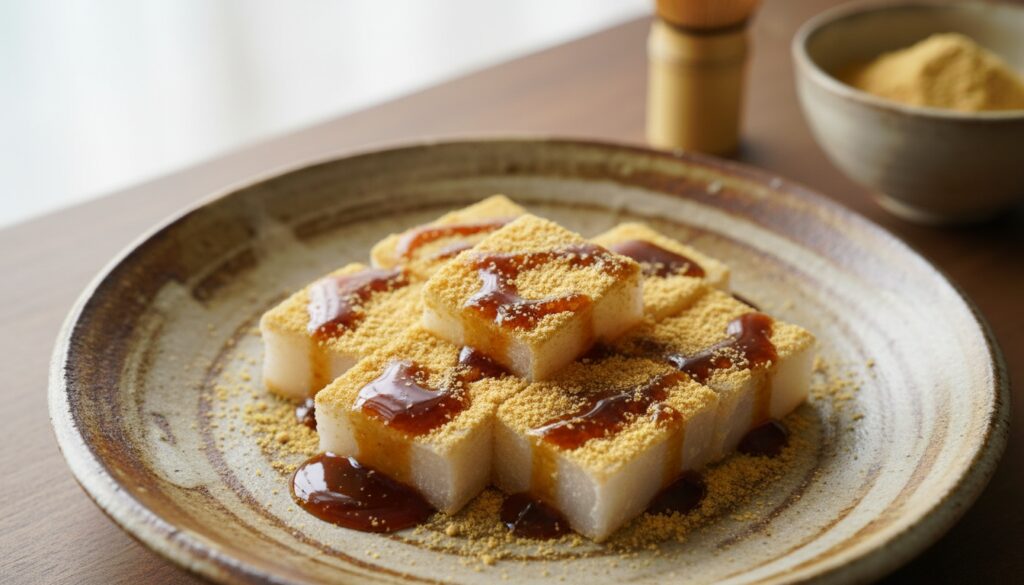
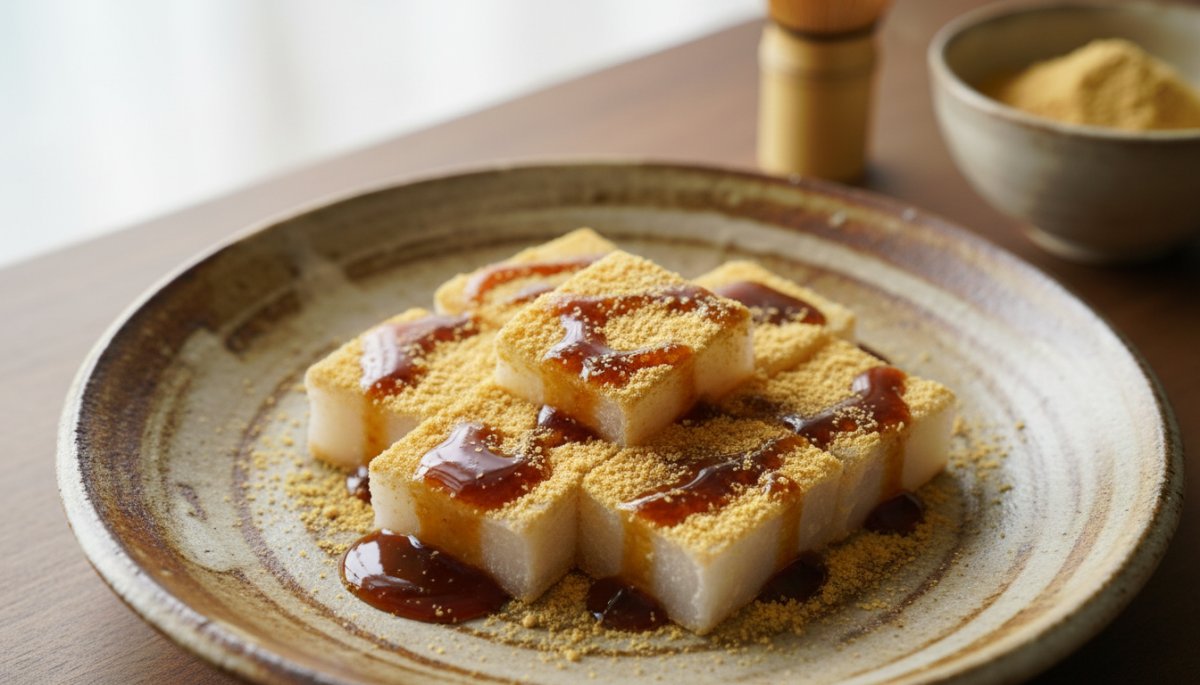
When it comes to summer wagashi, few are as iconic as translucent kuzu mochi.
ぷるんとした食感と、ひんやりとした口当たりが夏の暑さを忘れさせてくれます。葛餅のなめらかさと透明感は、Hon-kuzu powderの選び方、練り方、加熱中の温度管理で決まります。
この記事では、京菓子原材料を扱う美濃与の知見をもとに、お客様に喜ばれる涼菓子作りの秘訣をお伝えします。和菓子店や製菓メーカーの方々が、夏の定番商品として自信を持って提供できる葛餅を作るための、実践的なノウハウをご紹介していきましょう。
What Is Kuzu Mochi? Understanding the Difference Between Fermented and Non-Fermented
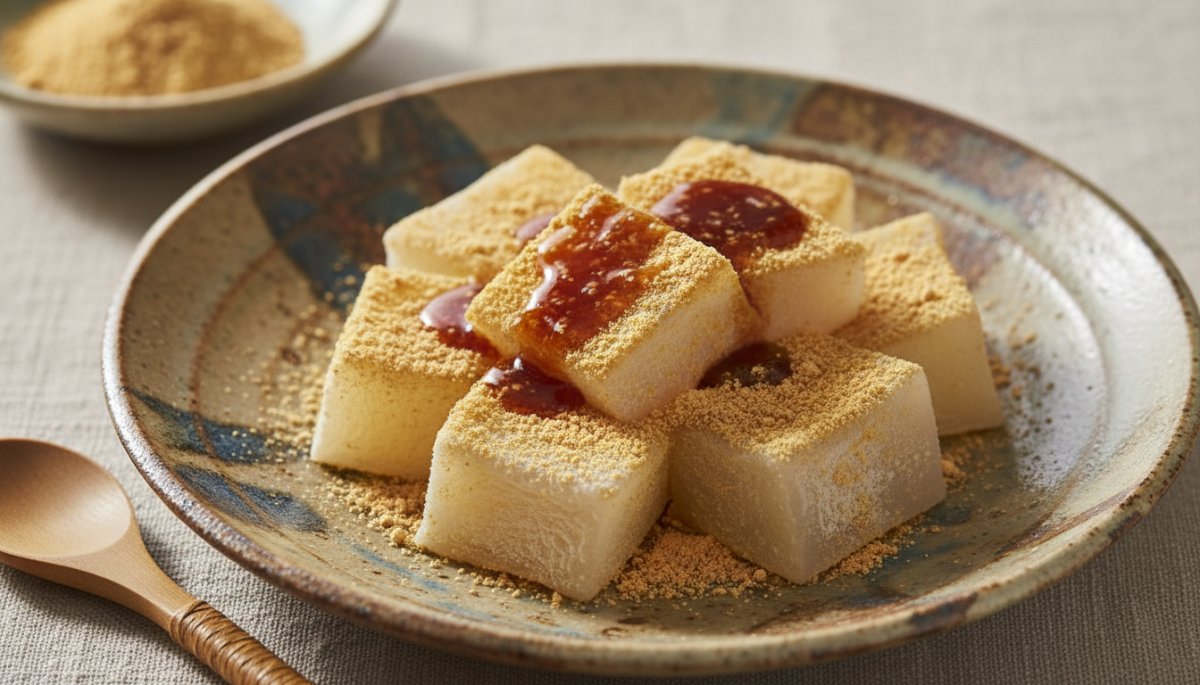
Kuzu mochi can be broadly divided into two types.
一つは本葛粉を使った関西風の葛餅。もう一つは小麦澱粉を発酵させた関東風の「久寿餅」です。本葛粉を使った葛餅は、葛粉と水、砂糖を混ぜて加熱し、透明でぷるんとした食感に仕上げます。一方、関東の久寿餅は小麦澱粉を長期間乳酸発酵させた原料を使用し、独特の風味と食感を持つのが特徴です。
発酵させた久寿餅は、発酵由来の独特の酸味と香りを持つのが特徴です。
This article will focus mainly on the method for making Kansai-style kuzu mochi with hon-kuzu powder.
How You Choose Your Hon-kuzu Powder Determines the Finish
Identifying High-Purity Hon-kuzu Powder
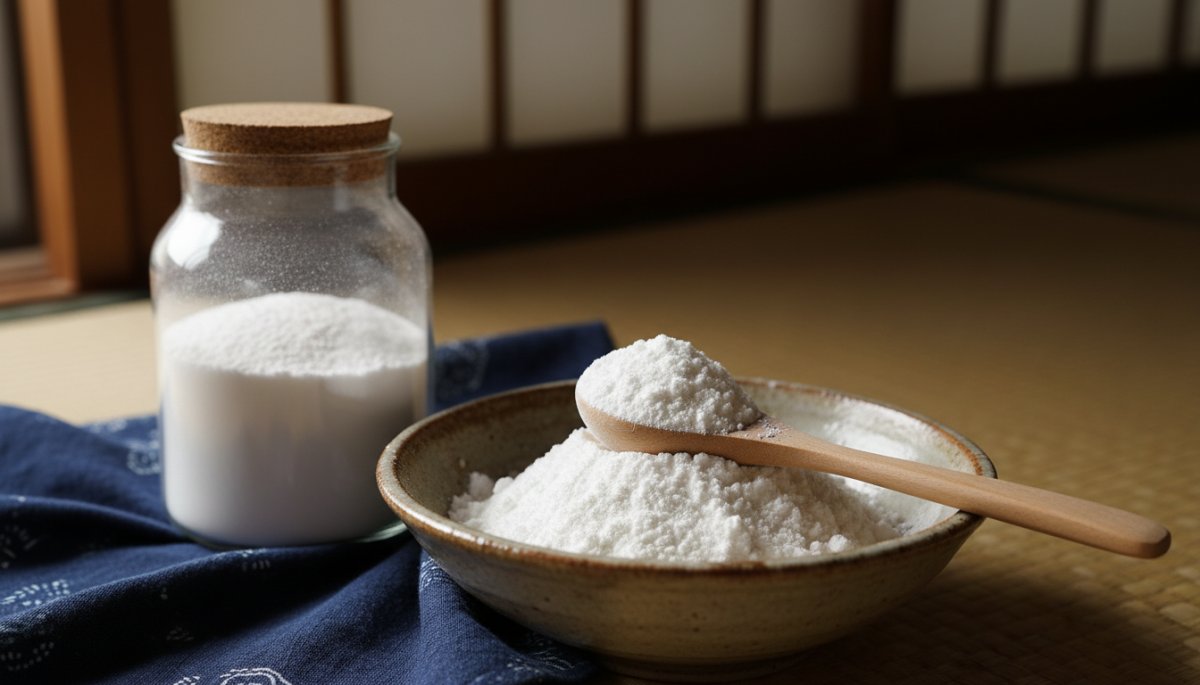
The first step in making kuzu mochi is choosing good-quality hon-kuzu powder.
Commercially available kuzu powder ranges widely, from 100% pure hon-kuzu powder to blended products mixed withpotato starchやコーンスターチを混ぜた混合品まであります。本葛粉は葛の根から採取される澱粉で、採取量が少なく手間がかかるため、価格は高めです。しかし、その分、透明感と弾力性に優れ、なめらかな食感を実現できます。
When choosing hon-kuzu powder, always check the ingredient labeling. Choosing a product clearly marked "100% hon-kuzu powder" is the shortcut to a professional finish. With blended products, the translucency and texture are inferior, making it difficult to bring out the true appeal of kuzu mochi.
Storage and Freshness Management
Hon-kuzu powder dislikes moisture. After opening, place it in an airtight container and store it in a cool, dark place. Because absorbing moisture makes it prone to clumping and harder to dissolve, the key is to bring it back to room temperature before measuring it out for use.
The Kneading Technique That Produces a Smooth Texture
How You Mix with Water Is the Key to Success
The most important step in making kuzu mochi is the process of mixing the kuzu powder with water.
Because kuzu powder does not dissolve easily in water, it must be thoroughly dissolved before heating. After adding the kuzu powder and water to a pot, mix carefully with a whisk or rubber spatula so that no lumps remain. At this point, since the kuzu powder tends to settle to the bottom, it is important to keep stirring right up until you begin heating.
If the mixing is insufficient, lumps may form during heating or the translucency may be lost. If lumps remain, straining the mixture through a mesh ladle or tea strainer will produce a smooth finish.
Timing of Heating and Kneading
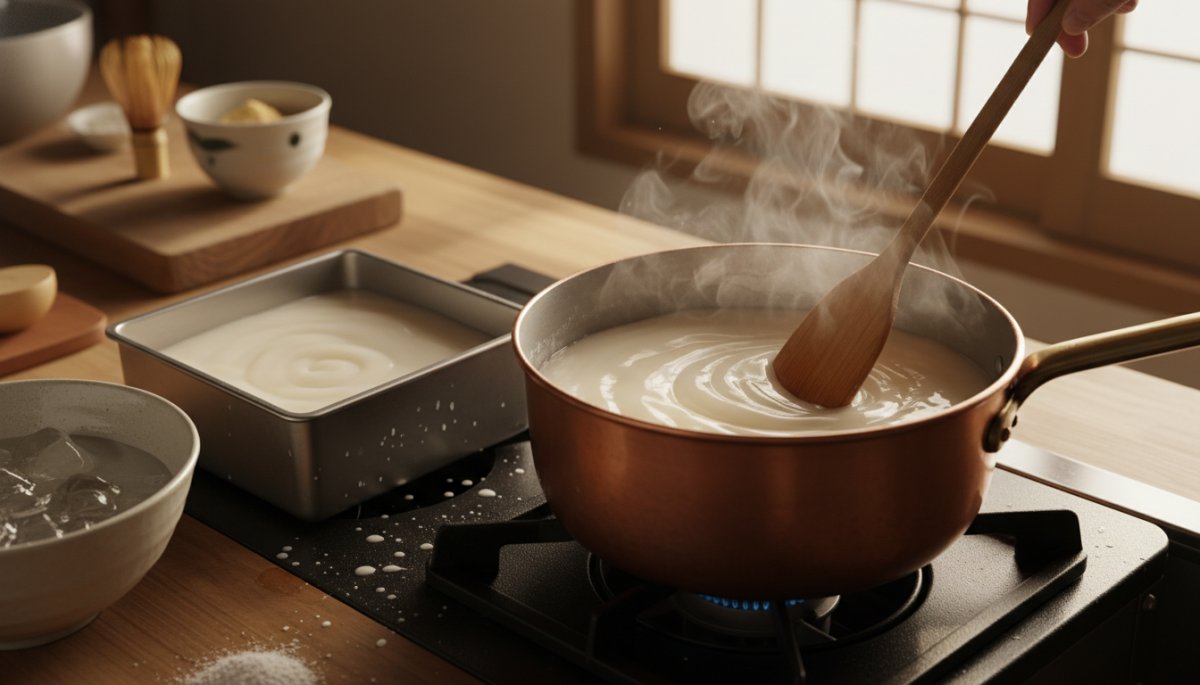
Once the kuzu powder and water are mixed, place the pot over medium heat and begin heating.
鍋底から絶えず混ぜ続けてください。木じゃくしを鍋底に当て、円を描くように力を入れてよく練り混ぜます。加熱が進むと、葛粉が透明になり始め、粘りが出てきます。この時、焦がさないように注意しながら、しっかりと練り続けてください。
Once it becomes translucent, reduce to low heat and knead until it develops a sheen and elasticity. Neglecting this step results in a hard texture or insufficient translucency. Kneading until the kuzu powder becomes completely translucent and heavy is the secret to a professional finish.
Temperature Control for Beautiful Translucency
Controlling the Heating Temperature
The translucency of kuzu mochi is determined by managing the heating temperature.
The basic approach is to heat over medium heat at first, then switch to low heat just before boiling. If you heat rapidly over high heat, the kuzu powder will not heat evenly and the translucency will be lost. It can also cause scorching, so pay the utmost attention to the heat level.
The time it takes to become translucent varies depending on the amount of kuzu powder and the heat, but is generally around 10 to 15 minutes. When it turns translucent and glossy, it's time to remove it from the heat.
The Cooling Method Changes the Texture
The cooling method after heating also affects the quality of the kuzu mochi.
Once you pour it into a mold, we recommend chilling it rapidly by submerging the entire mold in ice water. Cooling it slowly can cause the surface to turn whitish. Rapid cooling allows you to maintain translucency while achieving a bouncy texture.
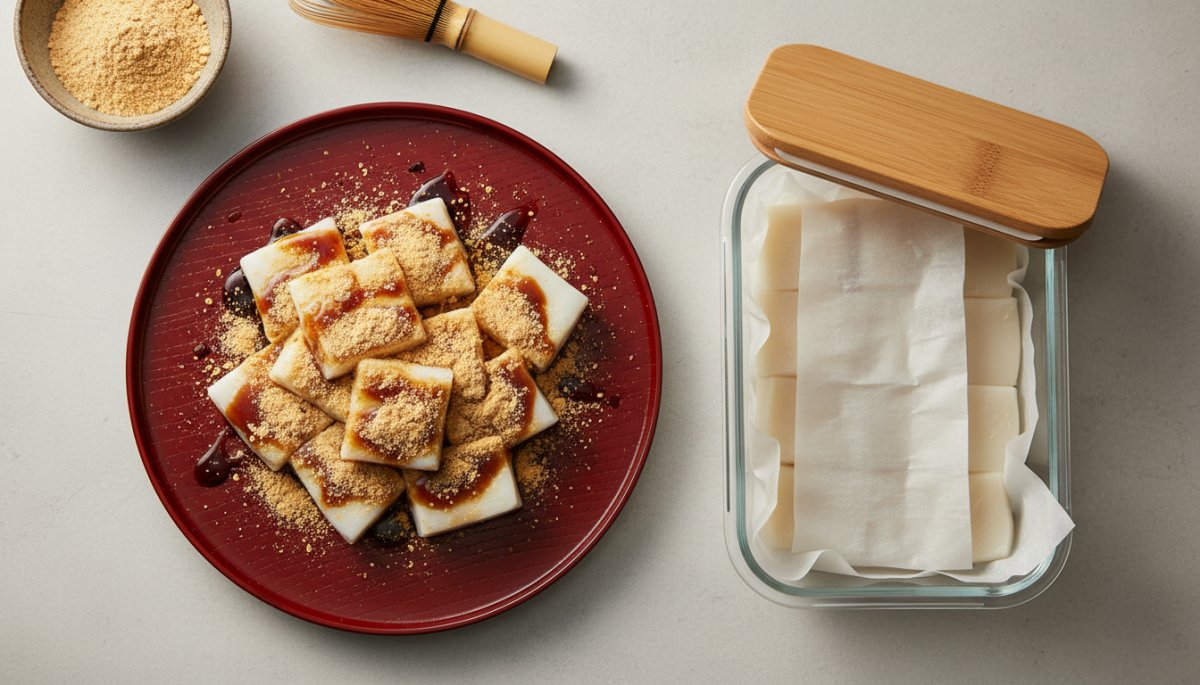
When chilling in the refrigerator, cool it in the mold and cut it into portions only after it has completely set. When cutting, wetting the knife with water as you go produces a clean finish.
Finishing with the Traditional Flavor of Kinako and Kuromitsu
What brings out the deliciousness of kuzu mochi is kinako (roasted soybean flour) and kuromitsu (brown sugar syrup).
きな粉は、大豆を焙煎して粉にしたもので、香ばしい風味が葛餅の淡白な味わいを引き立てます。美濃与では、伏見の大豆焙煎所で国産大豆を焙煎・製粉した「美濃与きなこ」と「美濃与 深煎りきな粉」を扱っています。焙煎度が高いほど香ばしさが増し、葛餅との相性も良くなります。
Kuromitsu is a sweet syrup made by simmering and dissolving brown sugar. Put brown sugar and water in a pot, bring to a boil, then strain to make it smooth. Adding honey deepens the richness and body. Pour the cooled kuromitsu over the kuzu mochi and dust it with kinako to complete a traditional kuzu mochi.
The balance of kinako and kuromitsu can be adjusted to your customers' preferences. Using more kinako brings out the fragrance, while using more kuromitsu highlights the sweetness.
ダマや白濁が出たときの対処と保存
Common Failures and How to Prevent Them
A common failure in making kuzu mochi is the formation of lumps.
This is caused by not mixing the kuzu powder and water thoroughly. It can be prevented by fully dissolving the kuzu powder before heating and stirring constantly during heating. If lumps do form, strain the mixture through a mesh ladle before pouring it into the mold.
Another failure is a lack of translucency. This is caused by insufficient heating or by too high a heat. It is important to heat slowly over medium heat and knead firmly until it becomes translucent.
販売するときの保存温度と期限
本葛の葛餅は作りたてが最もおいしく、冷蔵すると澱粉の老化で白く硬くなりやすい菓子です。販売する場合は、想定する流通・販売条件で保存試験を行い、期限と保存温度を決めてください。
Conclusion: Authentic Kuzu Mochi Made with Minoyo's Ingredients
Making kuzu mochi begins with choosing your hon-kuzu powder.
By using high-purity hon-kuzu powder and carefully attending to how you mix it with water, the timing of heating and kneading, and temperature control, you can complete a kuzu mochi with a smooth, bouncy texture. Finished with kinako and kuromitsu, it will be a treat that delights many customers as a cooling summer sweet.
美濃与では、京菓子原材料を幅広く取り扱っています。本葛粉をはじめ、国産大豆を自社焙煎したきな粉、葛餅を手軽に製造できるミックス粉「友シリーズ」など、和菓子作りに使う原料を提供しています。
Please make use of Minoyo's ingredients to create kuzu mochi that customers love as a summer staple. For details, please visitMinoyoの公式サイトでご確認いただけます。
📦 Related Minoyo Products
Please feel free to consult us about commercial procurement and sample requests
美濃与は京都に拠点を置く京菓子原材料の専門商社です。本記事で取り上げた原料の業務用調達や、お試しサンプル、ロット・規格のご相談など、和菓子製造の現場に寄り添った提案を行っています。
For Minoyo's business and strengths, please see Our Business & Why We Are Chosen . For the actual flow of doing business, see Ordering Process & How to Order; for questions, we have compiled them at Frequently Asked Questions . For individual consultations, please use Contact or material download to get in touch.


