白玉粉・もち粉・上新粉は何が違うのか
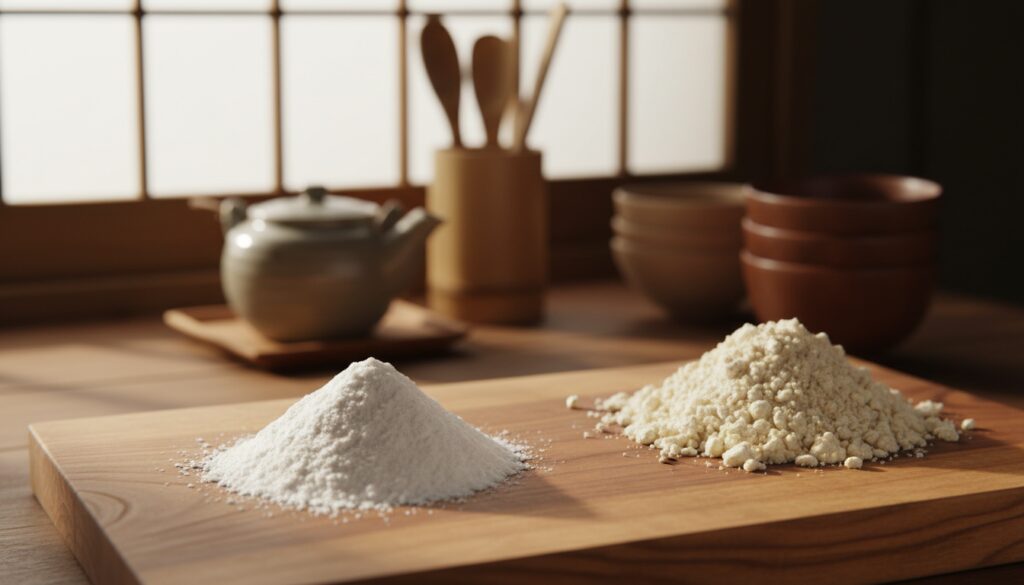
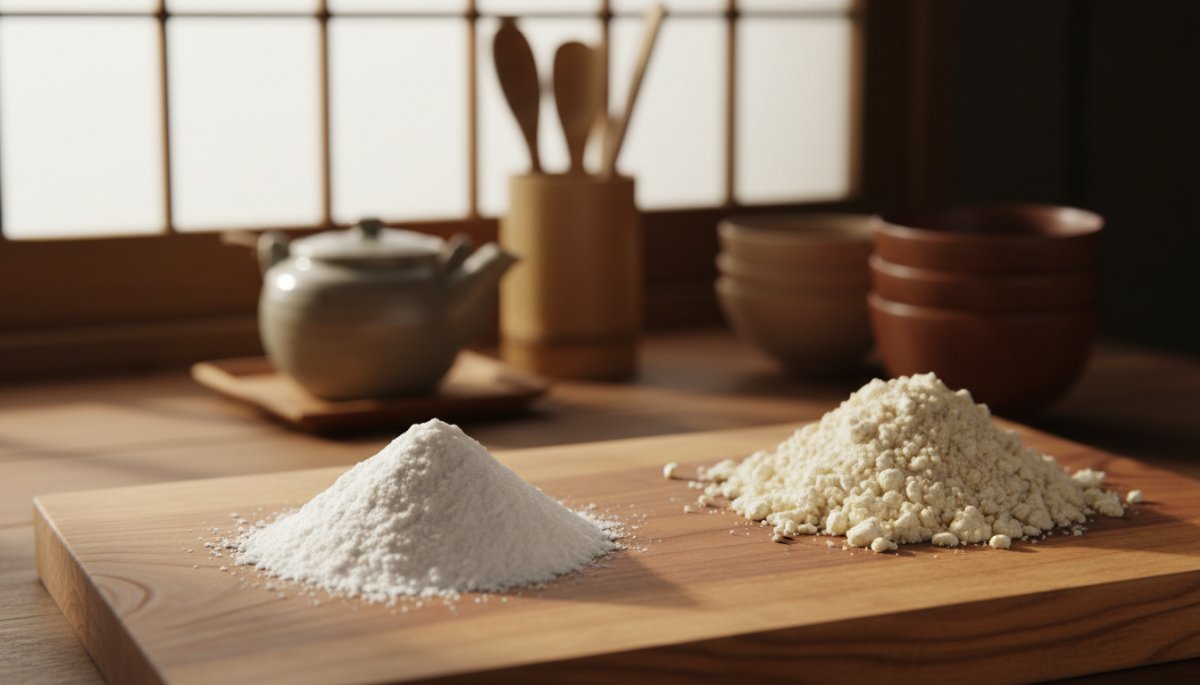
和菓子に使う米の粉は種類が多く、名前が似ているために混同されがちです。まず押さえておきたいのは、原料がもち米かうるち米か、そして製法が水挽きか乾式かという2点です。この2つで性質がほぼ決まります。
The Difference in Raw Material and Production Method
白玉粉はもち米を水に浸して挽き、沈殿させたものを乾燥させて作ります。水挽きという工程を経ることで粒子が細かくそろい、なめらかな口当たりになります。もち粉は同じもち米を原料としながら、乾いた状態で挽く製法です。白玉粉ほど粒子は細かくならず、扱いやすさと価格のバランスが取れています。
上新粉はうるち米、つまり普段食べているお米を挽いた粉です。もち米ではないため粘りが出にくく、こしのある歯ごたえに仕上がります。柏餅や団子の生地に使われるのはこのためです。
どの和菓子に何を使うか
白玉粉は白玉団子や求肥、大福の生地に向きます。加水してこねるだけで生地がまとまり、ゆでても崩れにくいのが特徴です。もち粉は大福や餅菓子に広く使われ、白玉粉より安価なため業務用では使い分けの対象になります。上新粉は蒸してからつく工程が必要ですが、その分しっかりした食感が出ます。
あられ粉はもち米を蒸してから乾燥させ、粗く挽いた粉です。前述の3種類とは工程が異なり、加熱済みの粉として扱います。
以下では、水挽きで作る白玉粉と、蒸した餅を乾燥・粉砕して作るあられ粉について、製法と性質をもう少し詳しく見ていきます。
See Minoyo's Product List Here
The Characteristics and Production Method of Shiratama-ko
Shiratama-ko (glutinous rice flour) is a traditional wagashi material made from glutinous rice.
The production method is distinctive: the glutinous rice is soaked in water overnight and then wet-milled. It is ground while adding water, characteristically bringing it to a smooth, milk-like state. Pressure is then applied to dewater it, and the solid mass is finely cut and dried.
The Distinctive Texture Brought by the Wet-Milling Method
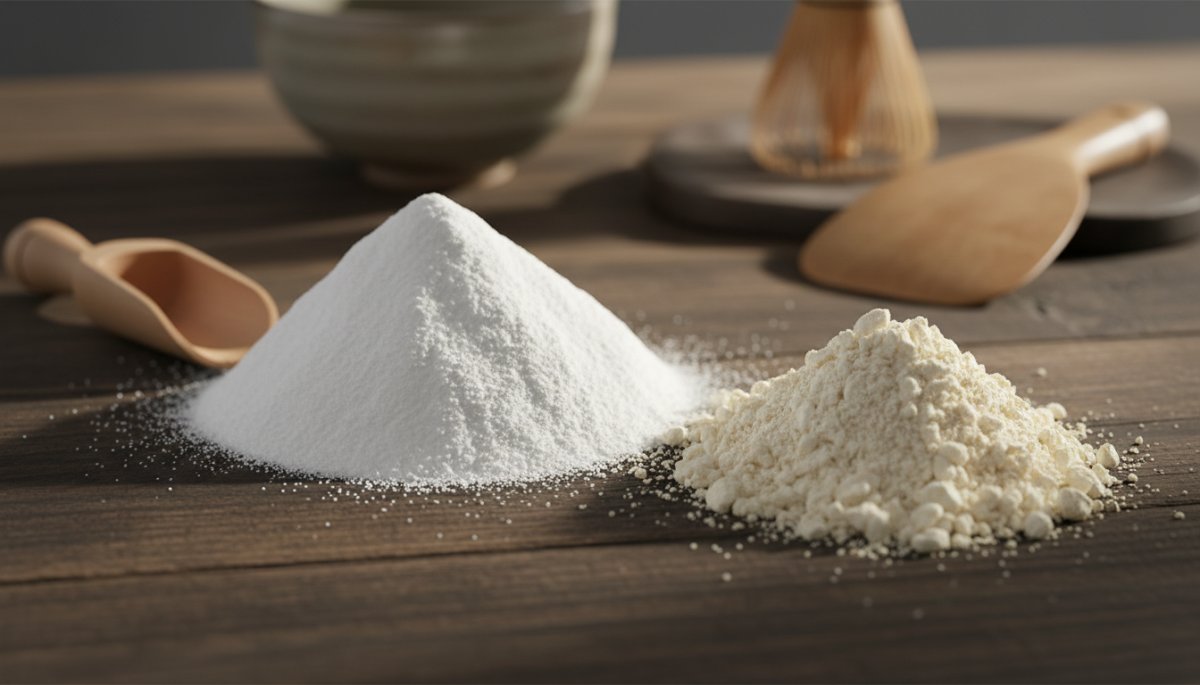
Through this wet-milling method, shiratama-ko becomes very fine particles.
水で練ると、つやのあるもちもちとした柔らかい生地ができあがります。白玉団子を作ると、つるりとした食感と弾力が楽しめるのはこのためです。冷めても硬くなりにくく、なめらかな口当たりが続きます。
The Main Uses of Shiratama-ko
Shiratama-ko is used for shiratama dango, gyuhi, daifuku mochi, and more.
It is ideal for making wagashi that leverage a smooth texture, and is also popular as a topping for fruit punch and zenzai. It is also prized when making soft mochi dough such as for ichigo daifuku.
The Characteristics and Production Method of Arare-ko
Arare-ko is a powder made by drying and crushing mochi.
The production method differs greatly from that of shiratama-ko. The basic process is to steam glutinous rice into mochi, then dry it before grinding it. By going through this heat treatment, it comes to have properties completely different from shiratama-ko.
あられ粉は糊化済み
Arare-ko is a heat-treated, gelatinized product.
生のもち米を挽いた白玉粉やもち粉とは性質が異なり、粒度も白玉粉より粗めで、見た目にも違いがはっきりしています。
あられ粉と「あられ」は別の商品
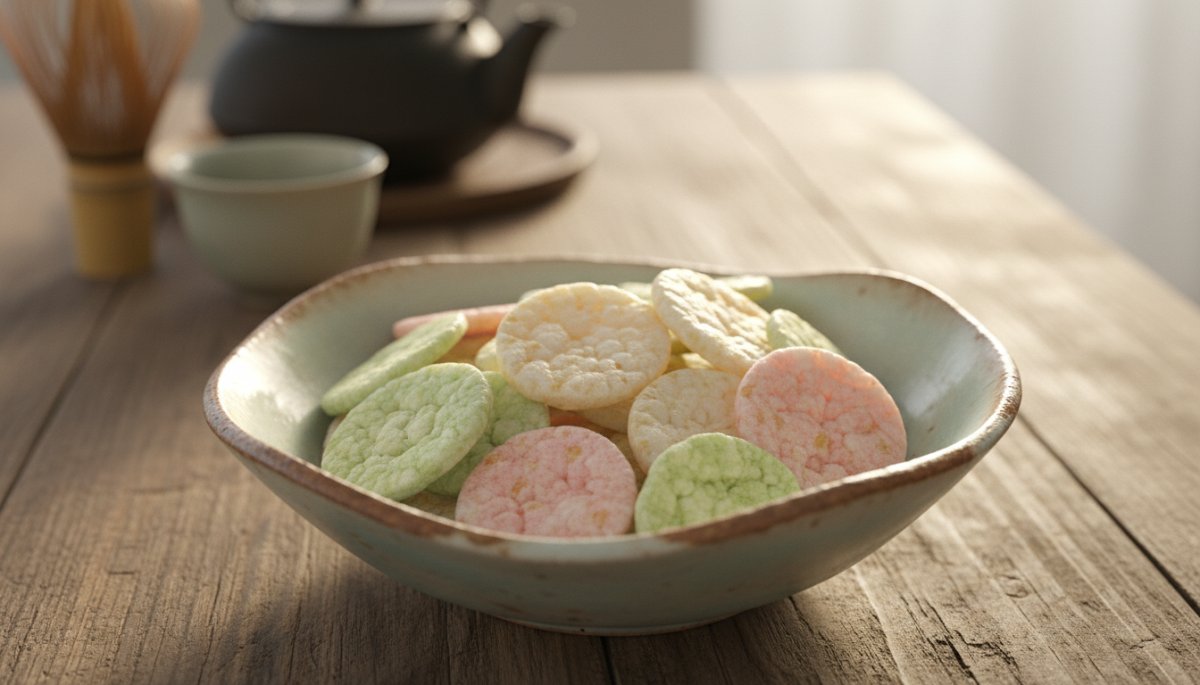
おしるこやぜんざいのトッピング、和菓子の飾りに使う千鳥あられ(緑・白・ピンク)や白玉あられ・茶玉あられは、完成品のあられです。名前は似ていますが、糊化済みの粉であるあられ粉とは別の商品です。
あられ粉を何に使うかは製品によって違うため、採用前にメーカーの資料で確かめてください。
Comparing the Differences Between Shiratama-ko and Arare-ko
Let's organize the differences between the two.
The Difference in Raw Material and Production Method
白玉粉とあられ粉は、どちらも原料は同じもち米です。しかし、製法が大きく異なります。白玉粉は水に浸したもち米を水挽きして作りますが、あられ粉は蒸したもち米を乾燥させてから粉砕します。この製法の違いが、食感や用途の違いを生み出す根本的な要因です。
The Difference in Particle Size and Appearance
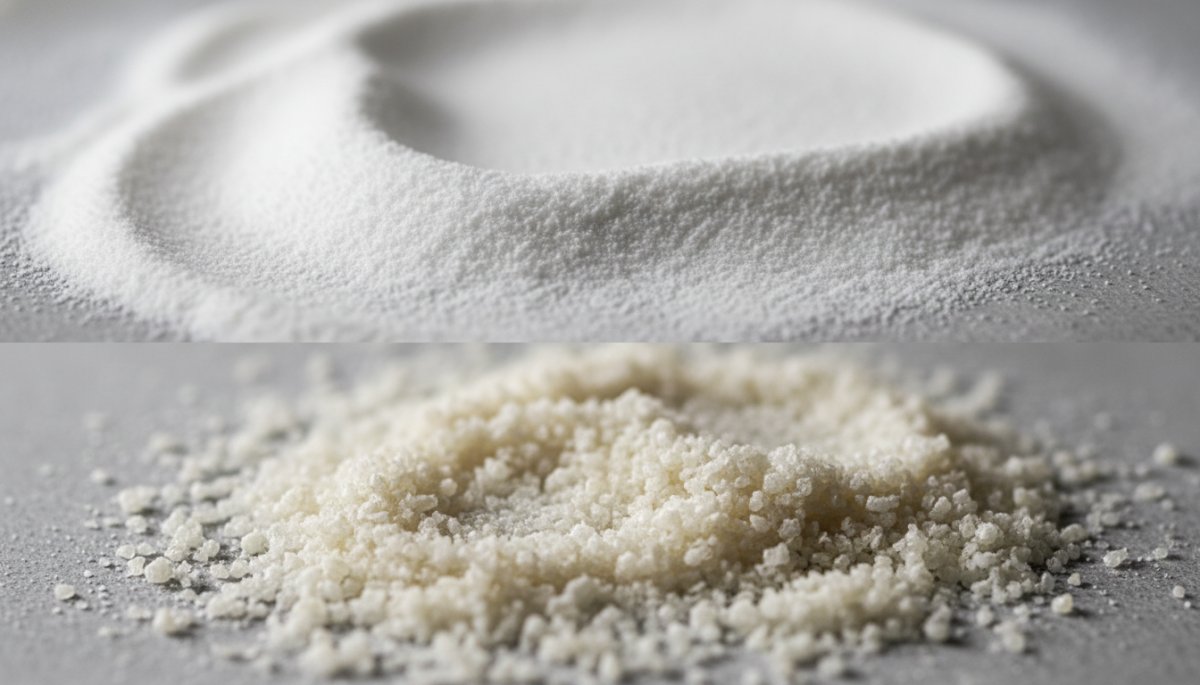
Shiratama-ko is a very fine granular powder.
Arare-ko, on the other hand, has a coarser particle size, so the difference is clear even visually. Shiratama-ko has a pure-white, smooth texture, while arare-ko is somewhat coarse and its color can appear slightly off-white.
The Difference in Texture and Finish
Dango made with shiratama-ko has a glossy, chewy, soft texture.
冷めても硬くなりにくく、つるりとした口当たりが特徴です。一方、あられ粉はすでに糊化しているため、白玉粉のように水でこねて弾力のある生地にまとめる使い方には向きません。
The Difference in Price
Shiratama-ko has a more complex, labor-intensive production process than mochi-ko.
そのため、一般的には白玉粉のほうが2倍以上のコストがかかっています。
SourceMaehara Seifun Co., Ltd. Gishi "Please tell me the difference between shiratama-ko and mochi-ko."adapted from
Know-How Professionals Use to Choose Between the Flours
Wagashi artisans choose between the flours according to the desired texture and use.
Shiratama-ko for a Chewy Texture
When you want a soft, elastic texture, shiratama-ko is ideal.
It suits wagashi that leverage a smooth mouthfeel, such as shiratama dango, daifuku mochi, and gyuhi. Because it does not harden easily even when cooled, it is also prized as a topping for fruit punch and anmitsu.
トッピングや飾りにはあられ
おしるこやぜんざいのトッピング、和菓子の飾りには、完成品のあられを使います。
千鳥あられは緑・白・ピンクの3色があり、彩りを加えたい商品に使えます。
水の量で変わる白玉粉の食感
With shiratama-ko, you can control the texture by adjusting the amount of water.
水を多めにすると柔らかく、少なめにすると弾力が増します。複数の粉を組み合わせて食感を調整する方法もあります。
まとめ:米の粉は原料と製法で選ぶ
白玉粉・もち粉・上新粉、そしてあられ粉は、原料の米と製法の組み合わせで性質が分かれます。
白玉粉は水挽製法で作られ、つやのあるもちもちとした食感が特徴です。白玉団子や大福餅など、柔らかい和菓子に向きます。もち粉は同じもち米を乾式で挽いた粉、上新粉はうるち米の粉で、こしのある食感になります。あられ粉は蒸したもち米を乾燥させて砕いた糊化済みの粉で、トッピングに使う完成品のあられとは別物です。
求める食感や用途に応じて、これらの粉を使い分けることで、和菓子作りの幅が広がります。白玉粉は冷めても硬くなりにくいなど、粉ごとに性質が違います。それぞれの性質を踏まえて、求める食感に合う粉を選んでください。
See Minoyo's Product List Here
📦 Related Minoyo Products
Please feel free to consult us about commercial procurement and sample requests
美濃与は京都に拠点を置く京菓子原材料の専門商社です。本記事で取り上げた原料の業務用調達や、お試しサンプル、ロット・規格のご相談など、和菓子製造の現場に寄り添った提案を行っています。
For Minoyo's business and strengths, please see Our Business & Why We Are Chosen . For the actual flow of doing business, see Ordering Process & How to Order; for questions, we have compiled them at Frequently Asked Questions . For individual consultations, please use Contact or material download to get in touch.


