![]()
Yuzu paste is a versatile ingredient that can be used in a wide range of applications, from wagashi artisans to home cooking.
This ingredient, in which yuzu's refreshing aroma, pleasant acidity, and subtle bitterness are concentrated, can dramatically change the flavor of dishes and desserts depending on how it is used.
This article explains practical ways to use yuzu paste in detail, from its basic characteristics to application techniques for wagashi, Western confectionery, and cooking, as well as storage methods and guideline amounts.
We will introduce techniques actually used by professional wagashi artisans as well as ideas you can easily incorporate at home, so please read through to the end.
See Minoyo's Product List Here
What Is Yuzu Paste? Its Basic Characteristics and Production Method

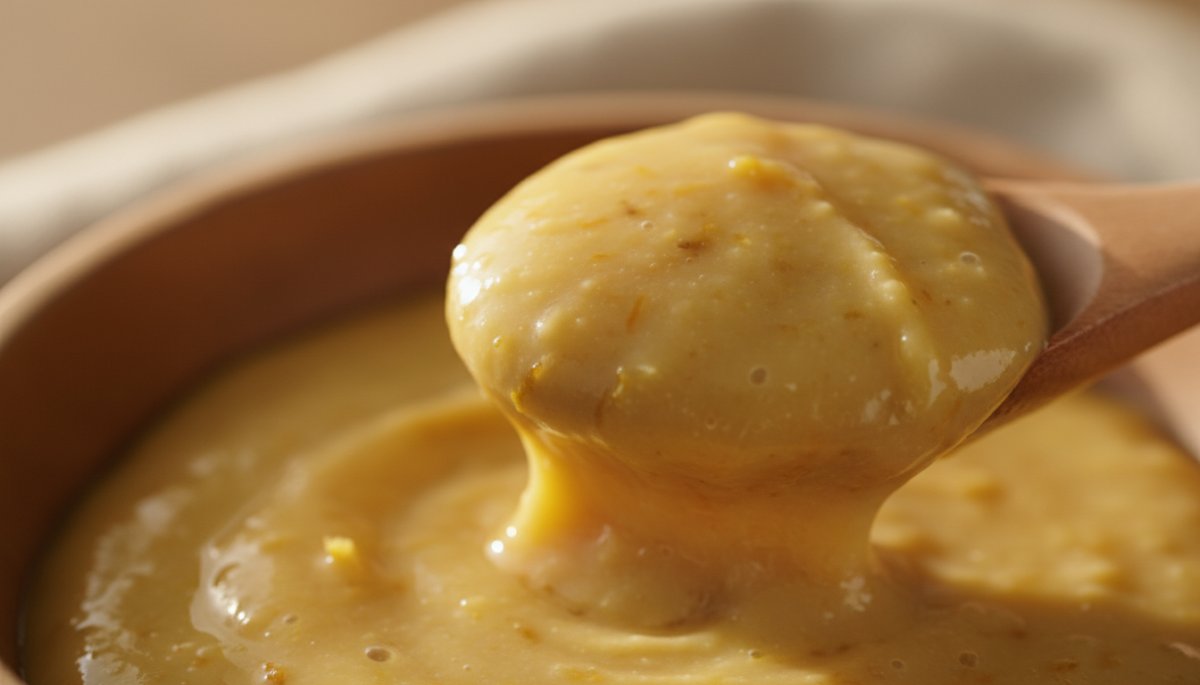
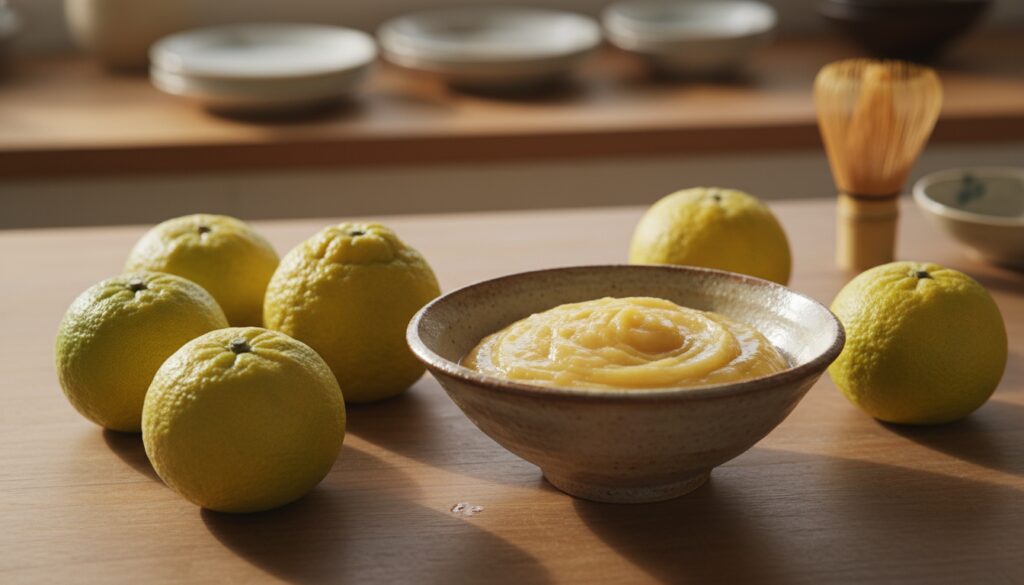
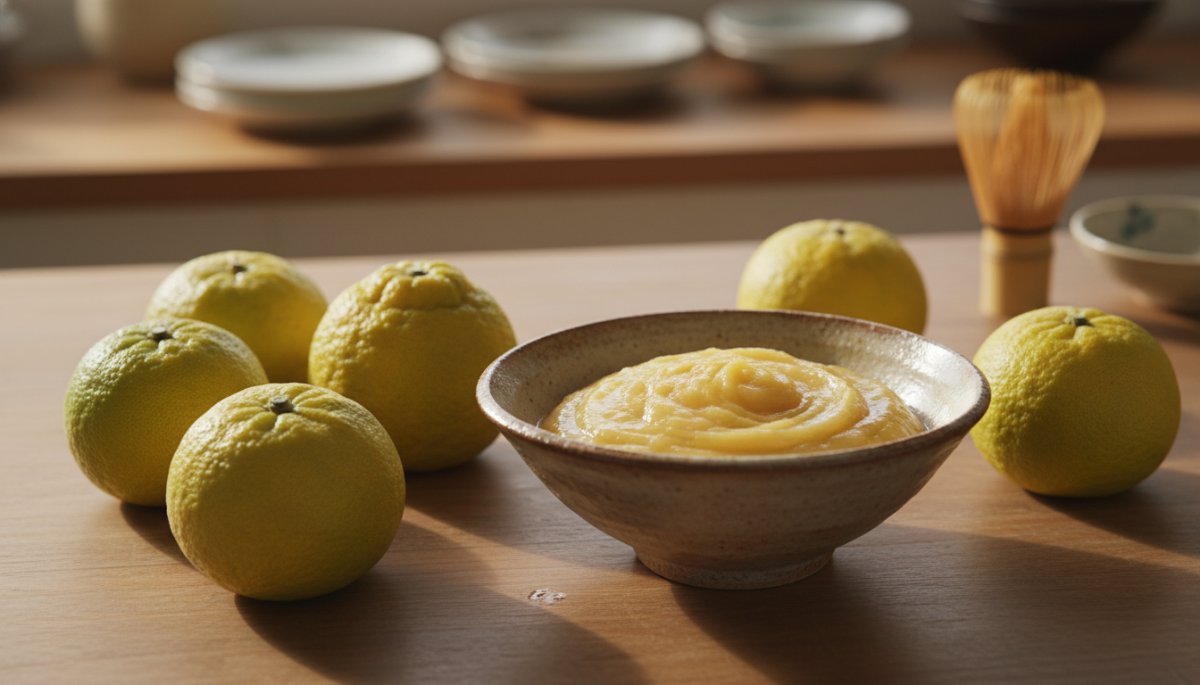
Yuzu paste is a raw material made by carefully processing the peel and juice of yuzu into a paste.
Because it is made from fragrant yuzu with heating kept to a minimum, the fresh flavor inherent to yuzu is preserved. Being a fine, uniform paste, it blends easily with other ingredients and is easy to incorporate, which is a major characteristic.
The Production Process of Yuzu Paste
The basic method is a three-step process: boiling the yuzu with the peel on, carefully removing the seeds, combining it with sugar, and running it through a food processor. Because there is no need to repeatedly parboil it or finely chop the peel, it can be made relatively easily.
In the case of commercial products, refrigerated management suppresses the deterioration of aroma and preserves the fresh flavor inherent to yuzu. Fresh yuzu paste is often provided as a refrigerated product in commercial sizes such as an 11kg specification, and is favored by professional wagashi artisans as well.
The Flavor Characteristics of Yuzu Paste
It makes use of the flavor of yuzu peel and juice, giving a refreshing aroma, gentle acidity, and subtle bitterness.
The appeal unique to yuzu paste is that it can add to dishes the aroma and richness derived from the peel that are hard to achieve with juice alone. Because its flavor comes through easily even in small amounts, it has characteristics that make it easy to use for adding aroma or as a base ingredient.
How to Use Yuzu Paste in Wagashi

In the world of wagashi, yuzu paste is used as an important ingredient for expressing a sense of season.
Application to Yuzu-mitsu Yubeshi
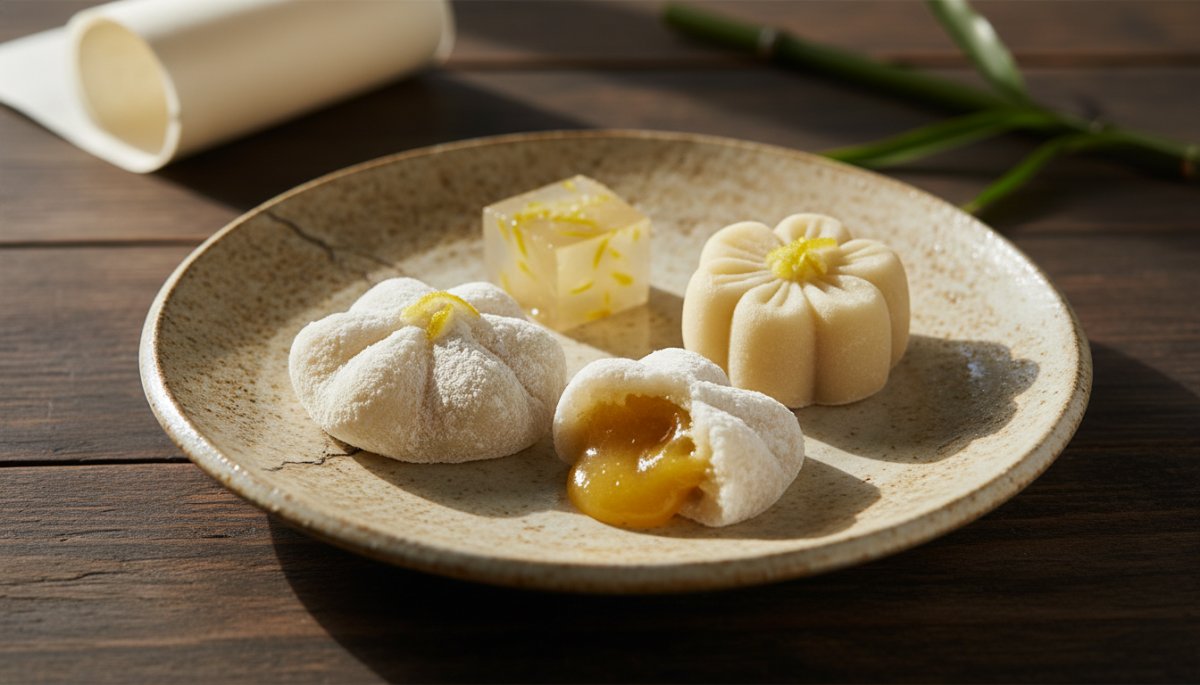
"Yuzu-mitsu yubeshi," which wraps yuzu paste and granulated sugar inside, is an exquisite wagashi from which yuzu syrup flows out in a slow trickle once steamed. Using a basic blend of 200g joshin-ko (rice flour) to 200–230cc water, 40g sugar, and 10g white sesame, divide the dough into 30g portions and wrap the yuzu paste and granulated sugar inside.
Heating it in a steamer for 20 to 25 minutes brings the aroma of yuzu wafting up together with the steam. The sight of yuzu syrup trickling out from within the chewy, springy dough is truly the crystallization of artisan skill.
Use in Monaka and Yokan
Yuzu paste is also ideal for mixing into the an of monaka or for flavoring yokan.
By adding yuzu paste to high-grade white an such as Tokuichigo Sarashi-an or Fuji-jirushi Sarashi-an, a refined yuzu-flavored an is completed. Because the refreshing aroma of yuzu tightens up the sweetness and adds a refreshing quality to the aftertaste, it is also suited to summer wagashi.
As a Topping for Fresh Wagashi
It can also be used as a topping for fresh wagashi in combination with yuzu slices. By spreading yuzu paste thinly and decorating it with yuzu slices on top, you can create a wagashi that is both beautiful in appearance and richly fragrant.
How to Use Yuzu Paste in Western Confectionery and Desserts

Yuzu paste can be used widely not only in wagashi but also in Western confectionery and desserts.
Application to Mousse, Cake, and Jelly
Using yuzu paste in mousse, cake, jelly, cream, and the like, the aroma of yuzu tightens up the sweetness and adds a refreshing quality to the aftertaste. A feature is that its flavor comes through easily even in small amounts, and simply mixing it into fresh cream or custard cream completes an authentic yuzu-flavored dessert.
It pairs especially well with cold desserts such as mousse and jelly, and is popular as a summer dessert menu item.
Kneading It into Cookies and Pound Cake
Kneading yuzu paste into cookie dough made with French butter creates a Western-style cookie in which the refined aroma of yuzu spreads.
When you add French butter and yuzu paste to medium-strength flour, baking powder, and sugar, bind the dough with egg, and bake it, it finishes into a fine cookie in which the flavor of yuzu stands out. Adding it to pound cake also lets you enjoy a moist texture and a refreshing aroma.
As a Topping for Ice Cream and Yogurt
Simply topping vanilla ice cream or plain yogurt with yuzu paste lets you enjoy an easy Japanese-style dessert. Combining it with honey gives an exquisite balance of sweetness and acidity.
Techniques for Using Yuzu Paste in Cooking

Yuzu paste can be used widely not only in wagashi and desserts but also in everyday cooking.
Use in Dressings, Sauces, and Tare
Using yuzu paste in dressings, sauces, dressing sauces, and tare lets you add to dishes the aroma and richness derived from the peel that are hard to achieve with juice alone. Simply mixing olive oil, vinegar, soy sauce, and yuzu paste completes an easy citrus-flavored dressing.
A citrus-mirin dressing combining Takara Hon Mirin, lemon juice, yuzu paste, and soy sauce is ideal for a salad of daikon and tuna.
Application to Meat and Fish Dishes
Rubbing yuzu paste and salt into chicken thigh and grilling it makes a dish in which the aroma of yuzu draws out the umami of the meat. Coating fish fillets with a sauce combining yuzu paste and gochujang and grilling them lets you enjoy Korean-style yuzu grilled fish.
Adding yuzu-salt paste to tsukune of ground pork and lotus root makes a healthy tsukune with a refreshing flavor.
Use in Hot Pot and Soups
Adding yuzu paste to a hot pot of napa cabbage, mushrooms, and tofu finishes it into a refined hot pot with the spreading aroma of yuzu. Adding yuzu paste to a soy-milk-based hot pot gives a flavor in which mellowness and refreshing quality harmonize.
Adding yuzu paste to a soup of turnip and thinly sliced pork completes a warming winter dish.
Storage Methods and Guideline Amounts for Yuzu Paste
To make the most of yuzu paste, understanding proper storage methods and amounts is important.
Storage Method and Shelf Life
Commercial fresh yuzu paste is a refrigerated product. It is recommended to store it in the refrigerator before opening, and to use it up as soon as possible after opening.
In the case of homemade yuzu paste, if the amount of sugar is small it may harden by the next morning, so adding an appropriate amount of sugar is a point that improves shelf life. Freezing is also possible, and yuzu juice is sometimes provided in a frozen specification of 2kg×6 bottles.
Guideline Amounts by Dish
A characteristic of yuzu paste is that its flavor comes through easily even in small amounts.
For dressings and sauces, use about 1 to 2 teaspoons; for the an of wagashi, add about 5 to 10% of the total as a guide. For dessert cream, 1 to 2 tablespoons, and for seasoning meat or fish, 1 to 2 teaspoons is the right amount. We recommend adding it little by little while tasting to adjust.
Choosing Between Different Yuzu Products
Besides yuzu paste, there are various yuzu products such as yuzu slices, yuzu jam, and yuzu juice. Yuzu slices are suited to topping habutae mochi and fresh wagashi, while yuzu jam is suited to uses such as mixing into an or combining with cream.
Yuzu juice can be frozen for storage, letting you enjoy fresh yuzu flavor at any time. Using each form according to its purpose broadens the range of dishes and confections you can make.
Summary: The Culinary and Confectionery Possibilities of Yuzu Paste
Yuzu paste is a versatile ingredient that can be used across a wide range of applications, from wagashi and Western confectionery to everyday cooking.
It concentrates yuzu's refreshing aroma, well-balanced acidity, and subtle bitterness, so even a small amount readily brings out the flavor—its greatest appeal. In wagashi, it works in yuzu-honey yubeshi, the an for monaka, and to flavor yokan; in Western confectionery, in mousses, cakes, and cookies; and in cooking, in dressings, sauces, and meat and fish dishes.
By following proper storage methods and adjusting quantities as you use it, you can achieve professional-level results even at home.
Do try using yuzu paste to take on cooking and confectionery that brim with the feel of the season.
See Minoyo's Product List Here
Please feel free to consult us about commercial procurement and sample requests
Minoyo is a specialty store for Kyoto confectionery raw materials based in Kyoto. For the raw materials covered in this article, we offer proposals close to the realities of wagashi production, including commercial procurement, trial samples, and consultation on lots and specifications.
For Minoyo's business and strengths, please see Our Business & Why We Are Chosen . For the actual flow of doing business, see Ordering Process & How to Order; for questions, we have compiled them at Frequently Asked Questions . For individual consultations, please use Contact or material download to get in touch.