The World of Natural Colorings That Add Color to Wagashi
The beauty of wagashi lies in its delicate coloring.
春の桜餅のピンク、夏の水菓子の涼やかな青、秋の栗きんとんの黄金色。こうした色には、天然着色料も合成着色料も使われています。
Natural colorings are extracted from plants and microorganisms that exist in nature, such as gardenia, red yeast rice, matcha, and purple sweet potato. Each has its own distinctive coloring characteristics, and depending on how they are used, they can give wagashi rich, expressive results. However, they are more difficult to handle than synthetic colorings, with the characteristic of being easily affected by pH, temperature, and light.
See Minoyo's Product List Here
Types and Characteristics of Natural Colorings by Color
The natural colorings used in wagashi have different raw materials and characteristics for each color.
Yellow Colorings: Gardenia Yellow
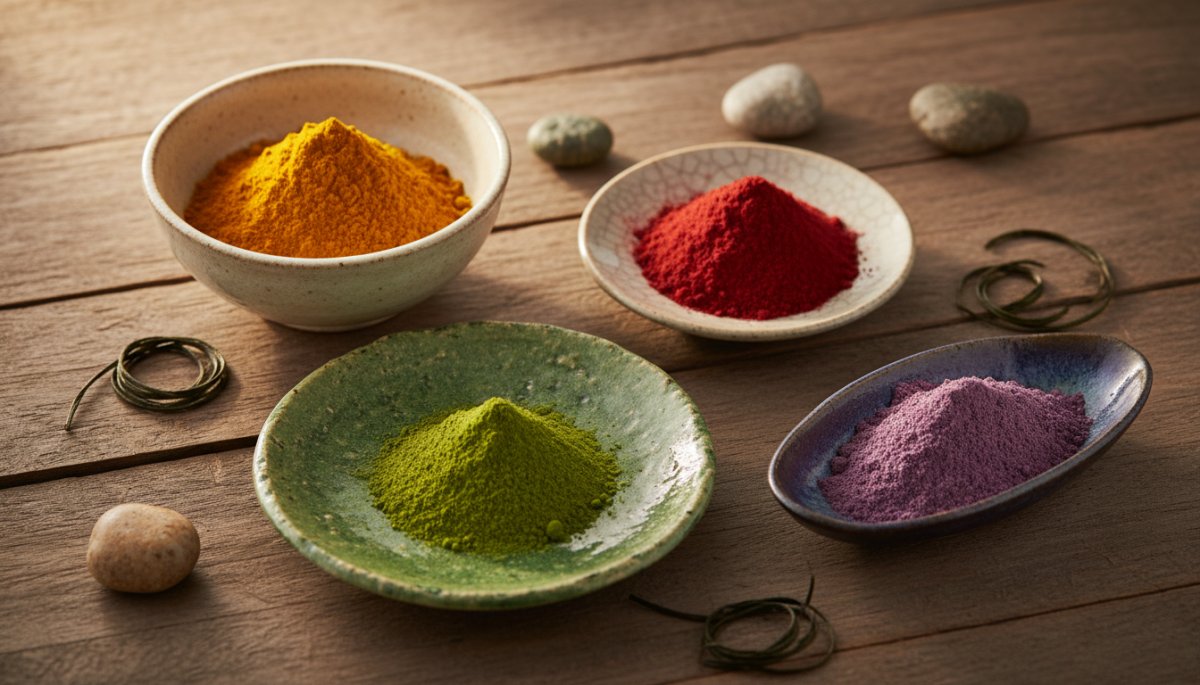
クチナシの果実から抽出される黄色色素は、和菓子の着色料として古くから使われてきました。栗きんとんや冷やし中華の麺、和菓子など、中性からアルカリ性の食品に適しています。熱には比較的安定ですが、光では退色しやすいため、陳列や保管時の遮光に注意します。
クチナシ黄色素は、カロテノイド系の色素であるクロシンを主成分としており、水溶性で扱いやすいのが特徴です。少量でも発色が良いため、入れすぎには注意が必要です。
Blue Colorings: Gardenia Blue and Spirulina Pigment
青色の天然着色料として代表的なのが、クチナシ青色素とスピルリナ色素です。クチナシ青色素は、やや黄色味を帯びた青色を呈し、熱や光に対する安定性が高いのが特徴。ただし、酸性では凝集することがあるため、pHを確認しておく必要があります。
スピルリナ色素は、単細胞の藻類から抽出される鮮明な青色色素です。酸性や加熱に弱い面があるため、使う食品のpHと加熱条件を確かめて使います。和洋菓子や製パン、キャンディなど、多様な用途に対応可能です。
もう一つ、チョウマメ色素(バタフライピー色素)もあります。アントシアニン系の色素で、pHによって赤紫色から青緑色に変化する特性を持っています。酸性で赤紫、中性で青、アルカリ性で青緑色を示すため、酸味のある素材と合わせると色が変わります。
Source Prepared from Rokko Biological Science Institute Co., Ltd., "Natural Blue Pigment"(November 2021)
Red Colorings: Red Yeast Rice Pigment and Cochineal Pigment
Widely used as a red natural coloring is red yeast rice (beni-koji) pigment. Extracted from a red koji cultured in-house, it has excellent dyeing affinity for proteins. It is used in crab-flavored kamaboko, dried shrimp, strawberry jam, soy sauce-based sauces, and more. It is stable against heat but can fade with light, so care is needed with storage methods.
Cochineal pigment is a pigment that exhibits a bright, vivid pink. Dissolving a powdered pigment product containing a stabilizer in boiling water before use increases both vividness and stability. It is used in wagashi, bread, ham, and more.
Green Colorings: Matcha and Gardenia Green Formulations
緑色の着色には、抹茶が最も一般的に使用されます。抹茶は着色と同時に風味も付けられます。ただし、熱や光によって退色しやすいため、保存には注意が必要です。
Green formulations that mix gardenia yellow or safflower yellow into gardenia blue are also used. You can choose the product according to the desired shade, and they are characterized by high stability as well.
Source Riken Vitamin Co., Ltd., "Rikecolor® Series of Pigment Products"adapted from
天然着色料の色がくすむ原因
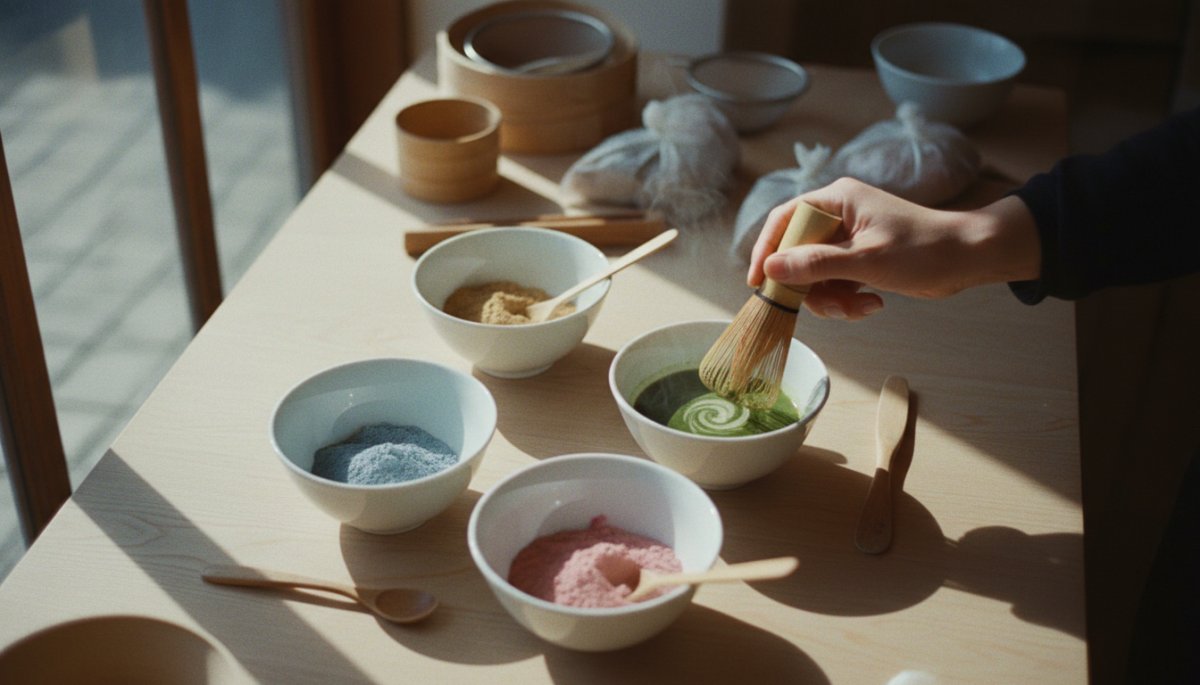
The coloring of natural colorings is greatly affected by several factors.
Changes in Shade Due to pH
Anthocyanin pigments change color significantly depending on pH. They tend to be more red under acidic conditions and more blue under alkaline conditions. For example, butterfly pea flower pigment shows reddish-purple under acidic conditions, blue under neutral conditions, and blue-green under alkaline conditions.
By understanding this characteristic, you can produce the intended color. Adding lemon juice or citric acid to make it acidic strengthens the redness, while adding baking soda to make it alkaline strengthens the blueness.
The Importance of Temperature Management
多くの天然着色料は、高温に弱い性質を持っています。特にアントシアニン系の色素は、加熱によって退色しやすいため、できるだけ低温・短時間の加熱にとどめます。
焼き菓子や蒸し菓子では、加熱による退色を見込んで、試作で色の残り方を確かめます。
Measures Against Fading Due to Light
Many natural colorings have the property of being sensitive to light. Ultraviolet light in particular accelerates the breakdown of pigments, so using light-shielding containers is recommended for storage.
When displaying products in stores as well, avoiding direct sunlight and placing them in as cool a location as possible helps minimize color degradation. For products that can be refrigerated, display in a refrigerated showcase is ideal.
Guidelines for Usage Amounts and How to Adjust Them
The amount of natural coloring to use is adjusted according to the depth of color you want.
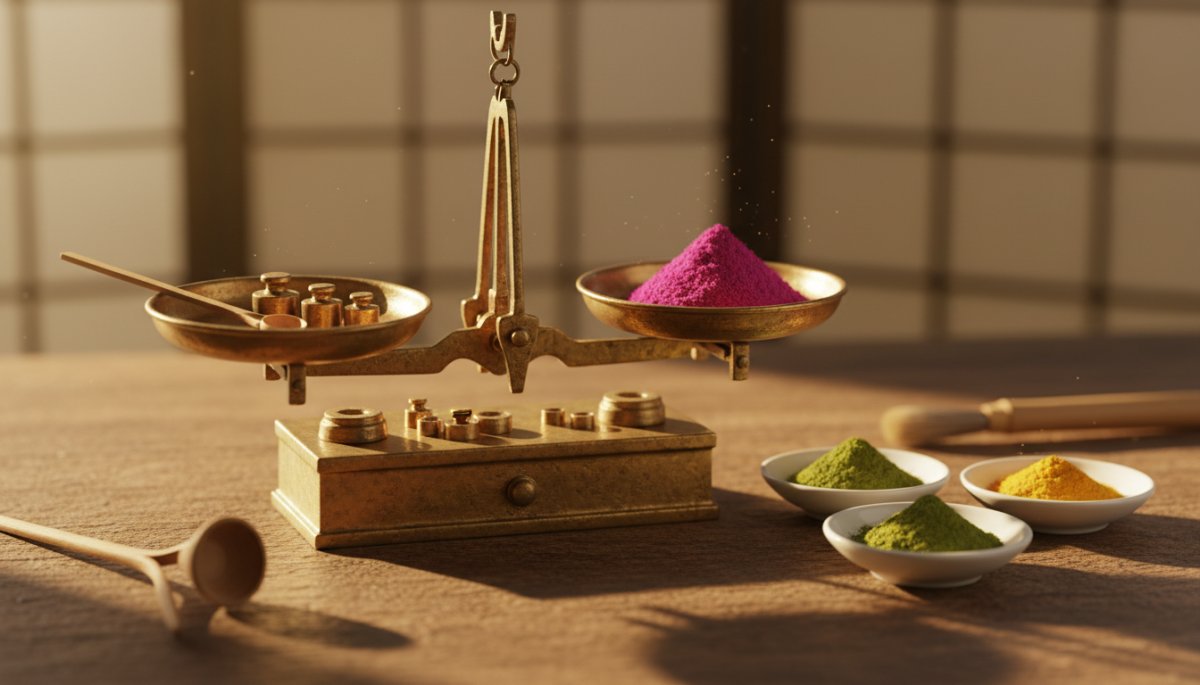
使用量の決め方
使用量は色素製剤の濃度や求める色の濃さによって大きく変わるため、製品の規格書を確認したうえで試作で決めます。
For a pigment you are using for the first time, we recommend starting with a small amount and gradually increasing it. If you add a large amount at once, the color becomes too deep and difficult to adjust.
Techniques for Adjusting Color Depth
When you want a pale color, dilute the pigment with water or syrup before using it. When you want a deep color, mix the pigment directly into the batter, but be careful, as mixing too much can change the texture of the batter.
By combining multiple pigments, you can also express subtle shades. For example, mixing gardenia yellow and gardenia blue lets you create a gradation of green. By varying the blending ratio, you can express a wide range of shades from yellow-green to blue-green.
天然着色料の保存と品質管理
Natural colorings can be used over a long period by following proper storage methods.
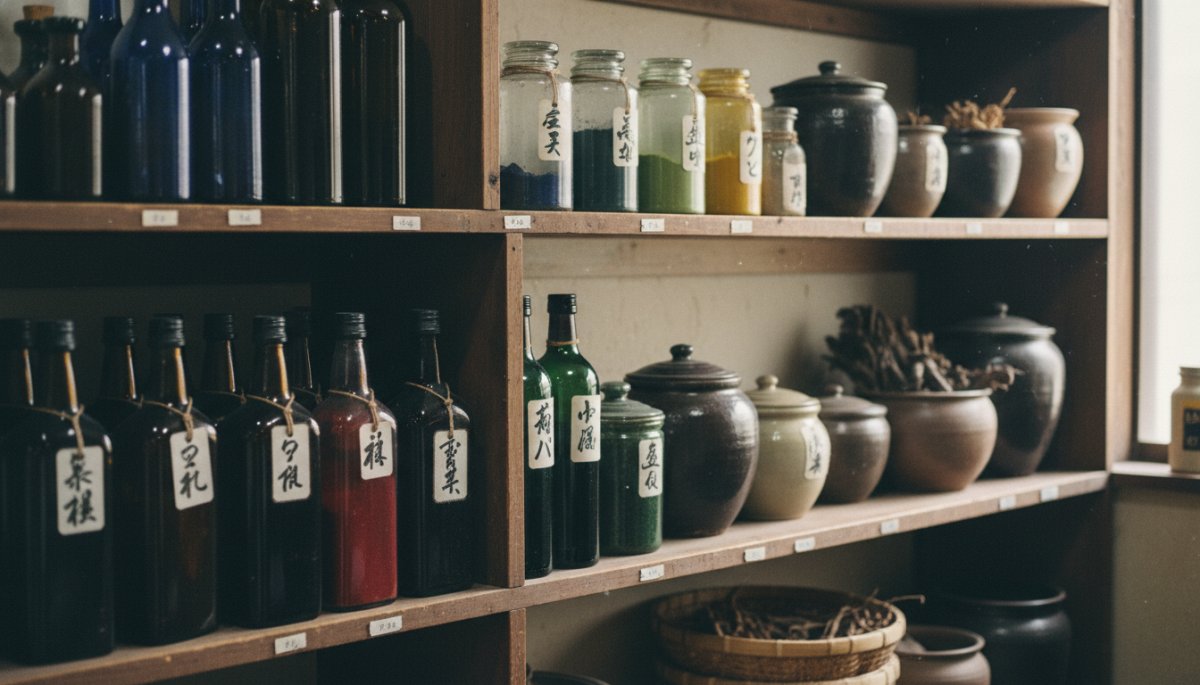
How to Store the Powder Type
粉末状の天然着色料は、湿気と光を避けて保存することが基本です。密閉容器に入れ、冷暗所で保管します。開封後は、できるだけ空気に触れる時間を短くし、使用後はすぐに蓋を閉めてください。
Including a desiccant helps prevent clumping caused by moisture. Especially during the rainy season and in summer, refrigerated storage is also worth considering. However, since condensation forms easily right after taking them out of the refrigerator, it is important to let them return to room temperature before opening.
How to Store the Liquid Type
液体タイプの着色料は、冷蔵保存が基本となります。開封後の使用期限は製品の表示や規格書に従ってください。使用前には軽く振って、沈殿物を均一に混ぜてください。
Because liquid types carry a risk of microbial growth, use a clean spoon or measuring cup and avoid putting your mouth directly on the container. Also, after use, wipe the mouth of the container with a clean cloth and close the lid firmly to prevent quality degradation.
夏と冬で保存方法を変える
夏場は高温多湿で色素が劣化・吸湿しやすいため、冷蔵保存を徹底します。冬場も、冷えた場所から出し入れするときの結露で粉末が固まることがあるため、乾燥剤を入れた密閉容器で保存します。
How to Check Quality
Regularly checking the state of your pigments is also important. For the powder type, check whether it has clumped, discolored, or developed an off odor. For the liquid type, check the state of any sediment, changes in color, and the presence of cloudiness.
If you have doubts about the quality, try dissolving a small amount in water to check the coloring. If it produces an unusual color or has become difficult to dissolve, we recommend refraining from using it.
色の組み合わせと使うときの注意
Broaden Your Range of Expression by Combining Colors
Rather than using single colors alone, combining multiple pigments makes richer expression possible. For example, the pale pink of sakura-mochi can be expressed as a more natural cherry-blossom pink by adding a small amount of gardenia yellow to red yeast rice pigment.
When creating a gradation, prepare pigment liquids of different concentrations and mix them in stages to achieve a smooth change of color. This technique is especially effective for high-end wagashi such as nerikiri and yokan.
Using Color to Evoke the Seasons
和菓子の魅力の一つは、季節感の表現です。春は桜のピンクや新緑の黄緑、夏は涼やかな青や白、秋は紅葉の赤や栗の黄色、冬は雪の白や柚子の黄色など、季節に応じて色を使い分けます。
天然着色料を使うことで、より自然で深みのある色合いを表現でき、季節の移ろいを繊細に表現することができます。
Points to note to avoid failure
The greatest point of caution when using natural colorings is not to add too much. Because they color more gently than synthetic colorings, it's easy to end up adding too much, but keeping to the right amount yields a beautiful finish.
Also, keep in mind that how the color appears changes depending on the type of batter. White an-based batter tends to bring out vivid colors, while adzuki an-based batter tends to make colors appear muted. It is important to adjust the amount of pigment with an understanding of the batter's characteristics.
Summary: Bring Out the Appeal of Wagashi with Natural Colorings
Natural colorings are an important material that gives wagashi natural beauty and depth.
Gardenia, red yeast rice, matcha, purple sweet potato, and other pigments each have their own characteristics, and by understanding how to use them appropriately, the expressive power of wagashi expands greatly. By considering the effects of pH, temperature, and light and following proper storage methods, you can maintain stable quality over a long period.
合成着色料とは異なり、天然着色料は扱いに多少の手間がかかりますが、その分、自然で優しい色合いを表現できるのが特徴です。
美濃与では、煉本紅・煉黄色・煉青色・煉挽茶色などの練りタイプと、赤色3号・桜花紅・青色1号・黄色4号・新小豆色・挽茶色・特製草青色・特製チョコレート色・Bamboo Charcoal Powder,などの粉末タイプを扱っています。赤色3号・青色1号・黄色4号は合成着色料です。
See Minoyo's Product List Here
📦 Related Minoyo Products
Please feel free to consult us about commercial procurement and sample requests
美濃与は京都に拠点を置く京菓子原材料の専門商社です。本記事で取り上げた原料の業務用調達や、お試しサンプル、ロット・規格のご相談など、和菓子製造の現場に寄り添った提案を行っています。
For Minoyo's business and strengths, please see Our Business & Why We Are Chosen . For the actual flow of doing business, see Ordering Process & How to Order; for questions, we have compiled them at Frequently Asked Questions . For individual consultations, please use Contact or material download to get in touch.


