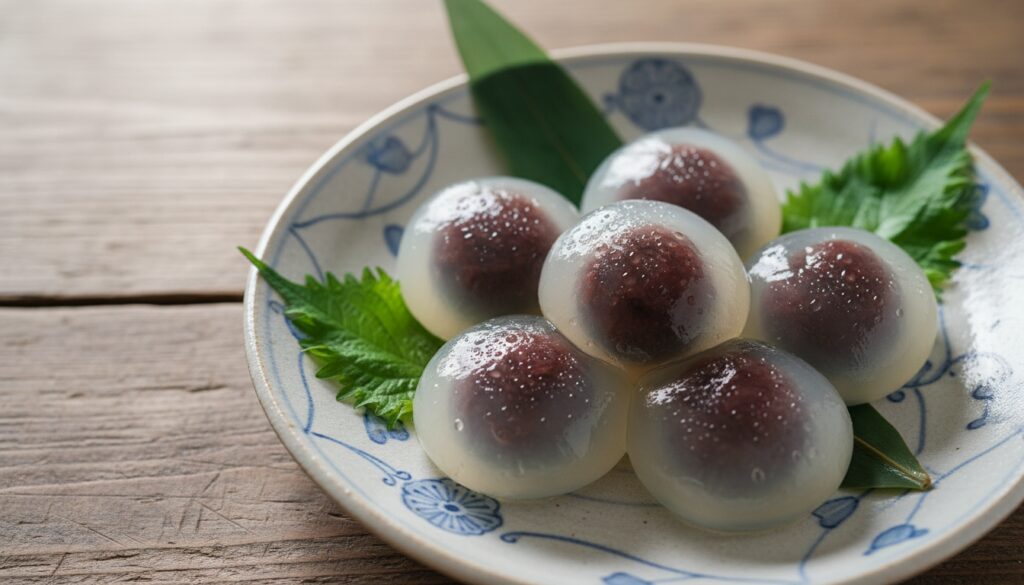
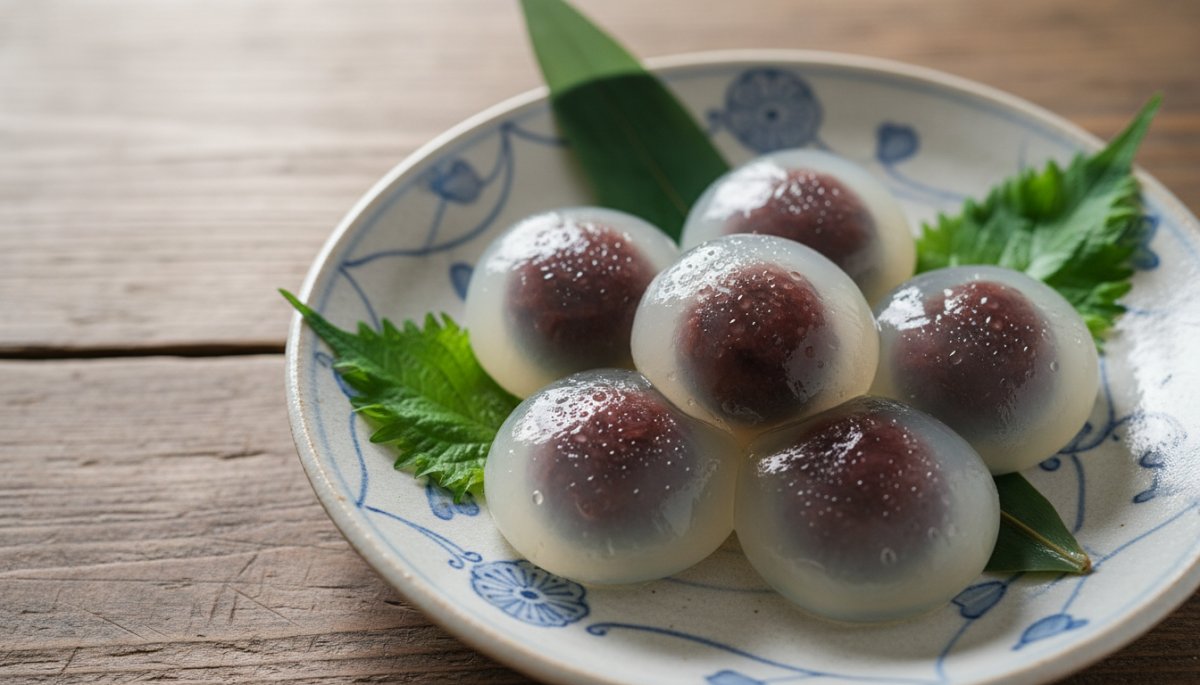
The Appeal of Mizu-manju, a Summer Wagashi Delight
暑い季節が訪れると、和菓子屋の店頭に涼やかな水まんじゅうが並びます。透明感のある美しい見た目と、ひんやりつるんとした食感。夏の風物詩として長く親しまれてきたこの和菓子は、粉の選び方と加熱の仕方で透明感も食感も変わります。
Mizu-manju is said to have originated in Ogaki, Gifu Prefecture, during the Meiji era. In this region, which was rich in groundwater at the time, vegetables and fruit were chilled in spring-fed water tanks called ido-bune, and mizu-manju too was chilled in well water before being eaten.
ここでは、水まんじゅうの生地に使う葛粉・でん粉の違いと、透明感や食感を左右する加熱条件を、製造現場で原料を選ぶ視点から整理します。
Basic Ingredients for Mizu-manju and How to Choose Them
水まんじゅうの透明感と食感は、生地に使う粉で大きく変わります。
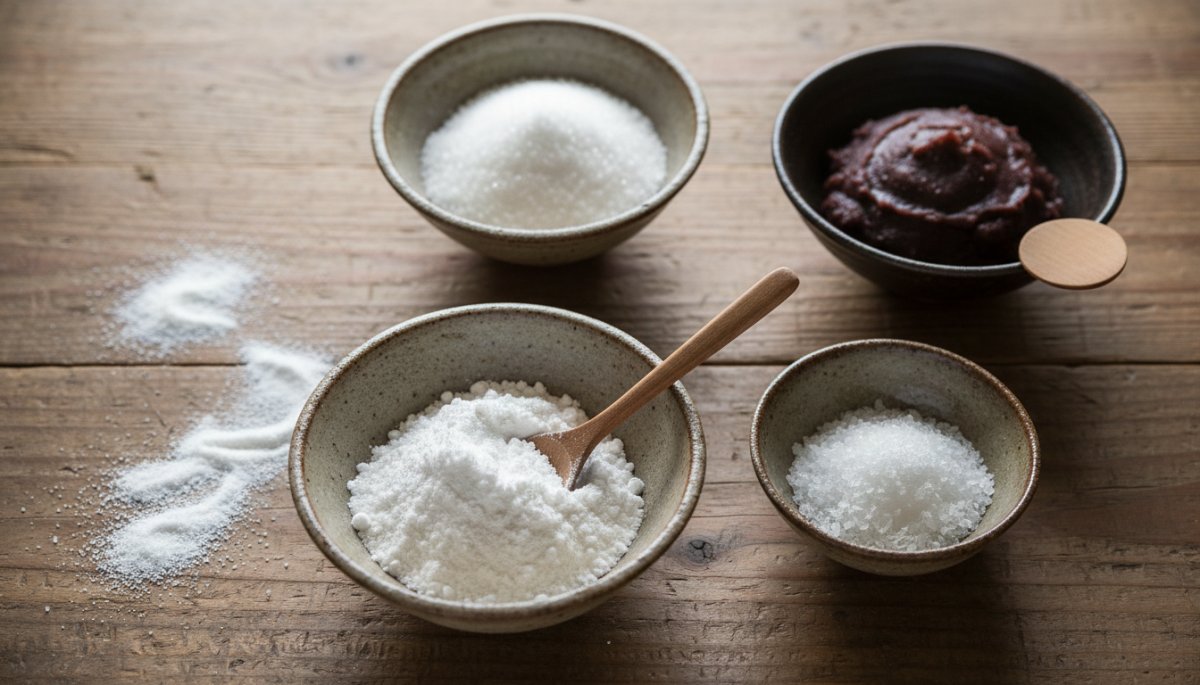
For the Authentic Approach, Choose Kuzu Starch
Traditional mizu-manju is made using kuzu starch. Kuzu starch is an ingredient that produces a distinctive chewy texture and translucency. However,Hon-kuzu powderは原料コストが上がるため、量産品では葛粉とほかのでん粉を組み合わせたり、美濃与の「水まんじゅうの友」のようなミックス粉を使ったりする方法もあります。
片栗粉を使う場合
片栗粉でも水まんじゅうの生地は作れます。片栗粉を使うと、葛粉よりもややしっかりとした弾力のある食感に仕上がります。どちらを選ぶかは、好みの食感次第です。
Combining with Warabi-mochi Powder
If you want an even smoother texture, there is also a method of combining warabi-mochi powder with kuzu starch. This blend strikes an exquisite balance between softness and translucency, achieving an elegant mouthfeel.
How to Choose the An (Sweet Bean Paste)
中に入れる餡は、こしあんが定番です。滑らかな口当たりのこしあんは、水まんじゅうの食感となじみやすい餡です。粒あんを使えば、小豆の食感がアクセントになります。白あんに抹茶を練り込んだ抹茶あんも、見た目が涼やかで夏らしい仕上がりになります。
粉と水の比率で食感が変わる
透明感と固さは、粉と水の比率で変わります。
配合は粉の種類で決める
何対何がよいかは、使う粉の種類と狙う硬さで変わります。ミックス粉なら商品ページに示された使用量を出発点にし、葛粉とわらび餅粉を併用する場合も、狙う食感に合わせて試作で調整します。
Adjust Sweetness with the Amount of Sugar
甘さは砂糖の量で調整します。砂糖の量を減らせば、あっさりとした味わいになり、餡の風味がより引き立ちます。
粉と砂糖を先に混ぜてから水を加える
粉と砂糖を先に混ぜてから水を少しずつ加えると、ダマにならず均一に分散します。
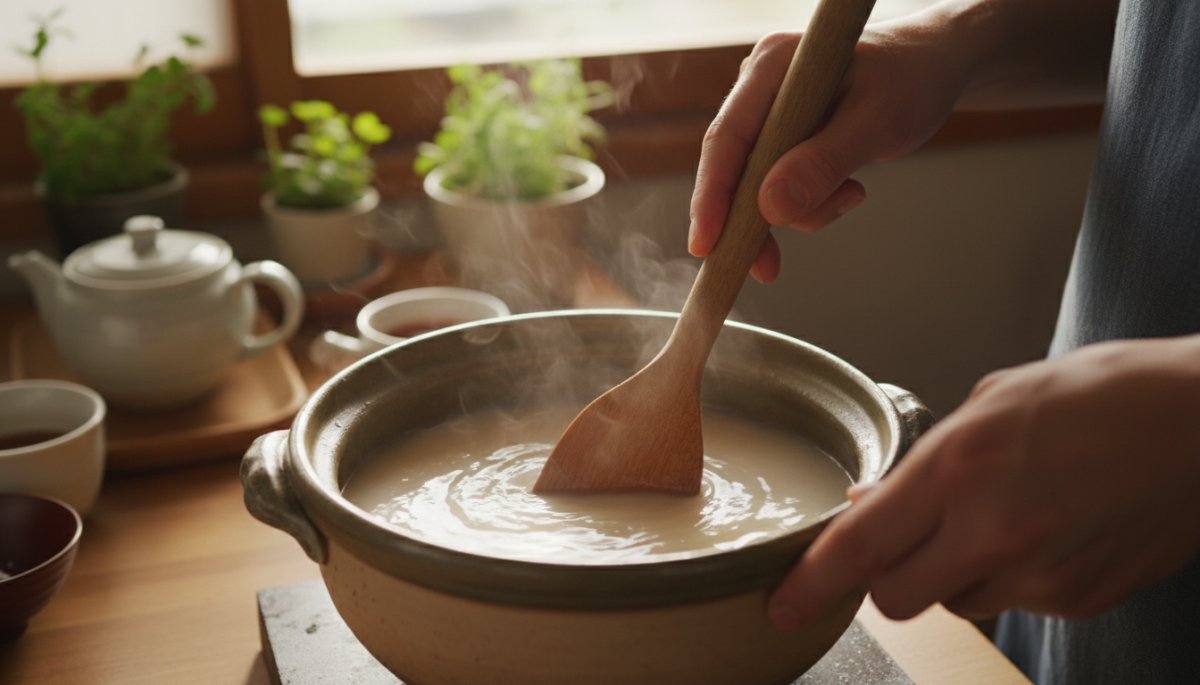
加熱の条件で透明感が変わる
The most important step in making mizu-manju is the heating process.
Medium Heat Is the Standard
Once you've put the ingredients in the pot, place it over medium heat. High heat scorches easily, while low heat takes too long and tends to give a firm finish. The key is to heat over medium heat while stirring constantly.
Heat Until Translucent
The batter, which starts out cloudy white, gradually becomes translucent as it heats. When it turns into a semi-translucent, syrup-like state and comes to a light boil, that's the time to turn off the heat. As a guideline, heating takes about 5 to 8 minutes, but judge based on the state of the batter.
To Avoid Scorching
The secret to preventing scorching is to stir constantly from the bottom. Using a wooden spatula or silicone spatula, keep mixing as if scraping the bottom of the pot. If you stop, it will burn in an instant, so be careful.
What to Do If It Sets
The batter may set while you are pouring it into molds. Because mizu-manju has the property of setting even at room temperature as it cools, if it hardens during work, simply return the pot to the heat and warm it again to bring it back to a smooth state.
Molding Techniques for a Beautiful Finish
The molding process is what determines the beauty of the appearance.
Using Dedicated Molds
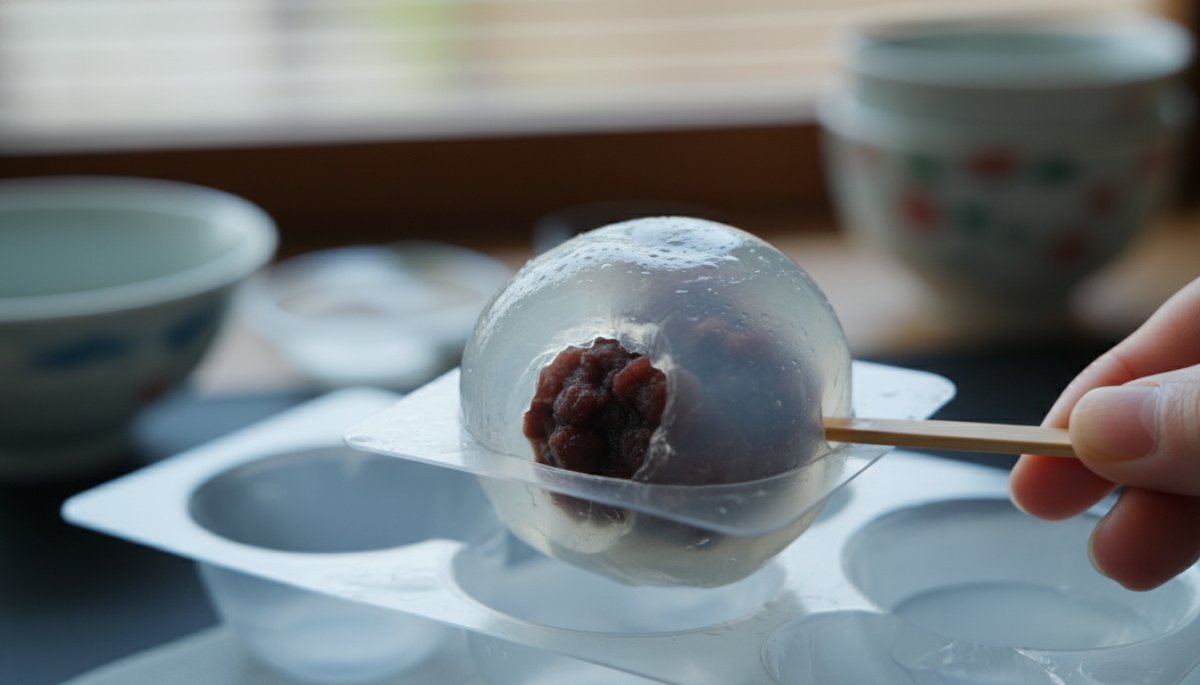
Using cups made specifically for mizu-manju makes them easier to remove and helps keep their shape neat. Misting the mold with water to dampen it before use makes it easier to release after chilling.
Pour the batter to about 80% of the mold, then sink a pre-rolled ball of an into the center. Pour batter over the top again to level it off, lightly cover with plastic wrap to prevent drying, and chill in the refrigerator.
Making It with Plastic Wrap
If you don't have dedicated molds, you can also make it using plastic wrap. Mist the wrap with water to dampen it, then place the batter and an on top. Lift the top of the wrap and tie it tightly with a rubber band, and a round mizu-manju is complete.
This method gives a subtly refined, elegant finish and can evoke a Japanese atmosphere.
型から崩さずに取り出すには
When removing the chilled and set mizu-manju from the mold, gently press the mizu-manju with a bamboo skewer or spatula to introduce air between it and the mold. When you turn the mold upside down, the mizu-manju will slowly slide out. Forcing it out will leave the surface dented, so be careful.
Arrangement Recipes to Enjoy with Seasonal Fruit
Once you've mastered the basic method, enjoy some arrangements too.
Fruit-Filled Mizu-manju
透明に仕上がる生地を使えば、中に入れたフルーツが透けて見えます。桃やみかんなどを入れる場合は、果物から出る水分や酸味で生地の固まり方が変わることがあるため、入れる量や包み方は試作で確認してください。
Matcha-Flavored Mizu-manju
Using matcha-an, made by kneading matcha into white an, gives a mizu-manju with a refreshing green color. The flavor of matcha helps ease the summer heat.
Kuromitsu and Kinako Topping
We also recommend eating simple mizu-manju topped with kuromitsu (brown sugar syrup) and kinako (roasted soybean flour). You can enjoy a taste reminiscent of warabi-mochi.
Mini Sizes for Bite-Size Treats
小さめの型を使って一口サイズに作れば、見た目も可愛らしく、食べやすい水まんじゅうになります。
Authentic Mizu-manju Making with Minoyo's High-Quality Raw Materials
For those who want to make more authentic mizu-manju, we recommend Minoyo's high-quality raw materials.
美濃与は明治35年創業の京菓子原材料の専門商社です。水まんじゅうや葛餅などを手軽に製造できるミックス粉「友シリーズ」をはじめ、国産大豆を自社焙煎したきな粉、上質な米粉や薯蕷粉など、和菓子作りに欠かせない原材料を幅広く取り扱っています。
まとめ:透明に仕上げる粉と加熱条件
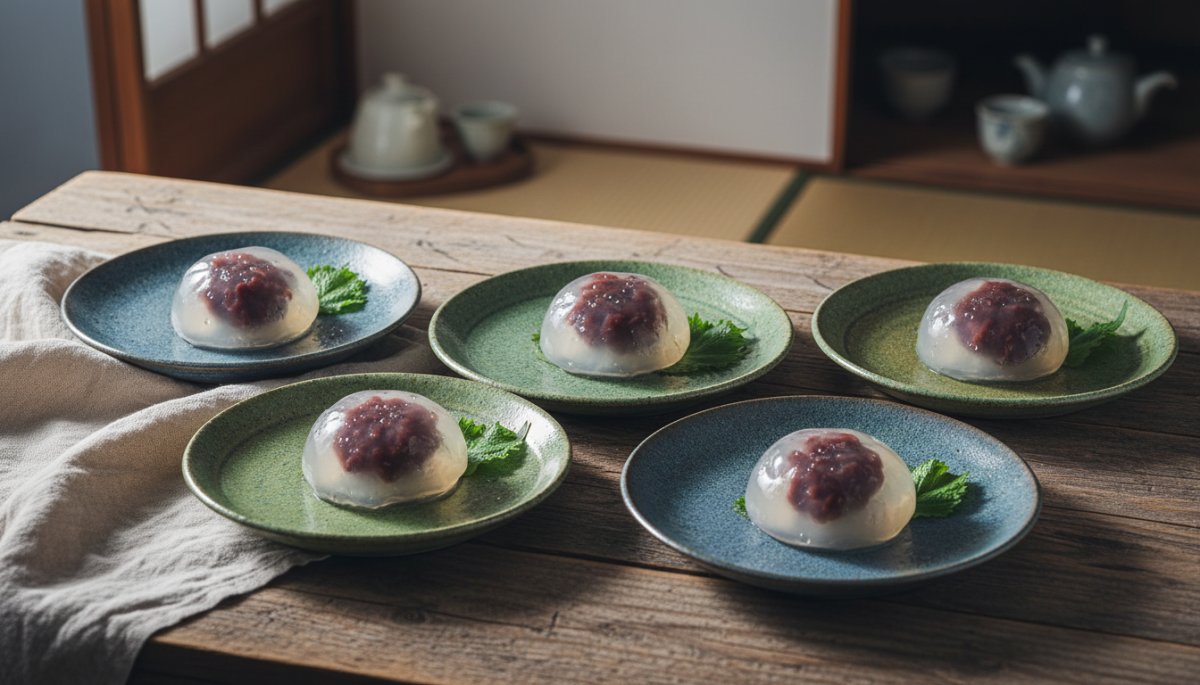
水まんじゅうは、見た目の涼やかさと、ひんやりつるんとした食感が魅力の夏の和菓子です。葛粉や片栗粉、わらび餅粉などの材料選び、粉と水の比率、中火で焦がさないように加熱する火加減、型を使った成型方法で、水まんじゅうの仕上がりは変わります。
基本の生地が決まれば、季節のフルーツを入れたり抹茶あんを使ったりと、アレンジも加えられます。
水まんじゅうの原料を切り替えるときは、粉の種類と加熱条件をあわせて試作で確かめてください。Minoyoの取扱原料はこちらからご確認いただけます。
📦 Related Minoyo Products
Please feel free to consult us about commercial procurement and sample requests
美濃与は京都に拠点を置く京菓子原材料の専門商社です。本記事で取り上げた原料の業務用調達や、お試しサンプル、ロット・規格のご相談など、和菓子製造の現場に寄り添った提案を行っています。
For Minoyo's business and strengths, please see Our Business & Why We Are Chosen . For the actual flow of doing business, see Ordering Process & How to Order; for questions, we have compiled them at Frequently Asked Questions . For individual consultations, please use Contact or material download to get in touch.


