How Bulk Purchasing of Commercial Kinako Transforms Business Efficiency
If you run a wagashi shop or confectionery business, kinako is an indispensable raw material.
How can you keep daily procurement costs down while maintaining quality? By choosing commercial-use bulk kinako, you can lower the unit price while achieving a stable supply. However, it is not simply a matter of choosing a larger package. Unless you consider the roasting level, particle size, and even storage methods, valuable raw materials can go to waste.
本記事では、業務用大容量きな粉の選び方から保管方法、まとめ買いするときの発注量の決め方までを解説します。美濃与の大豆焙煎所の品質管理も紹介し、和菓子店・製菓業の方に役立つ実践的な情報をお届けします。
The Decisive Difference Between Commercial and General Kinako
There is more than just a difference in quantity between the small bags of kinako you see at the supermarket and the commercial-use bulk kinako distributed for business use.
Optimizing Particle Size and Roasting Level for Each Application
The greatest feature of commercial kinako is the ability to choose the particle size and roasting level to match your product.
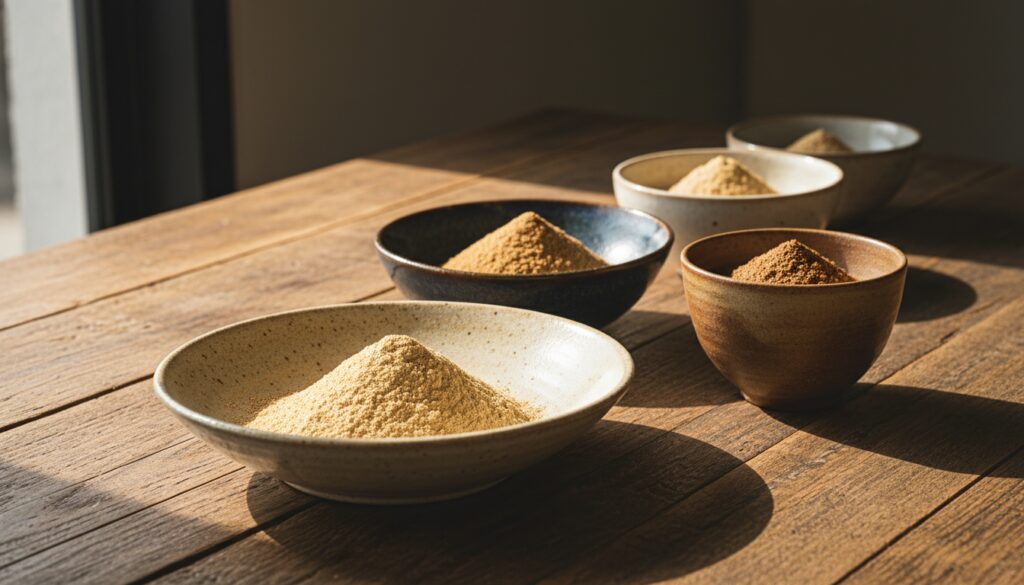
Deeply roasted, fragrant kinako is suited to warabi mochi, while a finely milled type is suited for kneading into cream. General-use kinako is designed as an all-purpose type, so it is not optimized for any specific application. In the professional kitchen, selecting kinako with the ideal specifications for the product you want to make is the deciding factor in flavor.
Sugar-Free for High Flexibility in Flavor Creation
There are many "adjusted kinako" products for home use that have sugar mixed in. Most commercial products, however, are unsweetened types that bring out the flavor of the ingredient itself.
This is so that each shop can freely adjust the sweetness. In addition, to prevent quality degradation after opening, commercial products often use packaging with high light-blocking and barrier properties, designed so you can use it up to the last bit while it stays fragrant.
Criteria for Selecting Roasting Level and Particle Size
The most important thing in choosing kinako is the combination of roasting level and particle size.
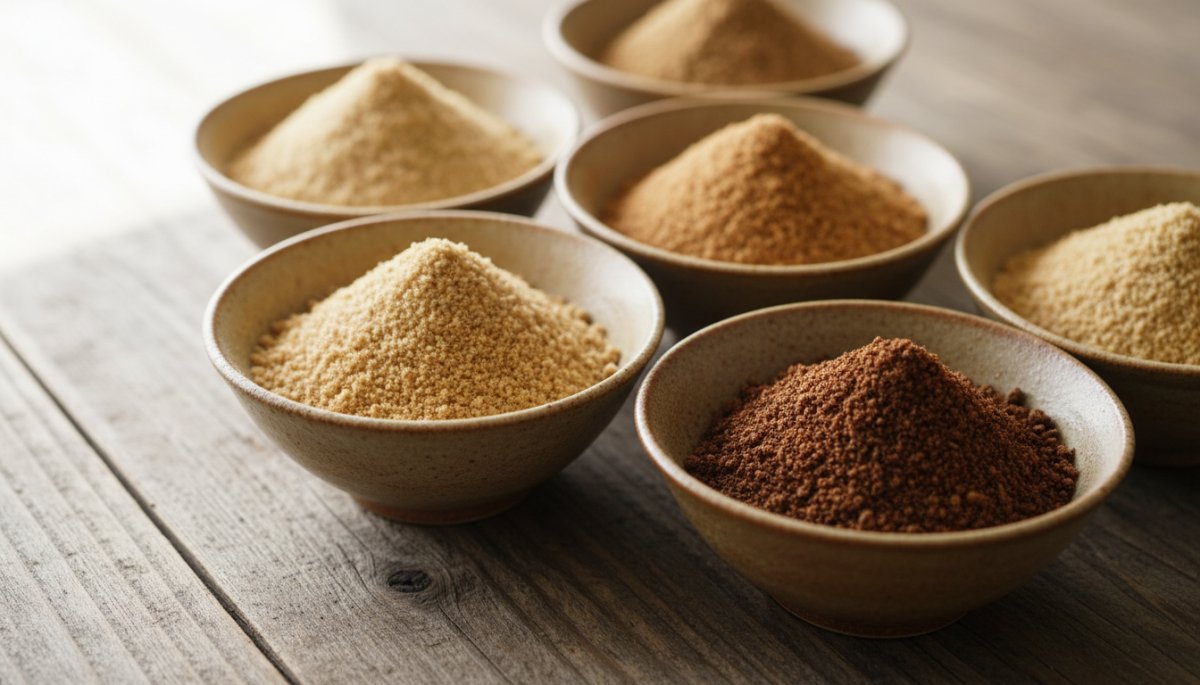
How Roasting Level Affects Flavor
Lightly roasted kinako is characterized by the soybean's natural sweetness and a gentle flavor. It suits applications that call for delicate flavors, such as Western confectionery creams and smoothies.
一方、深煎りのきな粉は香ばしさが際立ち、和菓子の伝統的な風味を引き出します。おはぎやわらび餅など、きな粉の存在感を前面に出したい商品に最適です。中煎りはその中間で、用途を選ばず使いやすいタイプです。
Differences in Texture and Use by Particle Size
The finely milled type has a good mouth-melt and is suited for kneading into creams and pastes. Because the particles are fine, it also dissolves easily in liquids, making it suitable for kinako lattes and smoothies.
The coarsely ground type retains texture and makes its presence felt when used as a topping. Sprinkled on dango or ice cream, it offers a crunchy texture. The standard type is in between the two and is the most versatile option.
まとめ買いで単価を下げるときの発注量
The greatest benefit of bulk purchasing is a reduced unit price.
However, if you can't use it up and the quality deteriorates, it defeats the purpose. Determining the right order quantity and timing is the key to cutting costs.
使用量から発注サイクルを決める
First, accurately grasp your monthly kinako usage. Average out the actual usage over the past three months and factor in seasonal variation.
和菓子店では、夏場にわらび餅の需要が高まるため、きな粉の消費量も増加します。この変動を見越して、繁忙期前に在庫を確保しておきます。発注量と発注サイクルは、使用実績、商品ごとの賞味期限、保管スペースをもとに決めます。
Room for Price Negotiation Through Lot Purchasing
Beyond choosing bulk packages, ordering multiple lots at once creates further room for price negotiation.
サプライヤーとの長期的な関係を築き、定期発注の契約を結ぶことで、安定した価格での仕入れが可能になります。年間の使用見込みを仕入先と共有しておくと、繁忙期前の手配がしやすくなります。
Practical Know-How for Quality Control and Storage
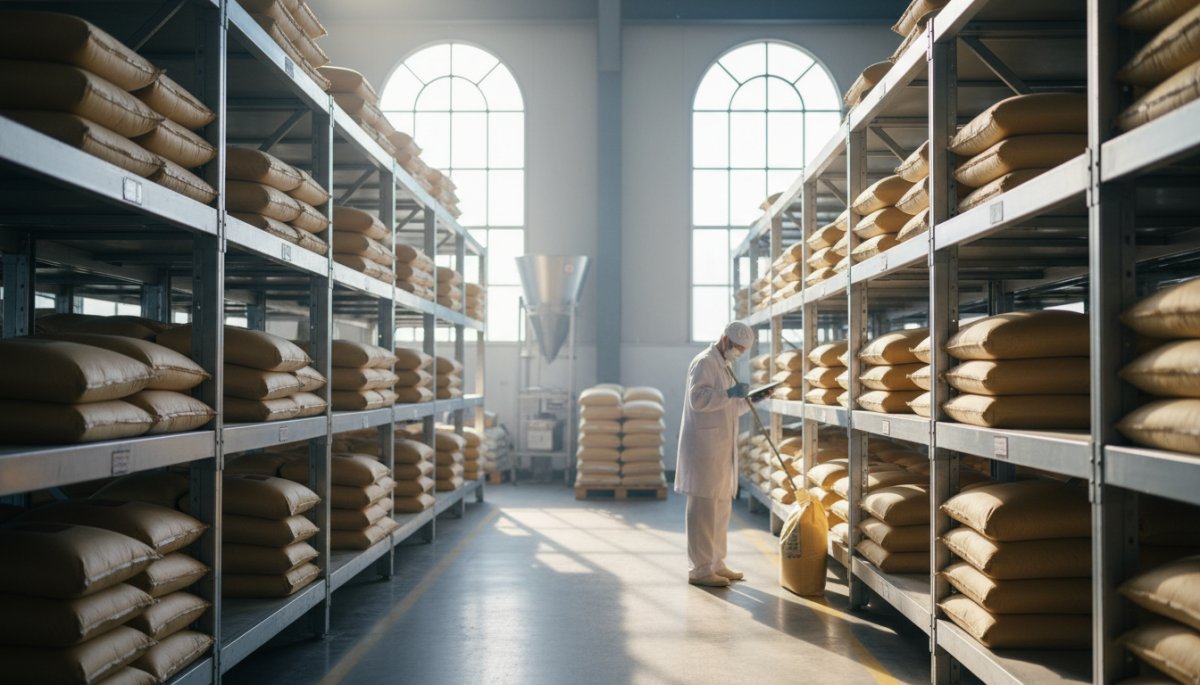
No matter how high-quality the kinako you procure, quality will deteriorate if storage methods are inappropriate.
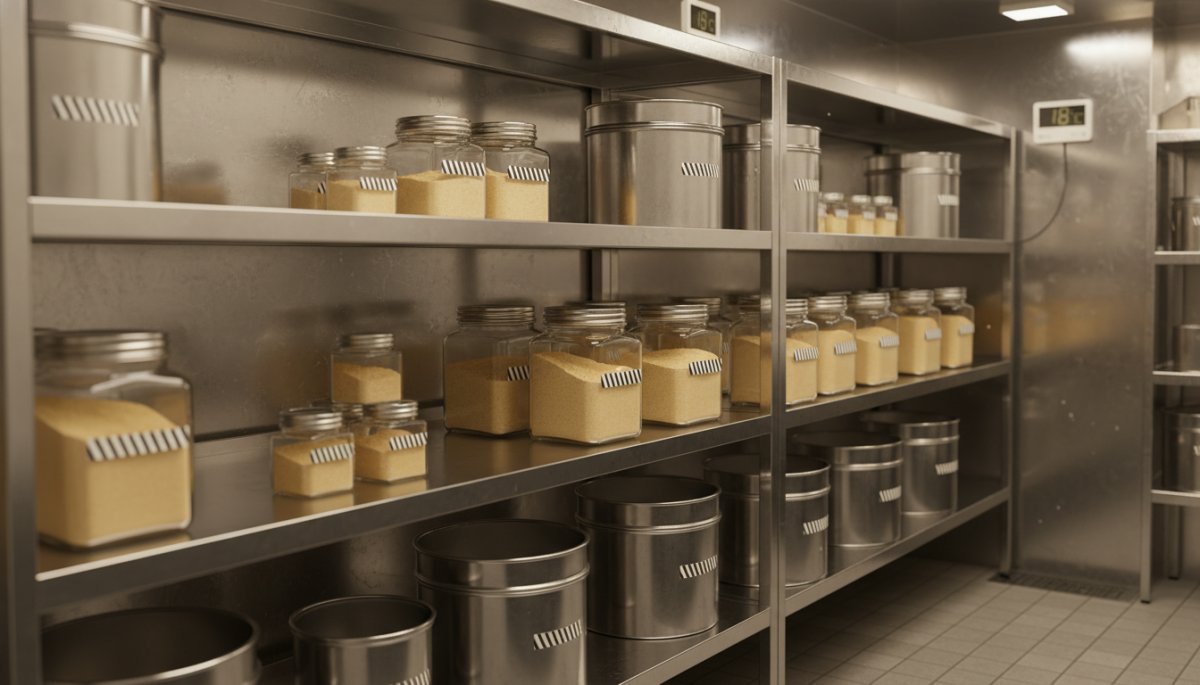
Temperature and Humidity Control Determine Quality
Because kinako contains soybean oils, oxidation progresses in hot, humid environments, degrading the flavor.
保管場所は直射日光と高温多湿を避け、商品に表示された保存方法に従ってください。開封後は密閉容器に移し替え、冷暗所で保管しましょう。冷蔵庫での保管も可能ですが、結露に注意が必要です。使用する分だけを取り出し、すぐに密閉することで、品質を長期間維持できます。
伏見の大豆焙煎所の品質管理
美濃与の公式サイトでは、伏見の大豆焙煎所についてFSSC関連の取り組みを案内しています。
伏見工場は大豆専用工場で、大豆以外の原料は持ち込んでいません。原料を選ぶ際は、仕入先の品質管理体制に加え、自社工程と最終製品の検査条件も確認してください。
Techniques for Maintaining Quality After Opening
Once you open a bulk package, it is wise to portion it out and store it in smaller amounts.
真空パック機があれば、週間使用分ずつ小分けにして真空保存すると、酸化を最小限に抑えられます。
The Value of Domestic Soybeans and In-House Roasting
The transparency of a raw material's origin and manufacturing process is directly linked to consumer trust.
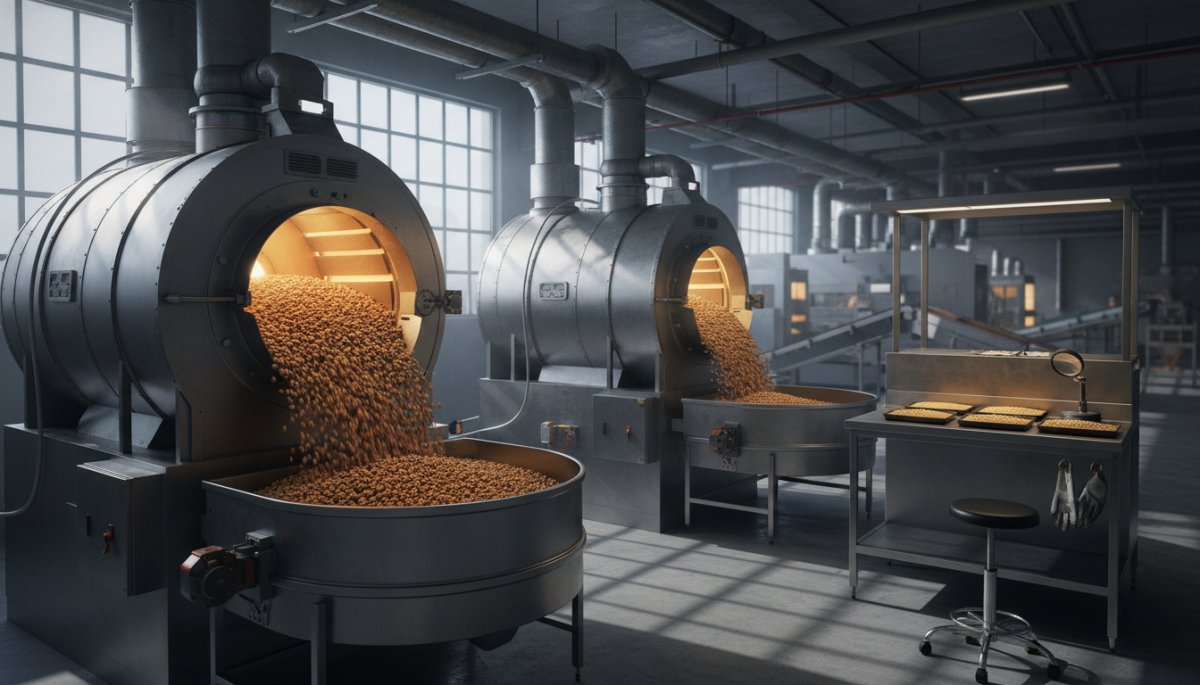
The Benefits of Using Domestic Soybeans
Domestic soybeans have stable quality and clear traceability.
美濃与では伏見の大豆焙煎所で国産大豆を焙煎・製粉し、「きな粉」と「深煎りきな粉」の2種類をご用意しています。産地が明確な原料を使用することは、消費者への「安心・安全」の提供に直結し、商品のブランド価値を高めます。
Quality Control Through In-House Roasting
Roasting is the single most important process in determining kinako's flavor.
自社で焙煎設備を持つメーカーは、温度や時間を細かく調整でき、一貫した品質を保てます。美濃与の大豆焙煎所では、生の国産大豆を仕入れ、焙煎から製粉までを自社で行っています。こうした製造体制を持つサプライヤーを選ぶことが、最終製品の品質を左右します。
Summary: Achieving Both Quality and Cost with Commercial Kinako
Selecting commercial-use bulk kinako carries meaning beyond mere cost reduction.
焙煎度合いや粒度を製品に合わせて最適化し、適切な保管方法で品質を維持することで、お客様に喜ばれる商品づくりが可能になります。国産大豆を焙煎から製粉まで自社で行う大豆専用工場のきな粉を選ぶと、原料の由来と製造工程を仕入先に確認しやすくなります。
Review your ordering cycle and negotiate prices through lot purchasing to maximize cost-effectiveness. Achieving both quality control and business efficiency is the foundation of building a shop that is loved for years to come.
業務用きな粉の選定や品質管理についてさらに詳しく知りたい方は、Minoyoにお気軽にご相談ください。用途をお聞かせいただければ、きな粉と深煎りきな粉のどちらが合うかご相談を承ります。サンプルのご請求も承っています。
📦 Related Minoyo Products
Please feel free to consult us about commercial procurement and sample requests
美濃与は京都に拠点を置く京菓子原材料の専門商社です。本記事で取り上げた原料の業務用調達や、お試しサンプル、ロット・規格のご相談など、和菓子製造の現場に寄り添った提案を行っています。
For Minoyo's business and strengths, please see Our Business & Why We Are Chosen . For the actual flow of doing business, see Ordering Process & How to Order; for questions, we have compiled them at Frequently Asked Questions . For individual consultations, please use Contact or material download to get in touch.


