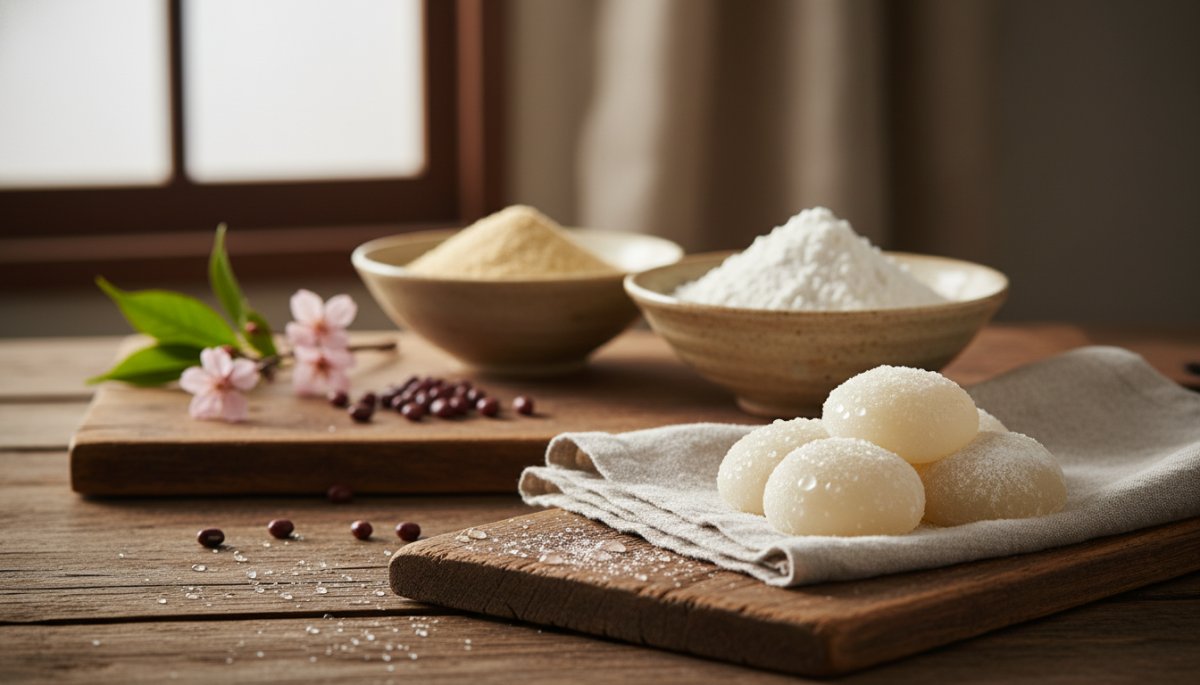
もっちり食感は粉の種類と製法で変わる
One of the elements that defines the appeal of wagashi is a chewy texture.
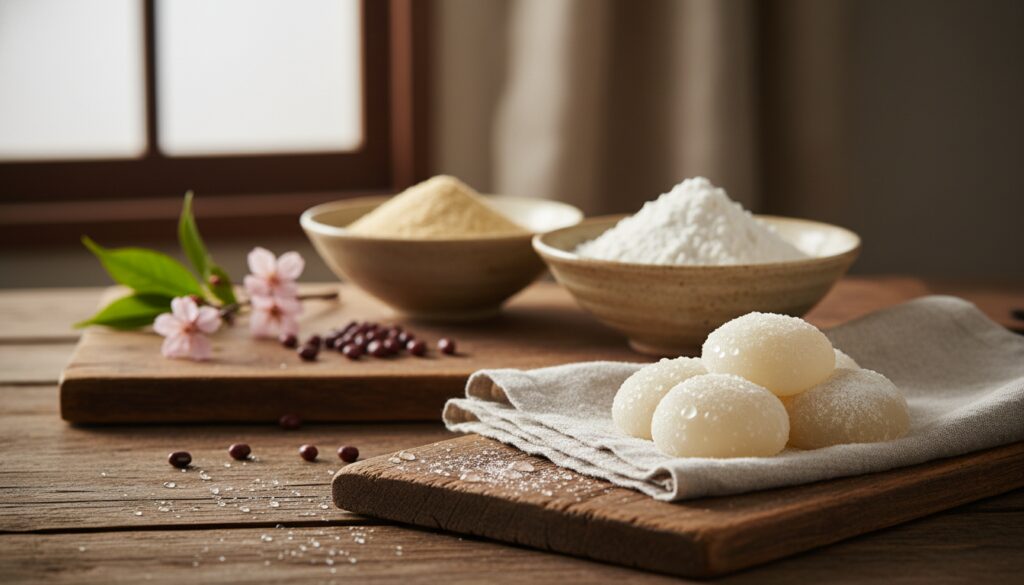
This distinctive texture changes significantly depending on the type of raw materials used and the blending balance. By understanding the characteristics of each type of flour—shiratama-ko (glutinous rice flour), mochi-ko (glutinous rice flour), joshin-ko (rice flour), kuzu starch, and so on—and combining them appropriately, you can achieve the ideal chewiness.
実は、同じもち米由来の粉でも、製法の違いによって食感は驚くほど変わります。例えば白玉粉は水につけたもち米を挽き、沈殿物を乾燥させたもので、粒子が細かいためつるりとした食感に仕上がります。一方、もち粉(求肥粉)はもち米を洗って乾燥させ、そのまま製粉したもので、より伸びがあり柔らかい仕上がりになります。
Professional wagashi artisans use these flours differently, and blend several together, according to the type of confection they want to make and the texture they seek.
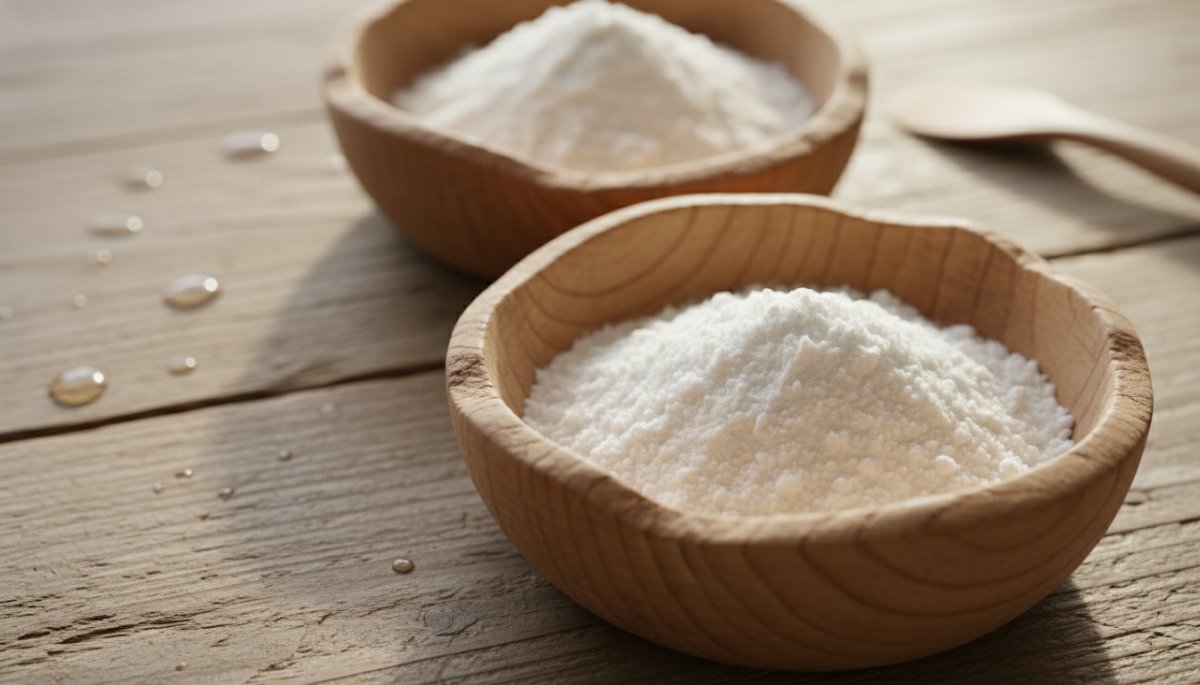
Characteristics and Uses of Shiratama-ko, Mochi-ko, and Joshin-ko
Let's take a detailed look at the characteristics of each of the representative flours that create the chewy texture of wagashi.
The Features and Best Uses of Shiratama-ko
Shiratama-ko is a flour made by soaking glutinous rice in water, then grinding it, letting it settle, and drying it.
Its particles are extremely fine, and when mixed with water it forms a smooth batter. After boiling, it is characterized by a smooth, silky texture and an easy, pleasant swallow, making it ideal for the shiratama used in shiratama dumplings and anmitsu. Because no sugar is added to the batter, it doesn't have the stretch or stickiness of gyuhi, but it has the property of not hardening easily even when chilled.
The Softness Created by Mochi-ko
もち粉(求肥粉)は、もち米を洗って乾燥させ、そのまま製粉した粉です。白玉粉と同じもち米由来ですが、製法の違いにより異なる食感を生み出します。もち粉で作った生地は、おもちの風味を残しつつ、おもちより伸びがあり柔らかい仕上がりになります。
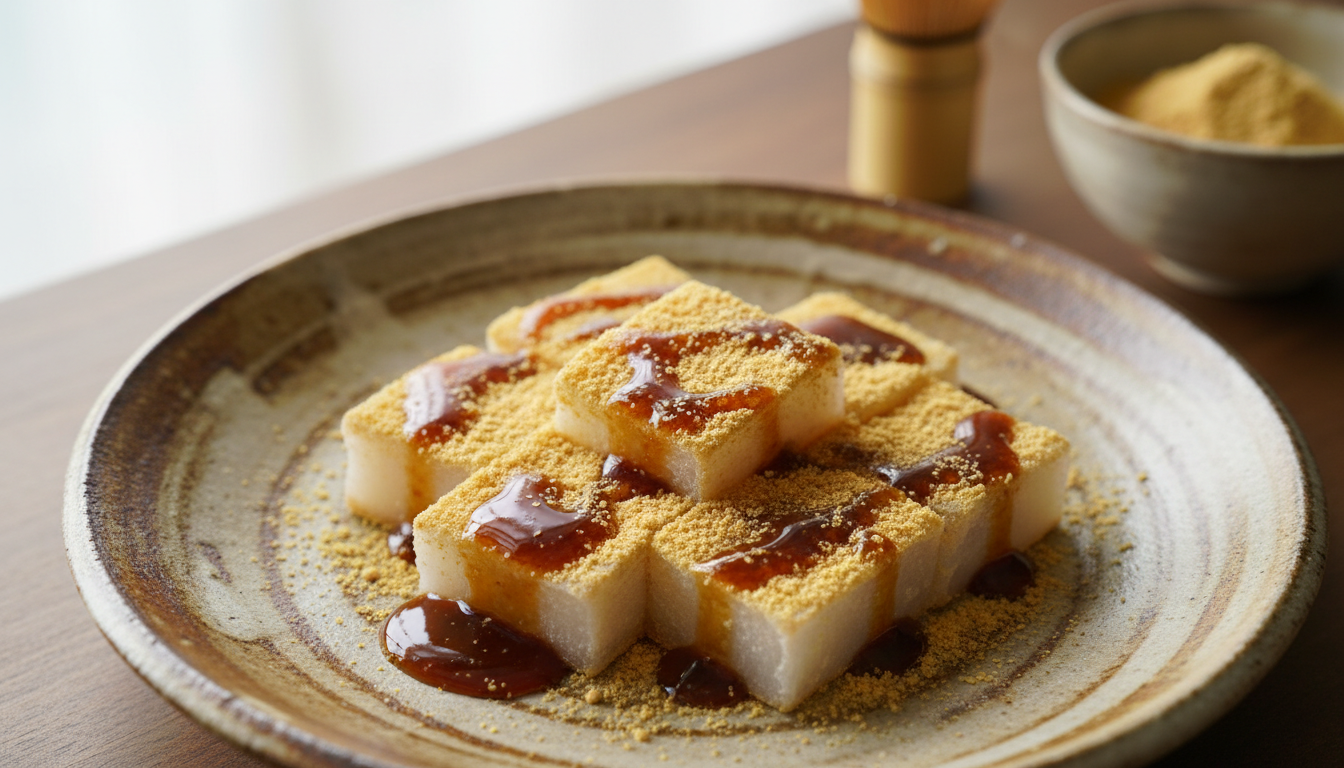
The production of gyuhi commonly uses a method called "mizu-neri" (water kneading), in which water is added to mochi-ko and kneaded, then sugar and mizuame (starch syrup) are added and it is kneaded while heating. When the sugars from sugar and mizuame combine with the starch, water retention increases, holding on to moisture; this is why gyuhi stays soft even after time passes.
上新粉を混ぜると歯切れが良くなる
Joshin-ko is a flour made from uruchi-mai (ordinary, non-glutinous rice). Compared with flours derived from glutinous rice, it has less stickiness and is characterized by a texture that bites through crisply. "Suama," known in the Kanto region, uses this joshin-ko; it lacks the stretch of gyuhi and can be bitten through easily.
By blending in a small amount of joshin-ko, you can add a clean bite while retaining the chewiness.
The Translucency and Elasticity That Kuzu Starch and Starches Bring
When you want translucency and a distinctive elasticity in addition to a chewy texture, kuzu starch and various starches play an important role.
The Characteristics and Uses of Hon-kuzu Starch
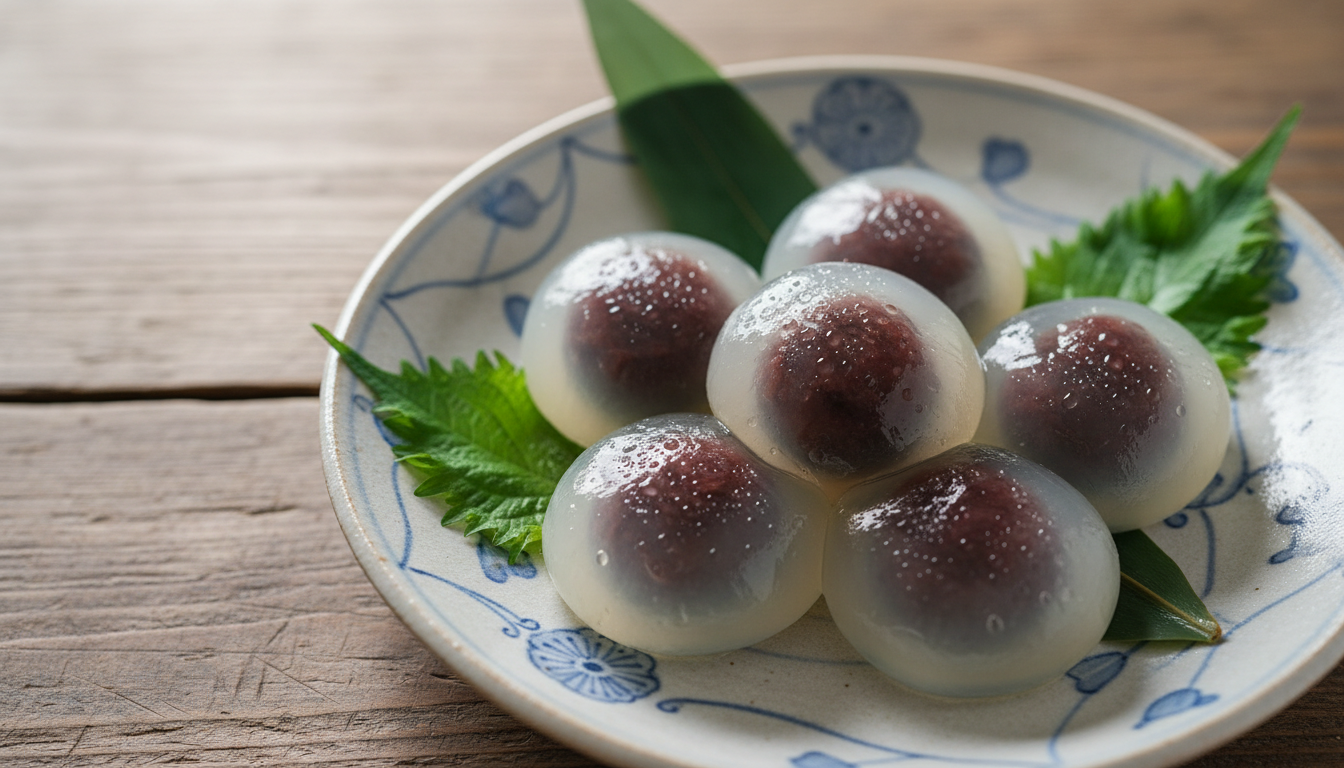
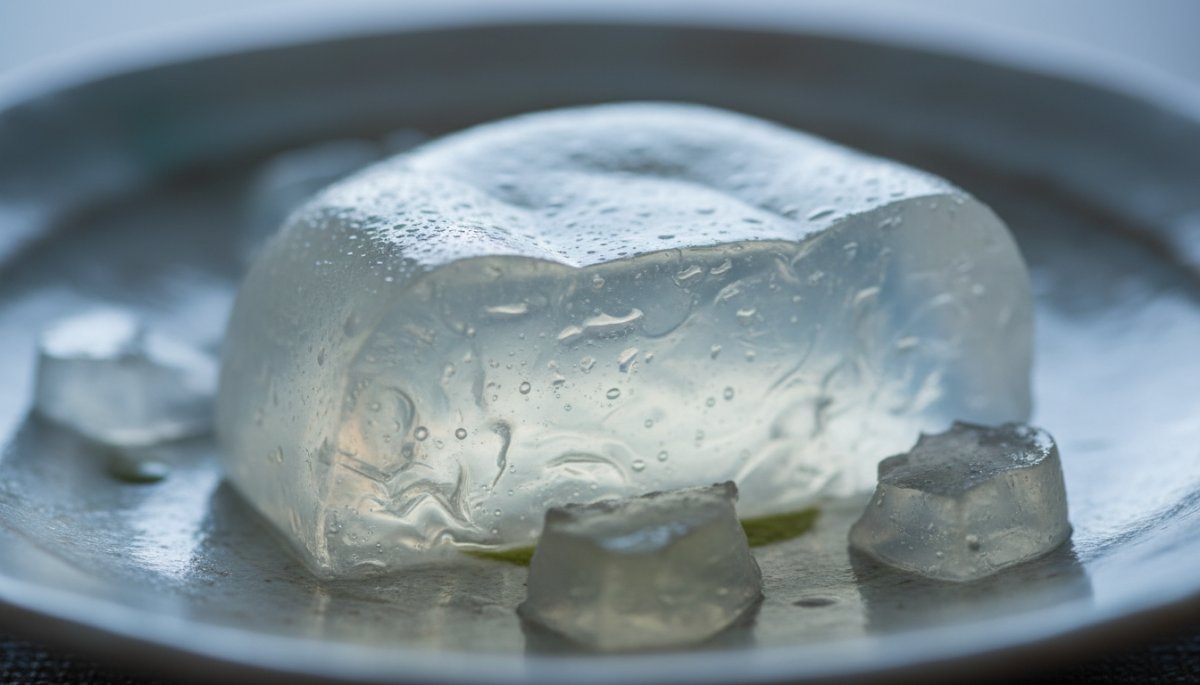
Hon-kuzu powderis a starch extracted from kudzu root; heating it produces a smooth stickiness and translucency. It has a pleasant mouthfeel, and after cooling it has just the right elasticity and clean bite, with the advantage of resisting syneresis (water separation). It is used in kuzu-mochi, kuzu-manju, kuzu-kiri, and more, yielding a beautifully translucent finish and a smooth texture.
Powdered hon-kuzu has high solubility and resists clumping, making it easy to handle during the heating process and helping to maintain stable quality. It has the characteristic of not interfering with the color or flavor of ingredients, making it easy to use across a wide range of applications.
The Rarity of Warabi Starch and Its Substitutes
本わらび粉100%の製品は、独特の透明感と弾力のある食感が特徴です。本格的なわらび餅作りには欠かせない原料ですが、希少価値が高く高級和菓子店で使用されます。
一般的には、わらび粉に他の澱粉を配合した「わらび餅粉」や、水と砂糖を加えて加熱すれば生地ができるミックス粉「蕨菓子の友」などが使用されます。これらは溶解性が良く、他原料と均一に混ざりやすいため、製造工程でのばらつきを抑えやすくなります。加熱後も品質が安定しやすく、透明感や歯切れの良さを保ちやすい設計です。
Characteristics of Other Starches
馬鈴薯澱粉(片栗粉)、小麦澱粉(浮粉)、甘薯澱粉、蓮粉、コーンスターチなどの澱粉類も和菓子製造に使われます。それぞれ粘度や透明度、食感が異なるため、目的に応じて選択します。
Pregelatinized starch (alpha starch) is a heat-treated starch that dissolves easily even in cold water, helping to simplify the production process.
練り方と水分量で変わる食感
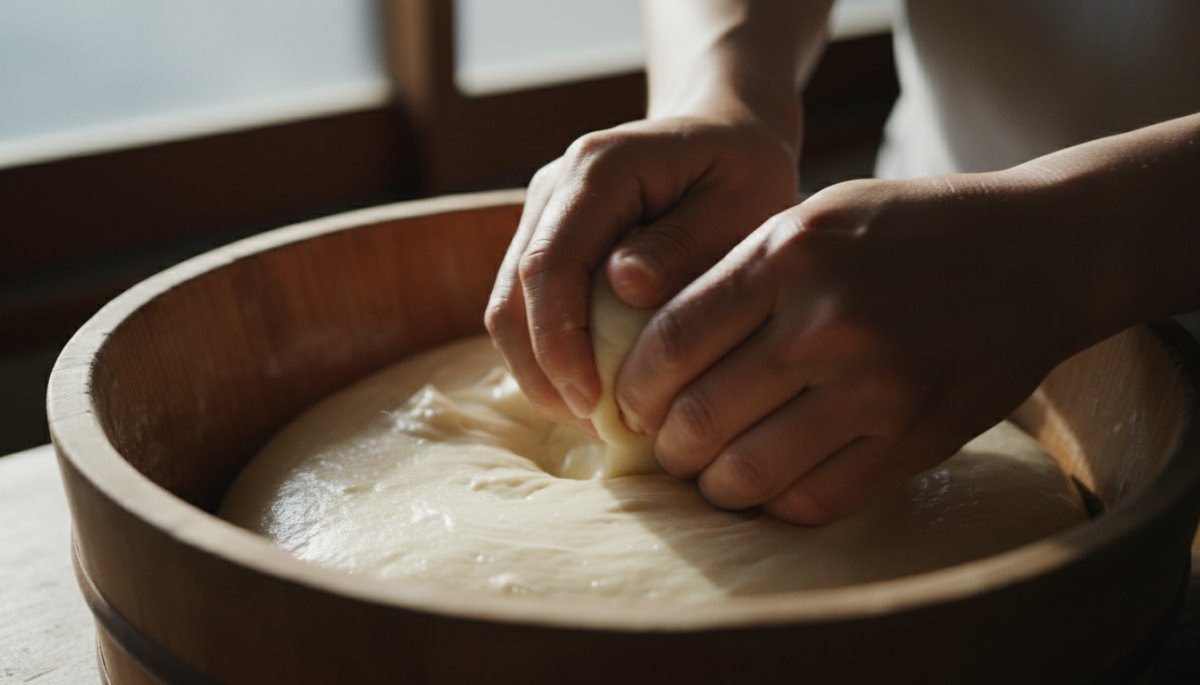
もっちりした食感は、求肥の練り方と水分量で変わります。
求肥の練り方による違い
求肥には、水練りのほかに「茹でる」「蒸す」工程を加える製法もあり、それぞれ舌触りが微妙に異なります。「茹で練り」はより柔らかくなり、「蒸し練り」は日持ちしやすくなります。
How Moisture Content Affects Texture
水分を多くすると生地はしっとりとした食感になりますが、高水分の生地は日持ちしません。
Adjusting for Season and Temperature
気温や湿度、粉の吸湿状態で仕上がりが変わるため、加水量と練り時間の調整幅を工程で決めておきます。
美濃与で扱う粉・澱粉・餡の原料
To achieve the chewy texture of wagashi, selecting high-quality raw materials is essential.
At Minoyo, we offerGenuine warabi starch、本葛、随一本葛などの本葛粉・蕨粉から、馬鈴薯澱粉、小麦澱粉まで、透明感のある和菓子作りに欠かせない澱粉を幅広く取り揃えています。業務用大容量パッケージ(5kg×3、5kg×4、10kg、20kg、25kg)での販売が中心で、安定した品質の原料を継続的に供給しています。
また、和菓子製造を簡便化するオリジナル「友」シリーズも展開しており、蕨菓子の友、葛菓子の友、水まんじゅうの友など、水と砂糖を加えて加熱するミックス粉を提供しています(蒸しようかんの友はこし餡・寒天と併用する配合用原料です)。これらは溶解性が良く、他原料と均一に混ざりやすいため、製造工程でのばらつきを抑え、安定した品質の和菓子作りをサポートします。
さらに、晒餡(特一号晒餡・冨士印晒餡・白晒餡、各12kg)も取り扱っています。形態や使用方法は規格書でご確認ください。
See Minoyo's Product List Here
Summary: Understand the Characteristics of Your Raw Materials to Achieve the Ideal Texture
The chewy texture of wagashi is determined by the type of raw materials used, the blending balance, and moisture adjustment.
白玉粉はつるりとした食感、もち粉は柔らかく伸びのある食感、上新粉は歯切れの良さ、葛粉は透明感と弾力をもたらします。それぞれの特性を理解し、作りたい和菓子の種類や求める食感に合わせて選び、配合を決めてください。
In blending ratios, the amount of sugar and mizuame affects water retention and is the key to keeping wagashi soft even after time passes. For moisture content, you need to consider the balance between texture and shelf life, and make fine adjustments according to the season, temperature, and state of the flours.
高品質な原料を使用することで、安定した品質の和菓子を作ることができます。美濃与では、本葛粉末や晒餡、友シリーズのミックス粉まで、和菓子製造の原料を取り扱っています。
By deeply understanding the characteristics of your raw materials and carrying out the right blending and adjustment, you can achieve wagashi with the ideal chewy texture.
See Minoyo's Product List Here
Please feel free to consult us about commercial procurement and sample requests
美濃与は京都に拠点を置く京菓子原材料の専門商社です。本記事で取り上げた原料の業務用調達や、お試しサンプル、ロット・規格のご相談など、和菓子製造の現場に寄り添った提案を行っています。
For Minoyo's business and strengths, please see Our Business & Why We Are Chosen . For the actual flow of doing business, see Ordering Process & How to Order; for questions, we have compiled them at Frequently Asked Questions . For individual consultations, please use Contact or material download to get in touch.