What Is Kintsuba? The Appeal of a Wagashi with Roots in the Edo Period
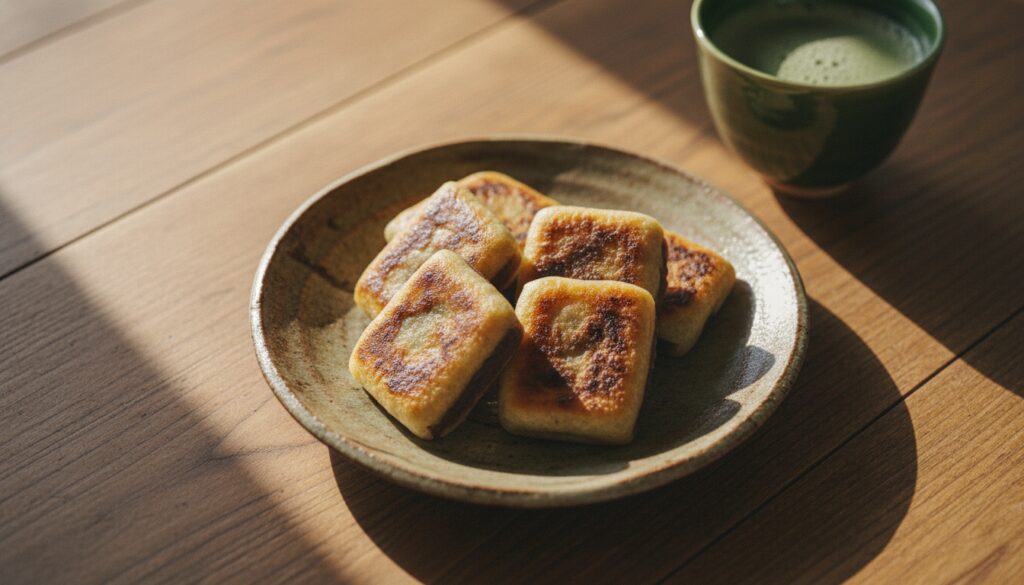
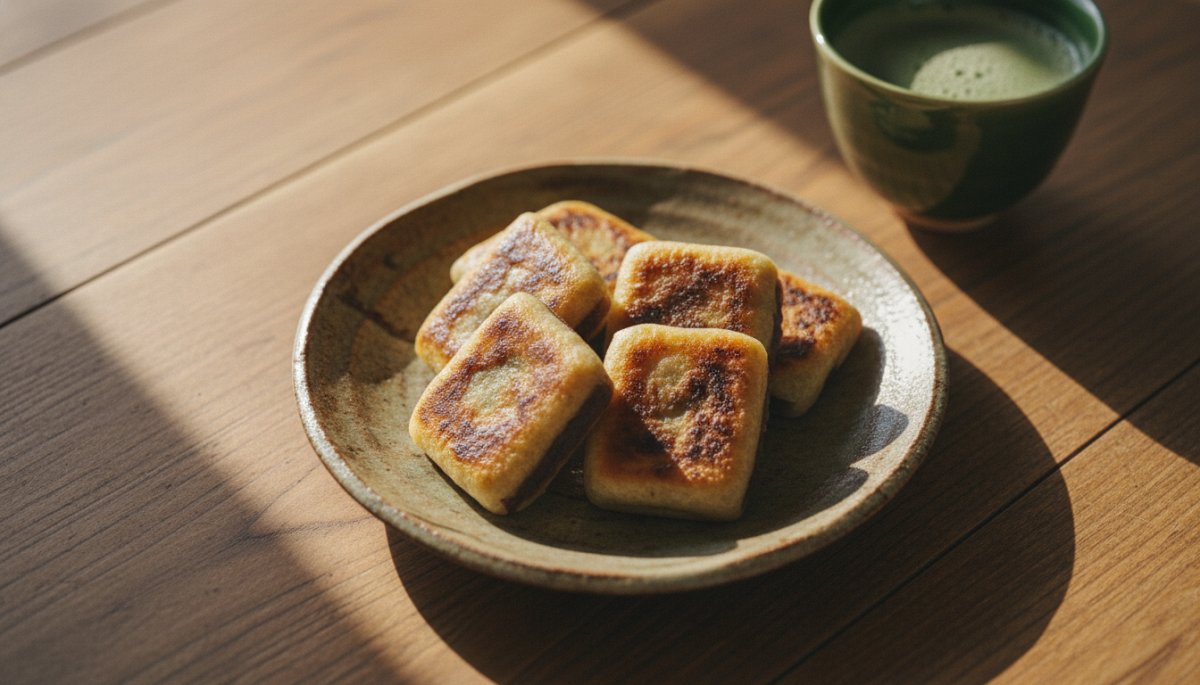
Kintsuba is a wagashi made by coating an (sweet bean paste) with a batter of flour dissolved in water and grilling all sides to finish. The standard shape is square, but in some regions there are round ones as well.
Its history is old, said to originate from a confection called "gintsuba" (silver sword guard) made in Kyoto during the Edo period. "Gintsuba" was a confection made by wrapping an in rice flour and grilling it, named because its shape resembled the guard (tsuba) of a sword. Later, when it was passed on to Edo, the rice-flour skin was replaced with wheat flour, and it came to be called "kintsuba" (gold sword guard).
きんつばは小豆と砂糖と寒天でつくるシンプルなお菓子ですが、それだけに素材の質がおいしさを決める、ごまかしのきかないお菓子です。
See Minoyo's Product List Here
Basic Raw Materials Needed for Making Kintsuba
To make kintsuba, you need two main parts, broadly speaking: the "an" and the "coating."
Raw Materials for the An
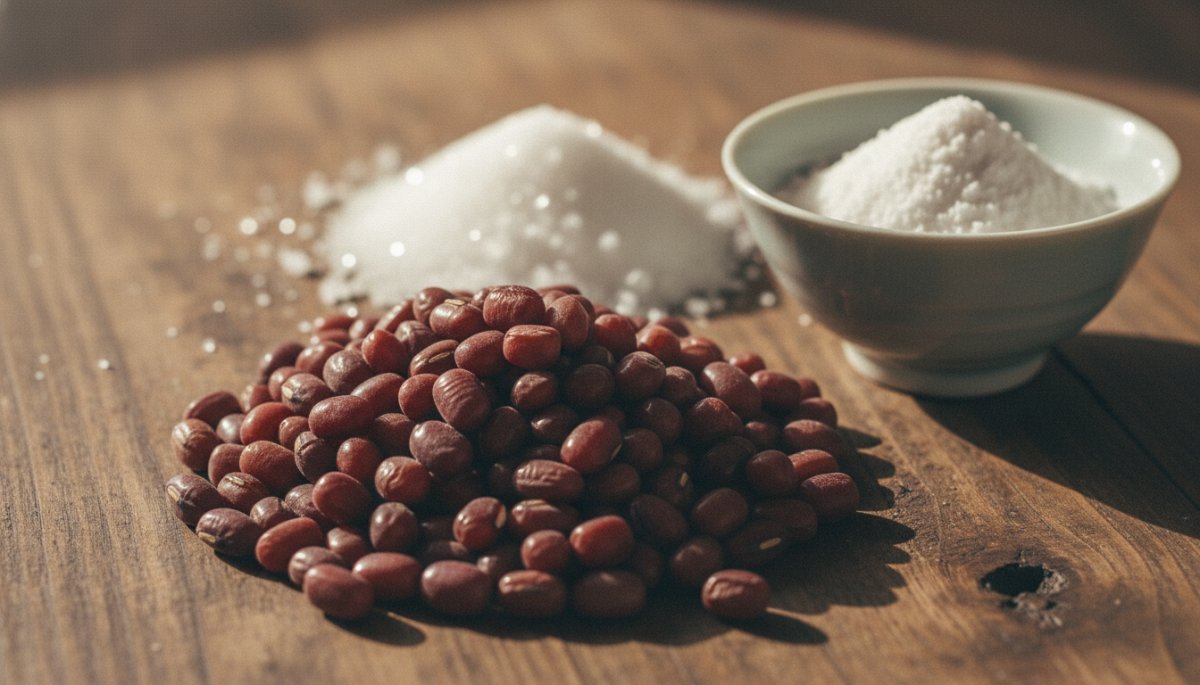
The star of the an is adzuki beans. Using high-quality large-grain adzuki beans from Hokkaido gives a finish where the grains glisten and the flavor is rich. When simmering the adzuki beans, sugar and agar are needed.
For sugar, jouhakuto (fine white sugar) or granulated sugar is common. For agar, powdered agar is easy to work with and is indispensable for setting the an. Also, adding a pinch of salt brings out the sweetness.
Raw Materials for the Coating
To make the thin coating of kintsuba, you need wheat flour, rice flour, and shiratama-ko (glutinous rice flour). Use cake flour for the wheat flour, and adding rice flour and shiratama-ko creates a chewy texture.
Dissolve them in water to make a batter, and adjust the taste with sugar and salt. This coating wraps the an, and grilling adds a savory fragrance.
The An Blending Ratio Professionals Practice
The blending ratio of the an is an important point that determines the taste of the kintsuba.
Basic Blend
The basic blend is 150g of adzuki beans to 130g of sugar, 1 teaspoon of powdered agar, and 160cc of water. Making it at this ratio produces an an that is lightly sweet and where the flavor of the adzuki beans stands out.
The amount of sugar can be adjusted to taste, but at least 100g is needed. If there is too little sugar, the an becomes dry.
The Role of Agar
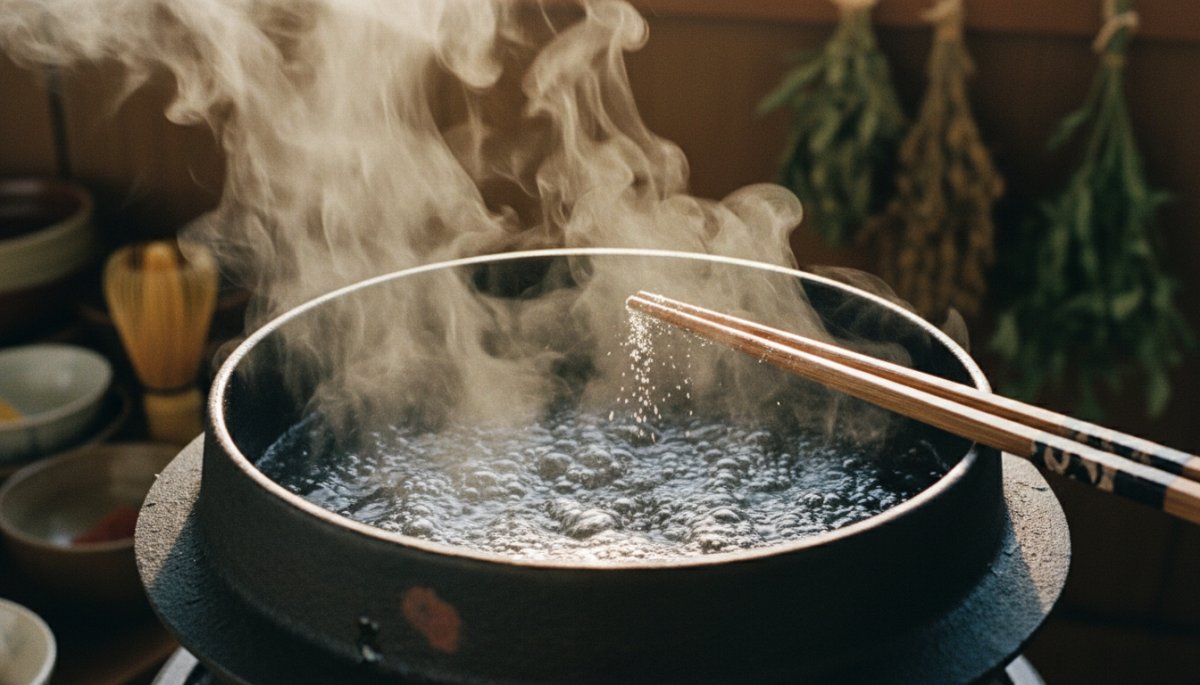
寒天はあんを固めるだけでなく、離水を防ぐ役割も果たします。粉寒天は水と一緒に2分以上沸騰させ、完全に溶かしてください。
寒天が不十分だと、あんが固まらず、きんつばの形を保てません。粉寒天の粒が見えなくなり、完全に溶けていれば大丈夫です。
衣の配合バランスと焼き方
The coating blend is an important element that determines the texture of the kintsuba.
Coating Blend Ratio
衣の配合例は、薄力粉35、米粉18、白玉粉10、水80、砂糖15の重量比に、塩をひとつまみ加えます。製造設備と求める衣の厚さに合わせて調整します。白玉粉は水で少しずつ溶き伸ばし、ダマにならないように注意します。
After adding the sugar and salt, mix in the sifted cake flour. Making the batter thin brings out the flavor of the an.
焼き方
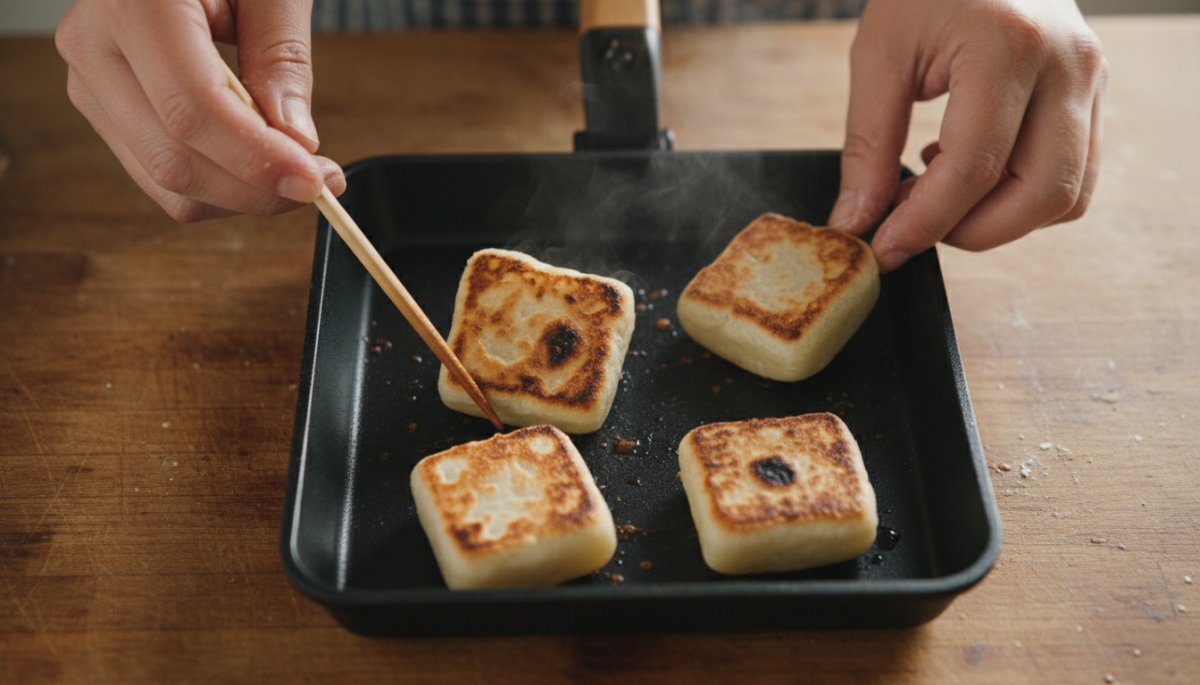
Coat a frying pan thinly with oil and grill over low heat. Hold the an in your hand, apply the coating batter one side at a time, and grill for about 30 seconds so it does not burn.
It is best to grill the broad faces on both sides first, then grill the sides. Trimming off the skin that overflows at the edges with scissors gives a clean finish.
小豆の選び方と下処理
The quality of the adzuki beans greatly affects the taste of the kintsuba.
How to Choose Adzuki Beans
Adzuki beans from Hokkaido have large grains and are rich in flavor. Choose ones with vivid color and evenly sized grains. Old adzuki beans have hard skins and do not soften easily even when simmered, so it is important to choose fresh ones.
美濃与では、丹波大納言小豆や白雪大納言など、あんの原料になる豆を30kg規格で扱っています。
Pre-Treatment of Adzuki Beans
Gently wash the adzuki beans in plenty of water, place them in a large pot with enough water to submerge them, and bring to heat. Once it comes to a boil, discard the water; repeating this process twice removes the astringency.
After that, boil the beans in about 4 to 5 times their volume of water; once it boils, lower the heat and simmer thoroughly until the beans can be easily crushed with a finger. This pre-treatment is the secret to making a refined an.
Using Sugar and Starch Syrup Appropriately
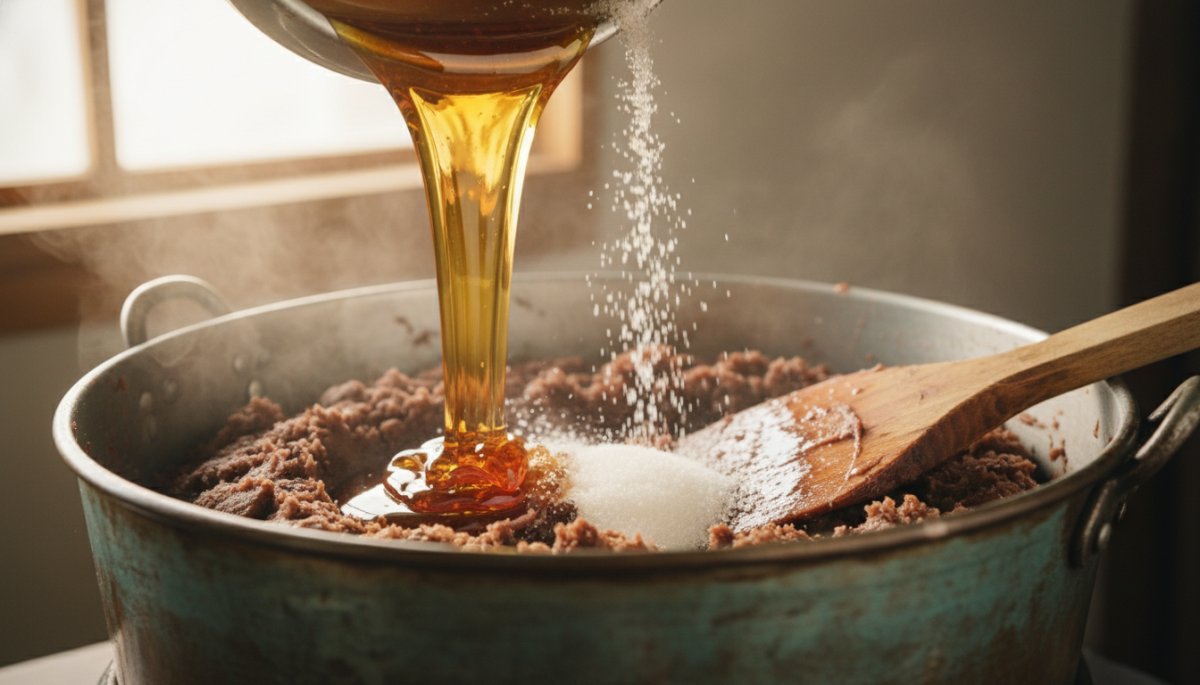
Sugar and starch syrup (mizu-ame) are important ingredients for adjusting the sweetness and texture of the an.
Types and Roles of Sugar
Jouhakuto is a common sugar characterized by a mellow sweetness. Granulated sugar has high purity and gives a crisp, clean sweetness.
Add the sugar after the adzuki beans have been simmered completely soft. Simmering the beans completely soft before adding sugar is the key to a delicious tsubu-an (chunky bean paste).
水あめと還元水あめの使いどころ
水あめは、あんにしっとりとした食感を与えます。還元水あめは、粒感を残しながら粒餡をやわらかく保つ目的で使われることがあります。
Points to Note for Failure-Free Kintsuba Making
Let us learn about the common failures in making kintsuba and how to counter them.
The An Does Not Set
寒天の量が不足していたり、煮溶かしが不十分だと、あんが固まりません。粉寒天はしっかり煮溶かし、粒が残っていないか確認しましょう。
Also, if there is too much water, it becomes harder to set. It is important to follow the blending ratio.
The Coating Becomes Too Thick
If the coating batter is too thick, it becomes overly thick and spoils the flavor of the an. The point is to make the batter thin and apply it thinly one side at a time.
When grilling, watch carefully over low heat and take care not to burn it. Grilling over high heat burns only the surface without cooking through to the inside.
The Adzuki Beans Fall Apart
It is important to raise the temperature gradually so the adzuki beans do not tumble about. Simmering slowly over low heat finishes them soft while keeping the grains intact.
When kneading, too, be careful not to over-mix; keep it to occasionally stirring gently with a spatula so the bottom does not scorch.
Summary: The Keys to Making Kintsuba Are Ingredient Selection and Blending
きんつば作りは、工程がシンプルなぶん、原料の質と配合比率が仕上がりにそのまま出ます。北海道産の上質な小豆、適切な砂糖と寒天の配合、そして薄く焼き上げる衣のバランスが、美味しいきんつばを生み出します。
小豆の下処理をしっかり行い、寒天を完全に煮溶かし、弱火でじっくり焼くことが成功の秘訣です。粒餡をやわらかく保ちたい場合は、還元水あめを使う方法もあります。
美濃与では、和菓子作りに必要な高品質な原料を幅広く取り揃えています。晒餡や寒天、あんの原料になる豆など、きんつばに使う原料を扱っています。
See Minoyo's Product List Here
📦 Related Minoyo Products
Please feel free to consult us about commercial procurement and sample requests
美濃与は京都に拠点を置く京菓子原材料の専門商社です。本記事で取り上げた原料の業務用調達や、お試しサンプル、ロット・規格のご相談など、和菓子製造の現場に寄り添った提案を行っています。
For Minoyo's business and strengths, please see Our Business & Why We Are Chosen . For the actual flow of doing business, see Ordering Process & How to Order; for questions, we have compiled them at Frequently Asked Questions . For individual consultations, please use Contact or material download to get in touch.