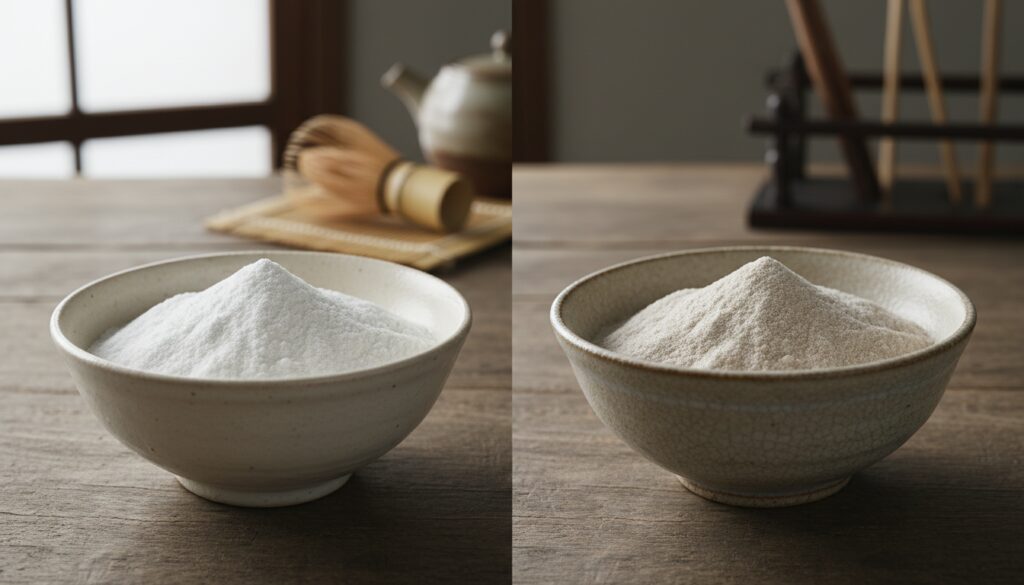
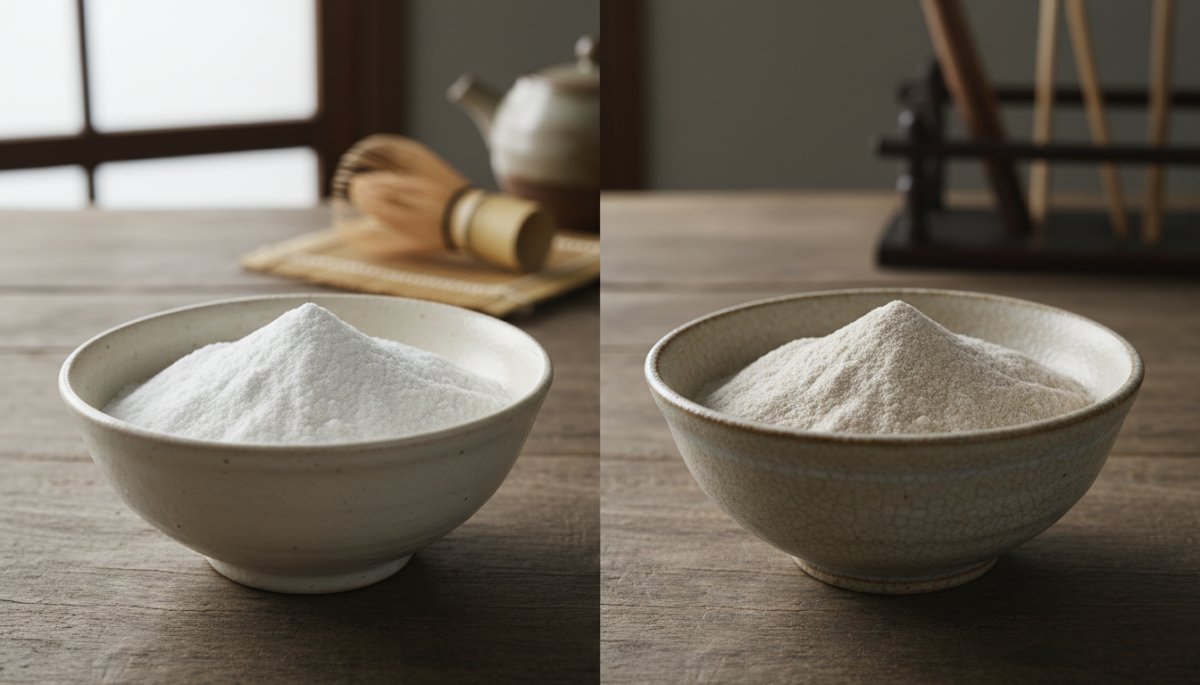
Do You Know the Difference Between Hon-kuzu and Hon-warabiko?
Hon-kuzu (kudzu starch) and hon-warabiko (bracken starch) are indispensable to making wagashi. Both are known for a beautiful, translucent finish, but their raw materials and textures are entirely different.
葛餅とわらび餅、どちらも夏の涼菓として人気ですが、使う粉によって味わいが大きく変わります。本葛は葛の根から、本蕨粉はわらびの根から採取される貴重な澱粉です。
この記事では、和菓子原料を専門に扱う美濃与の知見をもとに、本葛と本蕨粉の違いを原料・食感・用途・価格の観点から比べます。
The Difference in Raw Materials Between Hon-kuzu and Hon-warabiko
Both hon-kuzu and hon-warabiko are starches extracted from plant roots, but the plants they come from are entirely different.
The Raw Material of Hon-kuzu: Kudzu Root
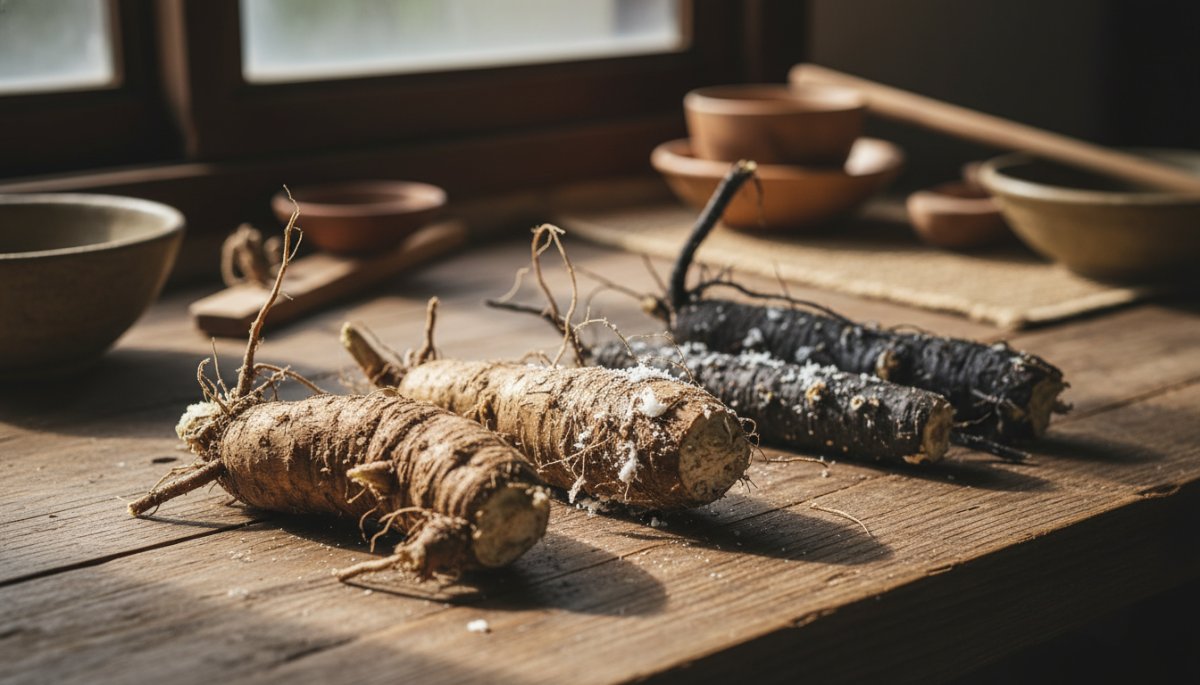
本葛は、植物の葛の根から精製した澱粉です。葛は古くから日本に自生する植物で、『万葉集』では秋の七草のひとつとして詠まれています。
冬の厳寒期に山中で手作業で掘り起こした葛の根を収穫し、洗って砕いて何度も水にさらして抽出した成分を、数ヶ月かけて自然乾燥させて作られます。冷水に晒して精製する方法は「吉野晒」と呼ばれます。
葛根から採れる澱粉はごくわずかです。そのため、国産の本葛粉は非常に高価で希少価値が高い食材です。
The Raw Material of Hon-warabiko: Bracken Root
Hon-warabiko is a starch refined from the root of the bracken fern (warabi). The bracken roots are harvested by digging them up by hand in the mountains during the coldest part of winter.
洗って砕いて何度も水にさらして抽出した成分を、数ヶ月かけて自然乾燥させて出来上がる自然の恵みです。
蕨の根から取れる蕨粉もごくわずかで、大変貴重な食材です。手間暇がかかり、冬の厳寒期に多くの工程をこなして作られるため、本蕨粉100%の製品は高価です。
Differences in Texture and Flavor
Hon-kuzu and hon-warabiko differ distinctly in the texture and flavor of the finished product. Understanding the characteristics of each broadens the range of your wagashi making.
The Texture of Hon-kuzu: Smooth and Refined
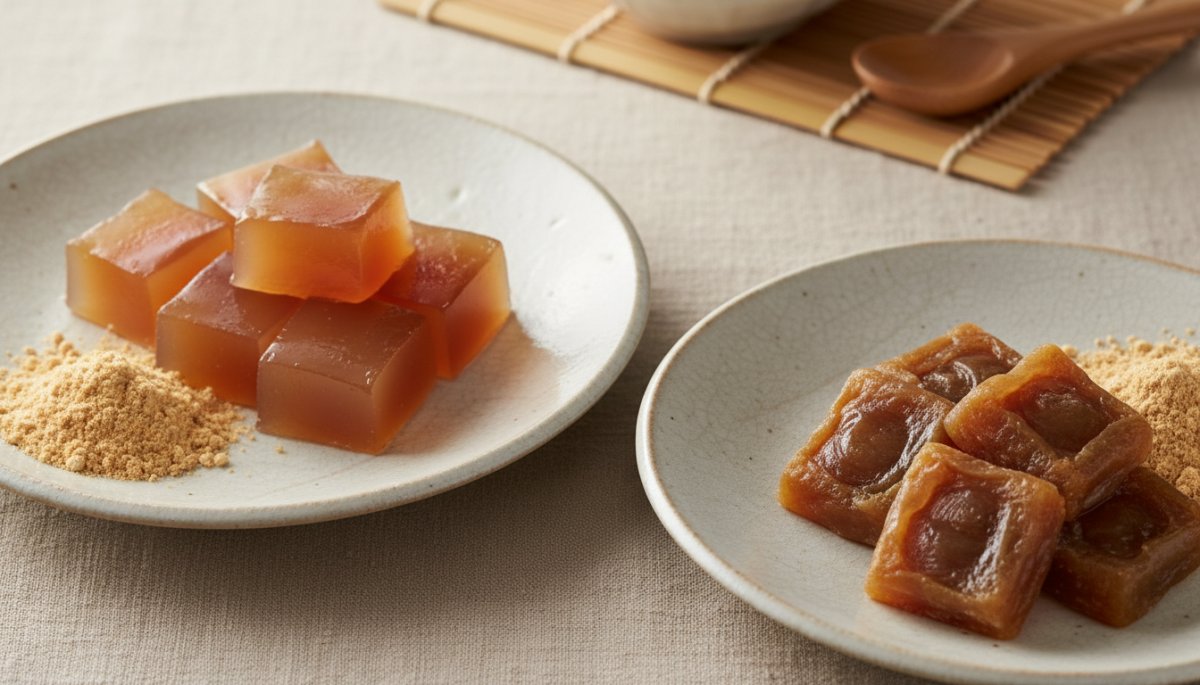
Kuzu mochi made with hon-kuzu powder is characterized by a fresh, glossy, smooth mouthfeel. It offers a light texture with a firmness felt within its softness.
Its appeal lies in a beautiful, translucent finish and a smooth, refined texture. It has a pleasant quality of melting cleanly in the mouth, making it ideal as a cooling summer sweet.
The Texture of Hon-warabiko: Chewy and Elastic
Warabi mochi made with hon-warabiko has a chewy elasticity and firm resilience. The more generously warabiko is used, the more it melts away cleanly in the mouth when eaten, leaving a pleasant lingering aftertaste.
本蕨粉100%で作ると、独特の透明感と弾力のある食感が生まれます。
本蕨粉を使用すると、仕上がりが黒っぽい褐色になるのも特徴の一つです。
本葛と本蕨粉はどの菓子に使う?
和菓子の種類や求める食感によって、合う粉を選びましょう。
Main Uses of Hon-kuzu
本葛は、葛餅、葛きり、葛饅頭、葛羊羹など、透明感と上品な食感を活かした和菓子に使用されます。
At Minoyo, we carry hon-kuzu,Zuiichi Hon-kuzu、富多川葛など、複数の葛粉を取り揃えています。
さらに、「葛菓子の友」「新葛もちの友」「葛ようかんの友」など、和菓子製造を簡便化するオリジナル商品も提供しています。これらは水と砂糖を加えて加熱すれば生地ができるミックス粉です。
Main Uses of Hon-warabiko
本蕨粉は、わらび餅、わらび饅頭など、もっちりとした弾力を活かした和菓子に使用されます。
美濃与では、本蕨粉、別口蕨粉を取り扱っており、用途に応じて選ぶことができます。
また、「蕨菓子の友」「京・蕨水菓」など、わらび餅作りを簡便化するオリジナル商品も展開しています。これらを使用することで、安定した品質のわらび餅を効率的に製造できます。
Differences in Price and Availability
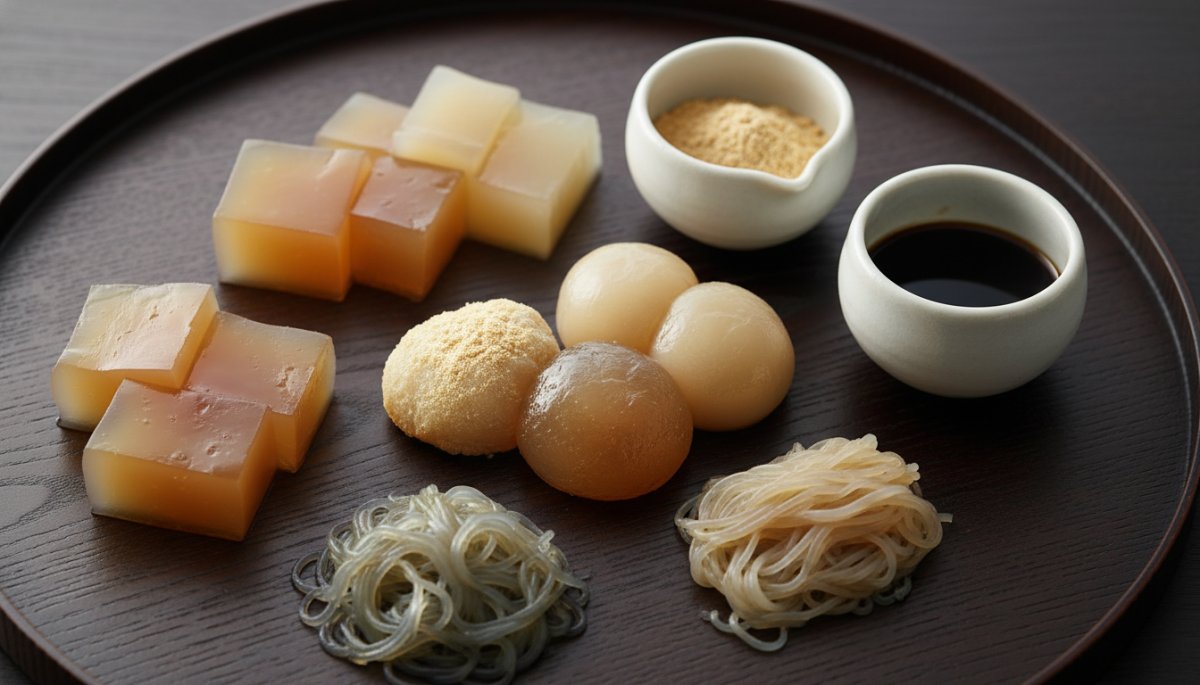
Both hon-kuzu and hon-warabiko are rare and expensive ingredients, but they differ in availability and price range.
The Price and Availability of Hon-kuzu
Domestically produced hon-kuzu powder is extremely expensive, because the kudzu harvest itself is small and refining the powder requires considerable effort. For this reason, foreign-made hon-kuzu powder and substitutes made from potato or corn starch are widely distributed.
吉野本葛は、葛澱粉100%のものを指し、他の澱粉が混ざっているものと区別するために「吉野本葛」という名前が付けられました。
The Price and Availability of Hon-warabiko
本蕨粉も本葛粉と同様に、精製に手間ひまがかかり高価な食材です。本蕨粉100%の製品は流通量が少なく、希少価値が高くなっています。
Generally, warabi mochi made with substitute starches from potato, lotus root, cassava, or sweet potato has become the mainstream. This is due to the rarity and high price of hon-warabiko.
美濃与では、本蕨粉を10kg規格で取り扱っています。
本葛・本蕨粉はどう選ぶ?
本葛と本蕨粉を選ぶ際には、用途や求める品質、予算に応じて選びます。
For Premium Wagashi, Use the Genuine Article
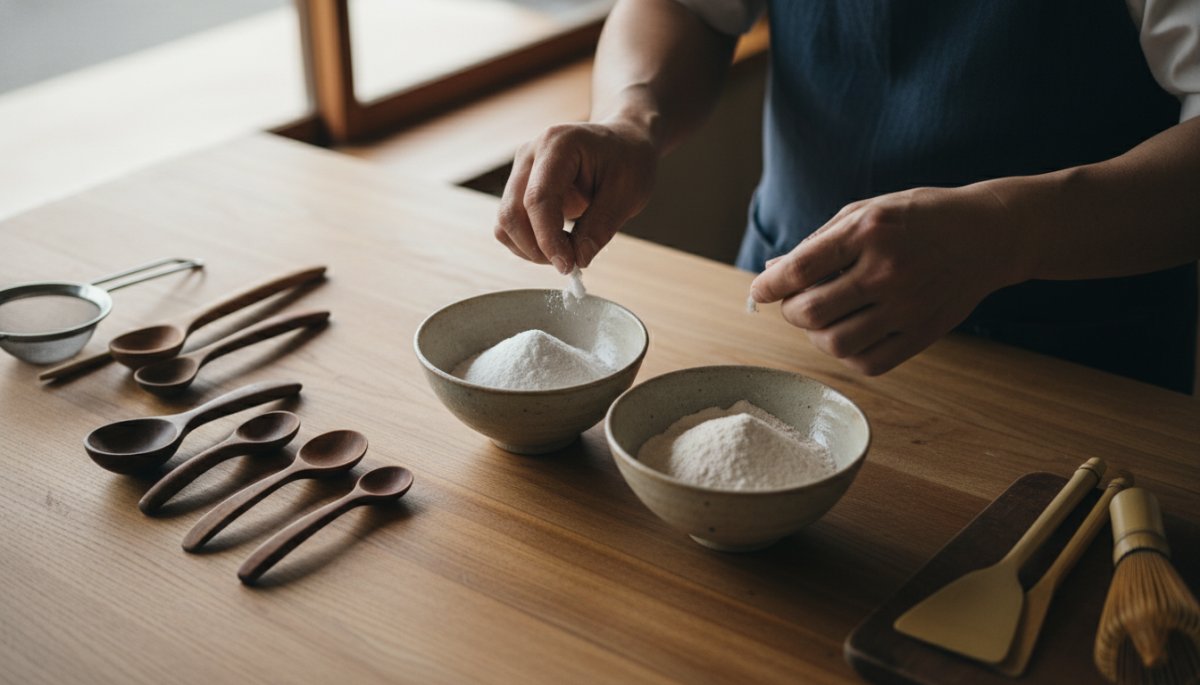
高級和菓子店や特別な贈答用の和菓子には、本葛100%、本蕨粉100%の製品を使用することをおすすめします。透明感、食感、風味のすべてにおいて、代用品とは明確な差が生まれます。
For Everyday Use, Choose the "Tomo" Series
For everyday wagashi making or when work efficiency is a priority, Minoyo's original "Tomo" Series is convenient. Products such as "Kuzu-gashi no Tomo" and "Warabi-gashi no Tomo" combine ease of use with quality.
これらの製品は、和菓子製造を簡便化し、安定した品質を実現するために開発されました。
Check the Quality Labeling
When purchasing hon-kuzu or hon-warabiko, always check the quality labeling. Products clearly marked "100% hon-kuzu powder" or "100% hon-warabiko" are the genuine article.
When a product is labeled only as "kuzu powder" or "warabi powder," it may contain other starches. It is important to check the list of ingredients and confirm that no components other than kudzu starch or bracken starch are included.
Conclusion: Broaden Your Wagashi Range by Using Hon-kuzu and Hon-warabiko Selectively
Hon-kuzu and hon-warabiko are both rare and expensive wagashi ingredients, but they differ clearly in raw material, texture, and use.
Hon-kuzu is extracted from kudzu root and is characterized by a smooth, refined texture. It is ideal for wagashi that make the most of translucency, such as kuzu mochi, kuzukiri, and kuzu manju. Hon-warabiko, on the other hand, is extracted from bracken root and is characterized by a chewy elasticity and firm resilience. It is indispensable to wagashi that offer a distinctive texture, such as warabi mochi and warabi manju.
用途や求める品質に応じて、本葛100%、本蕨粉100%の製品を選ぶか、使いやすい「友」シリーズを選ぶかを判断しましょう。品質表示を確認し、本物の本葛・本蕨粉かどうかを見極めてください。
美濃与では、本葛、随一本葛、本蕨粉、別口蕨粉など、品質の異なる澱粉を幅広く取り揃えています。さらに、和菓子製造を簡便化する「友」シリーズも展開しています。
📦 Related Minoyo Products
Please feel free to consult us about commercial procurement and sample requests
美濃与は京都に拠点を置く京菓子原材料の専門商社です。本記事で取り上げた原料を取り扱っています。サンプルのご請求も承っています。
For Minoyo's business and strengths, please see Our Business & Why We Are Chosen . For the actual flow of doing business, see Ordering Process & How to Order; for questions, we have compiled them at Frequently Asked Questions . For individual consultations, please use Contact or material download to get in touch.


