In the wagashi industry, Tamba Dainagon adzuki beans are also called the "red diamond" and receive exceptional treatment. In an age when consumers' palates have become discerning and demand for the genuine article is rising, the "rank of adzuki beans" used is a crucial factor that determines the final product's price positioning and brand image. Minoyo Co., Ltd., which has been involved in grain processing for a long 120 years since its founding, thoroughly explains the true value, processing characteristics, and applications for high-value-added products of Tamba Dainagon adzuki beans from the perspective of a raw-material supplier. Please use this as a hint for developing your company's flagship products.
Tamba Dainagon adzuki beans as a raw material | Why they are the "highest grade"
When selecting adzuki beans as a confectionery material, Tamba Dainagon adzuki beans are often compared with Hokkaido adzuki beans. However, their characteristics differ greatly. Here we unravel the raw-material characteristics that explain why this variety has been established as a brand.
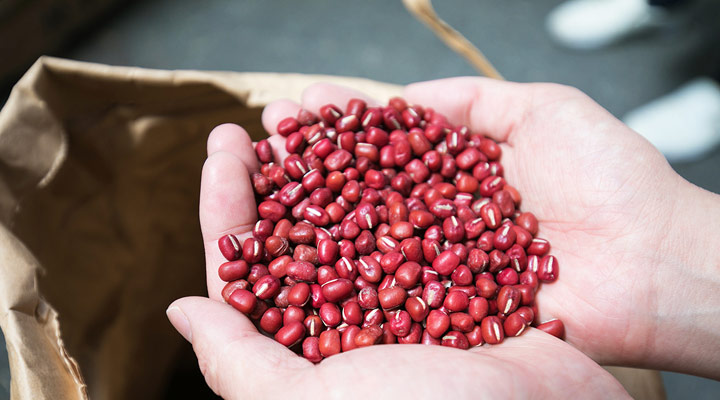
Overwhelming "grain size" and "resistance to breaking down when boiled"
The greatest feature of Tamba Dainagon adzuki beans is their large, beautiful appearance. Compared with ordinary adzuki beans, the grains are large and shaped like straw rice bales. Especially noteworthy is the characteristic that, despite their thin skin, they are resistant to breaking down when boiled (they do not split at the belly). This carries very important meaning in the an-making process. For products where the grain's shape is retained—such as tsubu-an, kanoko, amanatto, and zenzai—the beans keeping their beautiful shape directly translates into the beauty and value of the product. In terms of good yield as well, this is a major benefit for the processing floor.
A balance of deep flavor and refined sweetness
In terms of flavor as well, they stand apart from other adzuki beans. Because the skin is thin, they have a pleasant mouthfeel, and are characterized by a rich flavor that spreads the more you chew, and a refined sweetness with little astringency. They pair superbly with sugar; even when sugar is allowed to permeate, the beans' inherent flavor is not overwhelmed but rather is brought out. This "strength of flavor" is precisely why they are bought by name by many customers, starting with high-end wagashi shops.
The brand value created by scarcity
The domestic supply of Tamba Dainagon adzuki beans is said to account for only about 1% of all adzuki beans. Their rarity alone makes them a powerful hook for consumers when simply noted as "made with Tamba Dainagon adzuki beans" on product packaging or POP displays. Far more than just another ingredient, they are a "brand ingredient" that raises the very prestige of a product—and that is their greatest strength.
Origin and Cultivation Background | A Story That Justifies the Price
Behind the finest adzuki beans lies the distinctive terroir of the Tamba region. For purchasing managers, understanding this regional background is key to ensuring traceability and conveying a compelling story to consumers.
"Tamba Fog": The Distinctive Climate of the Tamba Region
The main cultivation areas—Tamba City in Hyogo Prefecture and the Tamba region of Kyoto Prefecture—have the sharp day-to-night temperature swings characteristic of a basin climate. This temperature difference causes the beans to store sugars and concentrate their flavor. In addition, the deep fog that rolls in from autumn through winter (the "Tamba fog") gives the soil and crops the right amount of moisture, allowing the adzuki beans to mature slowly. This environment contributes to a unique flavor profile that cannot be reproduced in other growing regions such as Hokkaido or Okinawa.
The Labor and Growing Techniques Behind the Beans
One reason Tamba Dainagon adzuki beans command a high price is the difficulty of cultivation. As a late-maturing variety, they have a long growing period, which also means a longer window of exposure to the risks of typhoons and frost. The variety is also difficult to mechanize, so much of the harvest still depends on manual labor. Growers put in painstaking effort—building ridges to improve soil drainage, setting up supports, and more. The pods split easily, so judging the right moment to harvest requires seasoned skill. Communicating this grower effort and rarity to consumers as the "story of the product" helps build acceptance for a higher-priced item.
The History Behind the Name "Dainagon" and Its Branding Value
Tamba Dainagon adzuki beans carry a fascinating history behind their name—another episode that can be used to enhance a product's added value.
The "Dainagon" Who Escaped Seppuku Even After Drawing a Sword in the Palace
There are several theories about the origin of the name, but the most famous likens it to the Edo-period court rank of "Dainagon." A Dainagon held the privilege of being spared from seppuku (ritual suicide) even if he drew his sword within the palace. Because these adzuki beans do not split their skins even when simmered (i.e., their "bellies" do not split), they are said to have been named the "adzuki that does not commit seppuku"—the Dainagon adzuki. Long prized as an offering to the shogunate and imperial court, they have supported traditional Kyoto confectionery culture, centered on Kyoto's long-established wagashi shops. This "historical prestige" makes for an extremely powerful branding element in gift confections and celebratory products.
Nutritional Value and Functionality That Meet Modern Needs
With the recent rise in health consciousness, adzuki beans are drawing attention not merely as a sweetening ingredient but as a functional food. Highlighting the nutritional value of Tamba Dainagon adzuki beans makes it possible to capture health-oriented consumers.
Rich in Polyphenols and Dietary Fiber
The vivid red color of Tamba Dainagon adzuki beans comes from anthocyanins, a type of polyphenol. These have strong antioxidant properties and are expected to support aging care and the prevention of lifestyle-related conditions. The beans also contain abundant dietary fiber (both insoluble and soluble), which can help regulate digestion and moderate spikes in blood sugar. Because Tamba Dainagon beans are especially large, each bean offers a high sense of satisfaction, making them ideal for snacks during a diet or as an ingredient in guilt-free sweets.
B Vitamins and Minerals
The beans contain a well-balanced supply of nutrients that modern diets often lack—vitamin B1, which supports energy metabolism; potassium, which helps relieve swelling; and iron, which helps prevent anemia. Highlighting these nutritional benefits on product labels or POP displays makes it possible to appeal to health-conscious consumers, particularly women.
Practical Applications and Processing Suitability from the Field
By their nature, Tamba Dainagon adzuki beans are better suited to some uses than others. Here we explain how to draw out the ingredient's full potential, along with modern variations.
Using the "Whole Bean" in Traditional Wagashi
The classic approach is, of course, one that makes the most of the beans' intact shape.
- Tsubu-an (Chunky Sweet Bean Paste): Because the skins are tender, they don't linger in the mouth, giving a smooth texture. As the filling for monaka or dorayaki, they make an overwhelming impression.
- Kanoko and Amanatto: Because the beans resist breaking down when simmered, a beautiful finish is guaranteed.
- Zenzai (Sweet Red Bean Soup): The beans hold their shape in the broth and retain a plump, tender texture, making them ideal for the menus of high-end restaurants and traditional sweet shops.
Modern Recipe Variations and Applications in Western Confectionery
In recent years, adoption in fusion sweets and bakeries has been on the rise.
- Matcha Terrine and Pound Cake: The large red beans visible in the cross-section provide a striking visual accent.
- Sekihan (Festive Red Rice): Using them in celebratory sekihan gives a plump, luxurious texture different from the usual (such as sasage cowpeas).
- Paste Processing: By pureeing the beans smoothly with their skins, they can be folded into creams and ice cream. The distinctive flavor of Tamba Dainagon holds its own against the richness of dairy.
Storage and Handling Tips from the Professionals
Precisely because it is a high-quality raw material, proper storage management is essential. Adzuki beans dislike humidity and high temperatures. After purchase, storing them in a temperature-controlled warehouse (below 15°C) is ideal; on-site, keep them in an airtight container in a cool, dark place. Particular care is needed from the rainy season through summer, when the risk of quality deterioration and pest damage rises. At Minoyo, we store our raw materials under thorough temperature control, delivering adzuki beans of consistent quality throughout the year.

Minoyo's Strengths in Raw Material Procurement
Securing high-quality Tamba Dainagon adzuki beans on a stable basis is no easy task. It is essential to choose a reliable supplier with both a network in the growing region and sorting expertise.
A Strong Network with the Growing Region and Sorting Technology
Minoyo Co., Ltd. has built relationships of trust with growers and collectors in the Tamba region over many years. Even in years of poor harvests due to unseasonable weather, we maintain a system for securing high-quality raw materials through our own channels. The unsorted whole grain we receive is processed into finished products under strict standards, passing through gravity sorting, color sorting, and polishing steps. Delivering glossy, uniform beans while minimizing the risk of foreign matter is a point of pride befitting professionals in grain processing.
From Small Lots to Large Orders
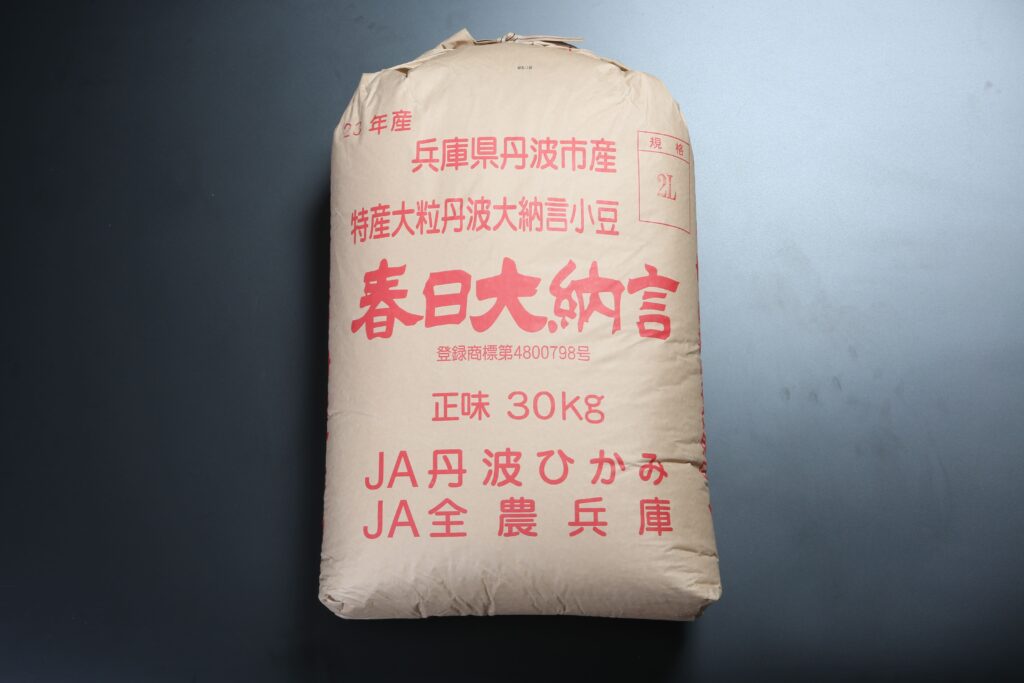
We can supply quantities tailored to the scale of each customer, from independently owned wagashi shops to major food manufacturers. In addition to 30kg paper-bag delivery, we flexibly accommodate the needs of production sites with easy-to-use subdivided packs (from 1kg) and flexible container (FIBC) options for high-volume use.
Conclusion: Building Products That Get Chosen with the Finest Ingredients
Adopting Tamba Dainagon adzuki beans is not simply about raising costs. It is an investment that gives a product a "story worth telling" and "overwhelming quality," clearly differentiating it from the competition.
- Large, beautiful appearance and processing suitability that resists breaking down when simmered
- Brand power backed by history and tradition
- Nutritional value that meets health-conscious demand
Combining all of these, Tamba Dainagon adzuki beans are sure to raise the value of your products by one or even two levels.
At Minoyo Co., Ltd., we handle the finest Tamba Dainagon adzuki beans as well as a wide range of grains and confectionery raw materials. If you are thinking, "I want to develop a new wagashi," "I'm not satisfied with the quality of my current ingredients," or "I'm looking for a supplier that can deliver a stable supply," please feel free to contact us. With the knowledge and experience we have cultivated since our founding, we will support your business.
[View details on Tamba Dainagon adzuki beans here]
[For quotes, sample requests, and inquiries, click here]
Please feel free to consult us about commercial procurement and sample requests
Minoyo is a specialty store for Kyoto confectionery raw materials based in Kyoto. For the raw materials covered in this article, we offer proposals close to the realities of wagashi production, including commercial procurement, trial samples, and consultation on lots and specifications.
For Minoyo's business and strengths, please see Our Business & Why We Are Chosen . For the actual flow of doing business, see Ordering Process & How to Order; for questions, we have compiled them at Frequently Asked Questions . For individual consultations, please use Contact or material download to get in touch.