5月の端午の節句に欠かせない和菓子「柏餅」。その象徴とも言える柏の葉について、一般のお客様から「この葉っぱは食べられるの?」と聞かれる場面は、柏餅の時期に繰り返し起こります。
This article comprehensively explains everything from the basics—whether the kashiwa-mochi leaf is edible, its historical background, and the characteristics of different varieties—to the storage and management know-how professionals should know, and the procurement points that improve work efficiency. We hope it will help with customer service during busy seasons and with creating higher-quality products.
Minoyo Co., Ltd., which has handled confectionery raw materials for many years, delivers this from a specialist's perspective.
Can You Eat the Kashiwa-mochi Leaf? The Right Way to Respond to Customers
When a customer at the counter asks, "Can I eat it leaf and all?", how should you appropriately respond? In fact, the answer changes depending on the type of leaf used and the processing method.
Whether or Not to Eat the Kashiwa-mochi Leaf
To state the conclusion first, generally speaking,the kashiwa-mochi leaf (oak leaf) is not intended to be eaten. Unlike the sakura-mochi leaf (salt-pickled Oshima cherry), the oak leaf has tough fibers and a stringy texture, so eating it together with the mochi often spoils the texture.
However, this does not mean it "must not be eaten (that it is poisonous)." On the contrary, the leaf contains components such as polyphenols, and its distinctive aroma stimulates the appetite. In some regions or households, or when a specifically softened, processed leaf is used, it is sometimes eaten together to enjoy the aroma.
Example of how to guide customers: 「香り付けと乾燥防止のために巻いておりますので、外してお召し上がりください」。
Points and Manners When Eating It
もしお客様が「食べてみたい」とおっしゃる場合は、以下の点をお伝えすると良いでしょう。
- Leaf veins (strings): Removing the hard main vein gives a better mouthfeel.
- Salt content: In the case of the salt-pickled type, it contains salt, so it is meant to be enjoyed as a balance against the sweetness of the mochi.
As makers, considering that customers may eat the leaf, using safe leaves that have passed residual pesticide testing is essential to protecting the brand of trust.
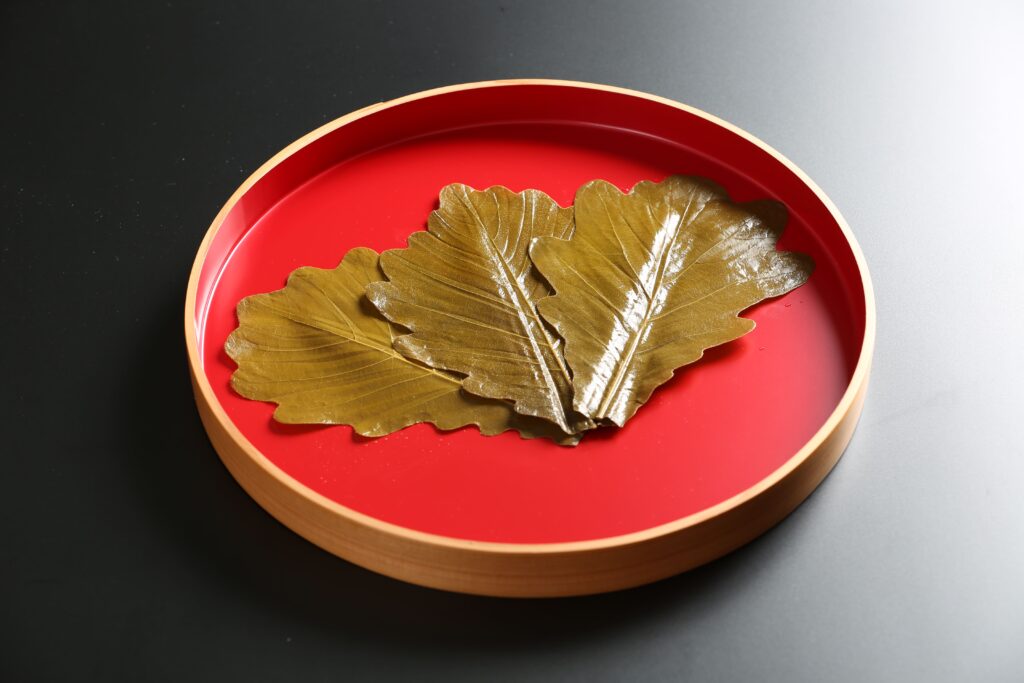
柏餅に使う葉はカシワとサルトリイバラの2種類
柏餅に使われる葉には、大きく分けて「カシワの葉」と「サルトリイバラの葉」の2種類が存在します。地域性や作りたい商品に合わせて選びます。
Characteristics of the Oak Leaf
Mainstream mainly in eastern Japan is the oak leaf, a member of the beech family (Fagaceae).
- Features: Large and thick, with a distinctive frilled edge.
- Advantages:
- Aroma: It has a distinctive rich "oak fragrance," and the scent that transfers to the mochi is strong.
- Preservation: 葉で包むことで餅の表面の乾燥をやわらげる。
- Workability: Because the leaf is large and sturdy, it is easy to wrap and the shape is less likely to break down.
- Use: It is ideal for kashiwa-mochi made with ordinary white mochi or kusa-mochi (mugwort mochi).
Characteristics of the Greenbrier Leaf
西日本の一部の地域では、サルトリイバラ(サンキライ)の葉で包む柏餅があり、「いばら餅」などと呼ばれることもあります。
- Features: It has a round heart shape, is smaller than the oak leaf, and has a smooth surface.
- Advantages:
- Appearance: It is glossy, with a cute shape that adds nice color.
- Points to Note: Because the leaf is smaller than the oak leaf, it is not suited to wrapping large mochi.
Regional Differences in Leaves and Product Development
カシワの葉と、西日本の一部で使われるサルトリイバラの葉。かつては地域によって分かれていましたが、現在は物流の発達により、全国どちらの葉も手に入りやすくなっています。 あえて自社の地域とは異なる葉を使った商品を「期間限定」や「地域めぐり」として販売することで、お客様に新しい発見を提供し、会話のきっかけを作ることも可能です。詳細な地域ごとの嗜好性を理解しておくことは、商品開発の幅を広げます。
The Meaning of Wrapping Kashiwa-mochi in a Leaf|Functionality and Storytelling
Why is kashiwa-mochi wrapped in a leaf? Deeply understanding the reasons becomes a "story you can tell" that enhances the added value of the product.
Adding Fragrance and Enhancing Flavor
The biggest reason is, of course, the "transferred aroma." By wrapping freshly steamed mochi in a leaf, the aromatic components contained in the leaf (such as phytoncides) transfer to the mochi, creating a distinctive, refreshingly cool flavor. This aroma also plays the role of bringing out the sweetness of the an (sweet bean paste) and cutting any cloying heaviness. Especially when using a carefully crafted an, the role of a quality leaf is to elevate that flavor more elegantly without interfering with it.
乾燥を防ぐ包みとしての役割
冷蔵技術がなかった時代、柏の葉は天然の包装材でした。葉で包むことで、餅の表面が乾いて硬くなるのをやわらげる働きがあります。
Meaning as an Auspicious Symbol
The oak tree has the characteristic that its old leaves do not fall until new buds have grown. Because of this, it has been prized in samurai society as a symbol of "an unbroken family line" and "prosperity of descendants." This auspicious story becomes a very powerful selling point for the gift demand of the Boys' Festival. By selling it with the message "wishing for your child's healthy growth," you can elevate its value from a mere snack to a special-day gift.
For B2B: Recipes and Efficiency Improvements for Making Kashiwa-mochi
Here, we review the basic processes and points for efficient, delicious kashiwa-mochi, assuming production at a shop.
Basic Kashiwa-mochi Recipe (Commercial Perspective)
- Making the dough: Mix joshin-ko (rice flour) with water and steam, then pound it thoroughly to develop chewiness (koshi). Whether or not to use an enzyme agent (softening agent) is adjusted according to the sales period and storage method.
- Wrapping the an: Wrap the an. Whether machine-wrapped or hand-wrapped, take care to keep the dough an even thickness.
- Preparing the leaf: 乾燥葉の場合は戻し率や加熱時間を一定にし、品質のバラつきを防ぎます。
- Finishing: Whether to steam twice or to wrap the leaf around the steamed mochi depends on the method, but to prevent the leaf from discoloring, "post-wrapping"—wrapping after steaming—is common.
Differences in the Color of Kashiwa-mochi Leaves|Using Brown and Green Appropriately
Kashiwa-mochi leaves come in two types: "brown (dead-leaf color)" and "green." Understanding these differences and using them appropriately broadens the scope of your products.
The Meaning Behind the Color Difference
- Brown leaf: The image of old-fashioned kashiwa-mochi. Many are heat-treated (boiled or steamed), and the subdued color conveys a sense of tradition. Generally, this type is said to have a stronger "oak fragrance."
- Green leaf: The image of fresh young leaves. Its vivid appearance adds spring-like color. Types that have been color-fixed by vacuum packing and the like are in circulation.
Flavor Changes by Color and Product Composition
味に大きな違いはありませんが、視覚的な印象は味覚にも影響します。 例えば、こし餡には茶色の葉、味噌餡には緑色の葉、といったように中身によって葉の色を変えることで、お客様が選びやすく、またショーケース内も華やかになります。
How to Purchase Kashiwa-mochi Leaves and Selection Criteria
When procuring oak leaves for commercial use, what criteria should you use to select them? Considering not just cost but also yield and workability leads to reducing total cost.
Selecting a Supplier via Online and Catalog
The points for identifying a reliable supplier are as follows.
- Size range: Whether there is a size range such as S, M, and L to match the size of the mochi.
- Processing state: Whether there is a form suited to your own process, such as dried, salt-pickled, or pre-boiled.
- Quality control: Whether information such as foreign-matter prevention measures and residual pesticide testing is disclosed.
How to Purchase at Physical Stores and Inventory Management
地元の問屋や市場も選択肢ですが、繁忙期には品切れのリスクがあります。オンライン直販を行っている専門メーカーであれば、在庫状況がリアルタイムで把握でき、計画的な発注が可能です。
仕入れた柏葉を使い切るまでの保存方法
大量に仕入れた葉を、シーズン終了まで無駄なく使い切るための保存テクニックをご紹介します。
Storing Dried Leaves
Moisture is the enemy. It not only causes mold but also makes the leaves stick together, reducing workability.
- 開封後の保存条件は規格書に従い、吸湿や異臭移りを避けて保管してください。
- Take out only the amount you will use, and promptly reseal the rest.
Storing Vacuum-Packed and Salt-Pickled Leaves
- Refrigeration and freezing: After opening, store in the refrigerator or freezer. When freezing, wrap the leaves in plastic wrap while pressing out the air so they do not dry out and crack, then place them in a freezer bag.
- Preventing discoloration: Green leaves fade easily due to light (ultraviolet rays). The trick to keeping their vivid color is to block out light, such as by placing them in a bag with high light-blocking properties or storing them inside a cardboard box.
"Rehydration" Techniques to Improve Work Efficiency
When rehydrating dried leaves, rather than simply soaking them in hot water, adding a small amount of baking soda can soften the leaves and bring out a more vivid color (depending on the type). Also, when rehydrating a large quantity, use a large sink or tub so the leaves do not tear, and be careful not to direct too strong a water flow at them. Rehydrating only the amount needed for the next day the day before, draining the water, and letting them rest in the refrigerator overnight allows the moisture to permeate the entire leaf, making the wrapping work go smoothly the following morning.
美濃与で扱っている業務用柏葉
美濃与で扱っている柏葉のうち、2つの商品をご紹介します。
1. 殺菌煮柏(塩漬け茶葉)
殺菌処理をした茶色の柏葉を塩漬けにした商品です。商品名の「茶葉」は葉の色を指し、お茶の葉ではありません。規格は500枚×8Pです。使用前の塩抜きなどの扱いは、ご注文前にお問い合わせください。
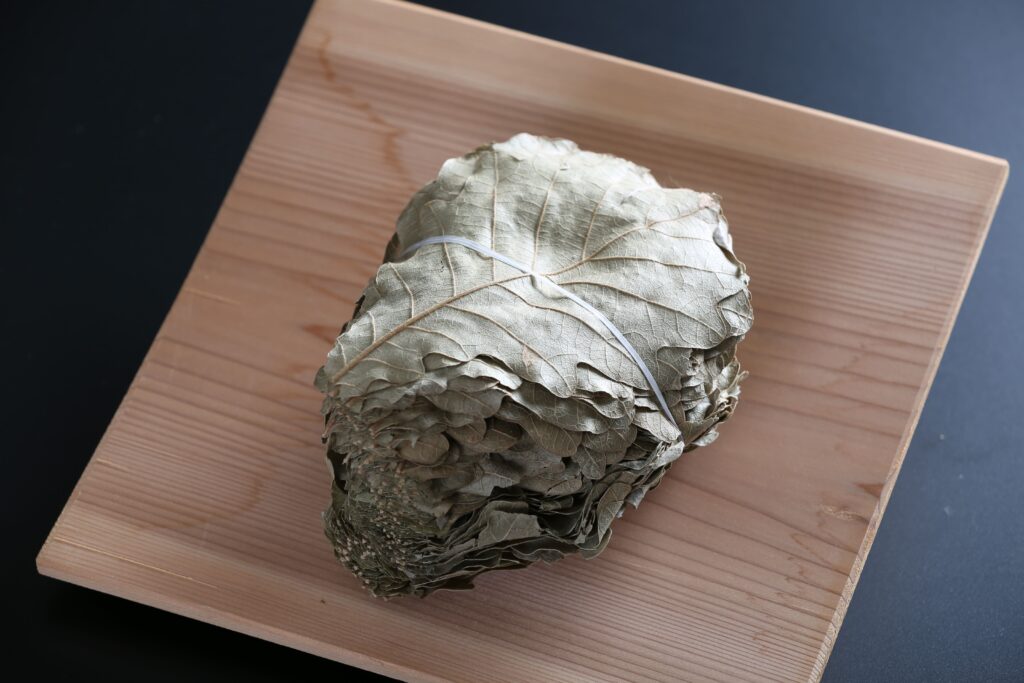
2. 乾燥柏葉
乾燥させた柏葉です。必要な分だけ戻して使えるため、使う量に合わせて在庫を持てます。規格は100枚×40束です。
Learn more here: Oak Leaves (Dried) Product Page
サンプルのご請求を承っています。
Frequently Asked Questions (FAQ) About Kashiwa-mochi Leaves
Finally, we have compiled an FAQ that can also be used for training shop staff.
Q: A customer asked me, "Don't you have domestic leaves?" A: 現在、市場に出回っている柏葉の多くは中国などの輸入品です。国産の柏葉は非常に希少で、入手困難かつ高価です。産地や残留農薬検査の有無は商品によって異なるため、規格書でご確認のうえご説明ください。
Q: There are white spots on the leaf—is it mold? A: カビの可能性があるため、外観に異常がある葉は自己判断で使用せず、ロットと現物の写真を添えて仕入れ先にご確認ください。
Q: The leaves I was storing dried out and became crispy. A: 一度極端に乾燥してしまった葉は、お湯で戻しても割れやすく、元のしなやかさには戻りにくく、包む用途には向きません。保管時の湿度を管理して、乾燥させすぎないようにしてください。
Summary: With a Carefully Chosen Leaf, Make Kashiwa-mochi That Gets Chosen
In kashiwa-mochi, the leaf is not merely "wrapping paper." It is an important "part of the ingredient" that conveys aroma, preservation, appearance, and story.
- Whether or not to eat it: For this question, explain the role of adding fragrance while respecting the customer's preference.
- The type and color of the leaf: Use them appropriately to enhance product variation and visual appeal.
- Proper storage management: Carry it out to use up the leaves in high-quality condition to the very end.
- A reliable manufacturer: Procure work-efficient products from one.
By being mindful of these points, the quality of your shop's kashiwa-mochi will rise even further, and it should become a product that customers choose.
At Minoyo Co., Ltd., we handle a wide range of confectionery materials, including not only oak leaves but also joshin-ko (rice flour) and an (sweet bean paste). Please feel free to contact us about preparations for the May festival, consultations on new product development, and more.
See the list of leaves and other plant materials here
Please feel free to consult us about commercial procurement and sample requests
美濃与は京都に拠点を置く京菓子原材料の専門商社です。本記事で取り上げた原料の業務用調達や、お試しサンプル、ロット・規格のご相談など、和菓子製造の現場に寄り添った提案を行っています。
For Minoyo's business and strengths, please see Our Business & Why We Are Chosen . For the actual flow of doing business, see Ordering Process & How to Order; for questions, we have compiled them at Frequently Asked Questions . For individual consultations, please use Contact or material download to get in touch.


