What Is Shibukawa Chestnut Kanroni? The Difference from Peeled Chestnuts and Its Flavor Characteristics
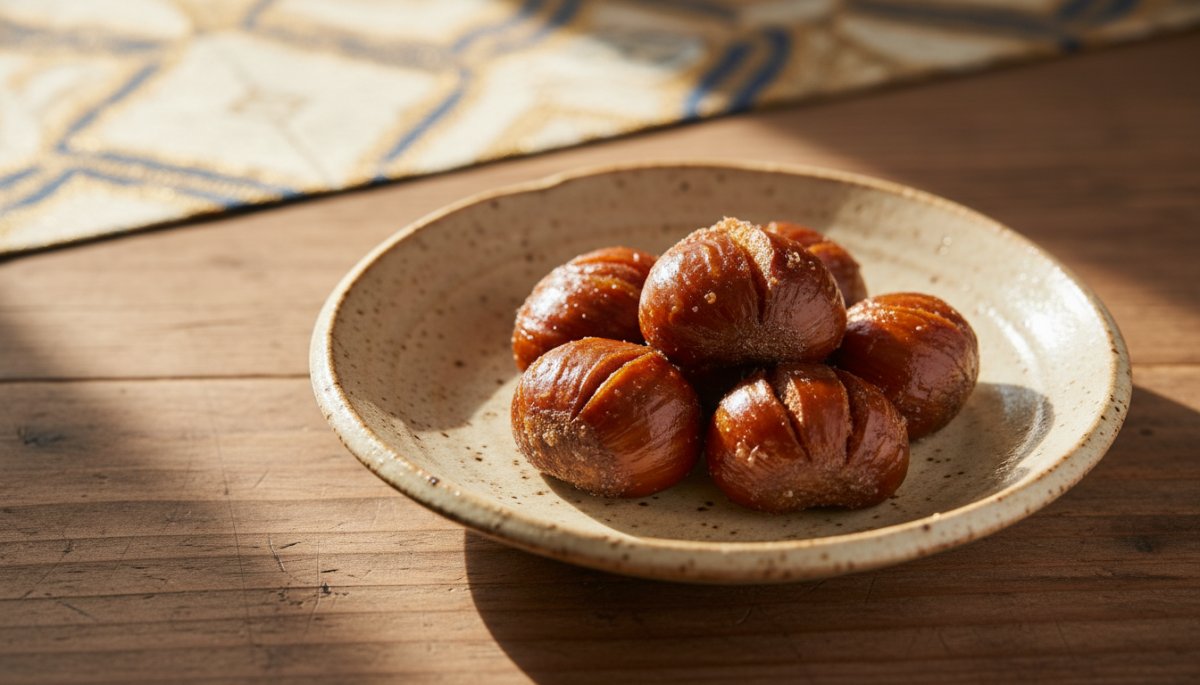
Chestnuts, beloved as a taste of autumn. Among them, shibukawa chestnut kanroni (candied chestnuts with the inner skin) is a luxurious wagashi ingredient that draws out the chestnut's natural flavor to the fullest.
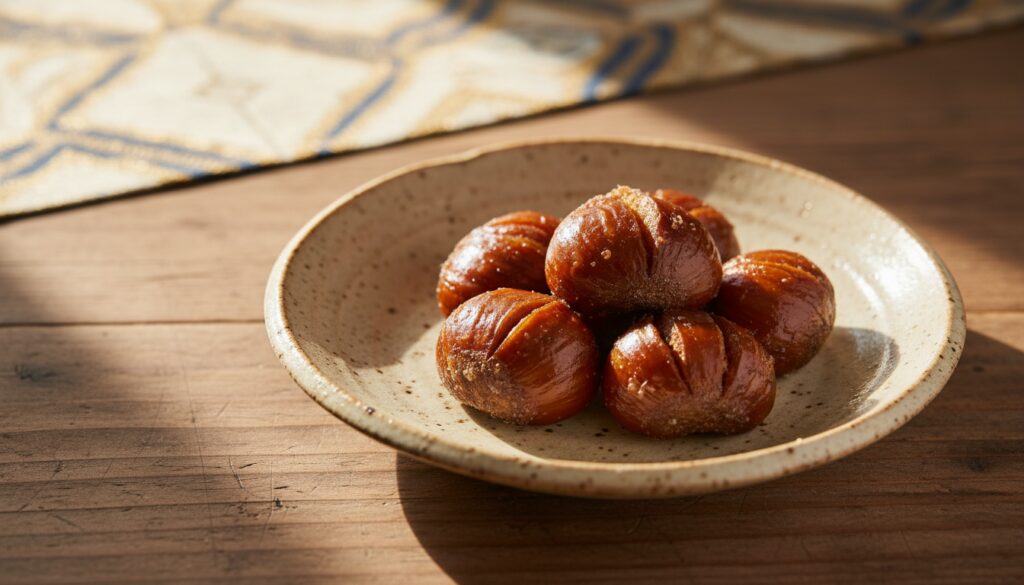
Shibukawa chestnut kanroni is made by removing only the chestnut's outer hull (the hard outer skin) and simmering it in sweet syrup while leaving the shibukawa (the wrinkled brown inner skin) intact. Compared with peeled chestnut kanroni, the addition of the polyphenols and distinctive flavor contained in the shibukawa gives it a characteristic deep, rich flavor.
Because peeled chestnut kanroni is simmered with even the shibukawa completely removed, the chestnut's natural sweetness comes through directly. Shibukawa chestnut kanroni, on the other hand, gains the faint astringency and toastiness of the shibukawa, resulting in a more complex, deeper flavor.
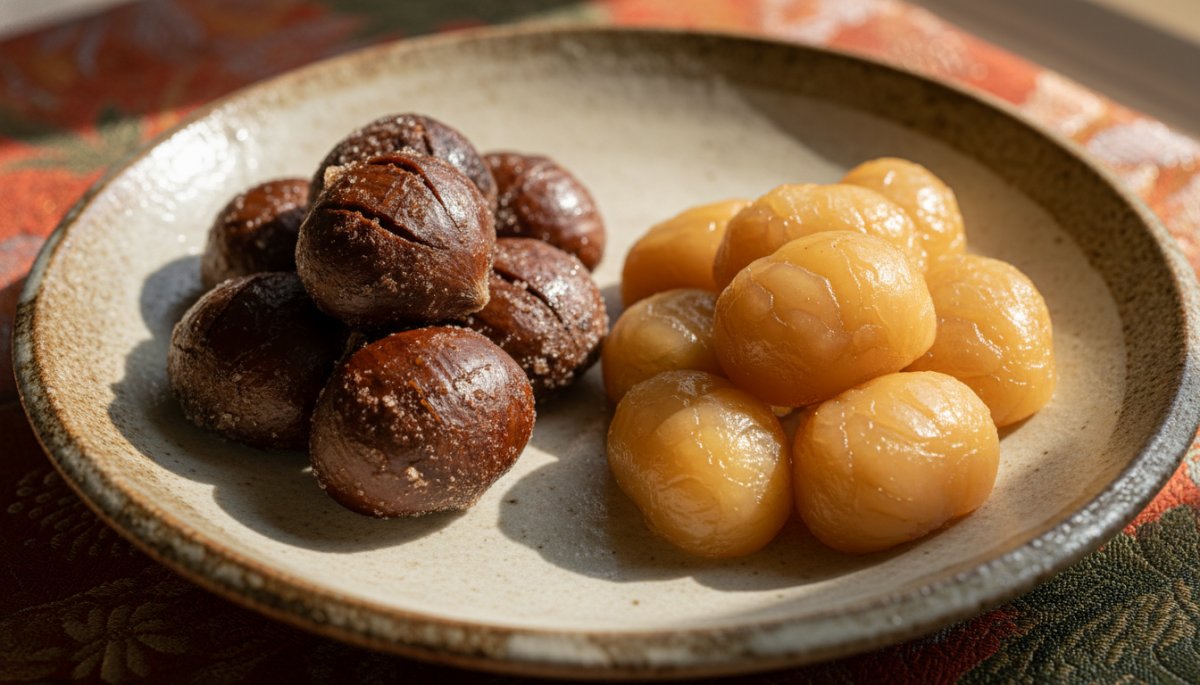
渋皮栗甘露煮は、渋皮の風味をそのまま菓子に持ち込める素材です。渋皮の風味が餡や生地となじみ、甘さだけではない味わいになります。
How to Choose Commercial Shibukawa Chestnut Kanroni and Judge Its Quality
When choosing commercial shibukawa chestnut kanroni for wagashi production, there are several important points.
Criteria for Selecting Format and Size
美濃与では渋皮栗甘露煮を「9L・1/06」の規格で扱っています。この表記が示す内容と荷姿は、商品ページと規格書でご確認ください。
栗のサイズも選定基準のひとつです。粒の大きさは、完成品で見せたい形や使用方法に合わせ、サンプルで確認してください。
Balancing Sweetness Adjustment and Storability
The storability of commercial shibukawa chestnut kanroni varies with the sugar concentration. The higher the sugar content, the better the storability, but if it is too sweet, the balance of the whole wagashi can be thrown off.
If you want to adjust the sweetness in-house, it is also effective to choose a product with a modest sugar content and devise ways such as adding syrup at the time of use.
How to Find a Reliable Supplier
By sourcing from a wholesaler specializing in wagashi raw materials, you can secure quality stability and continuity of supply. A specialist supplier like Minoyo handles shibukawa chestnut kanroni in the chestnut and plum category, and can offer it in large-volume commercial packaging.
When trading for the first time, we recommend requesting a sample and actually making a trial batch to confirm whether it suits your wagashi.
Application Techniques for Wagashi: How to Use Shibukawa Chestnut Kanroni
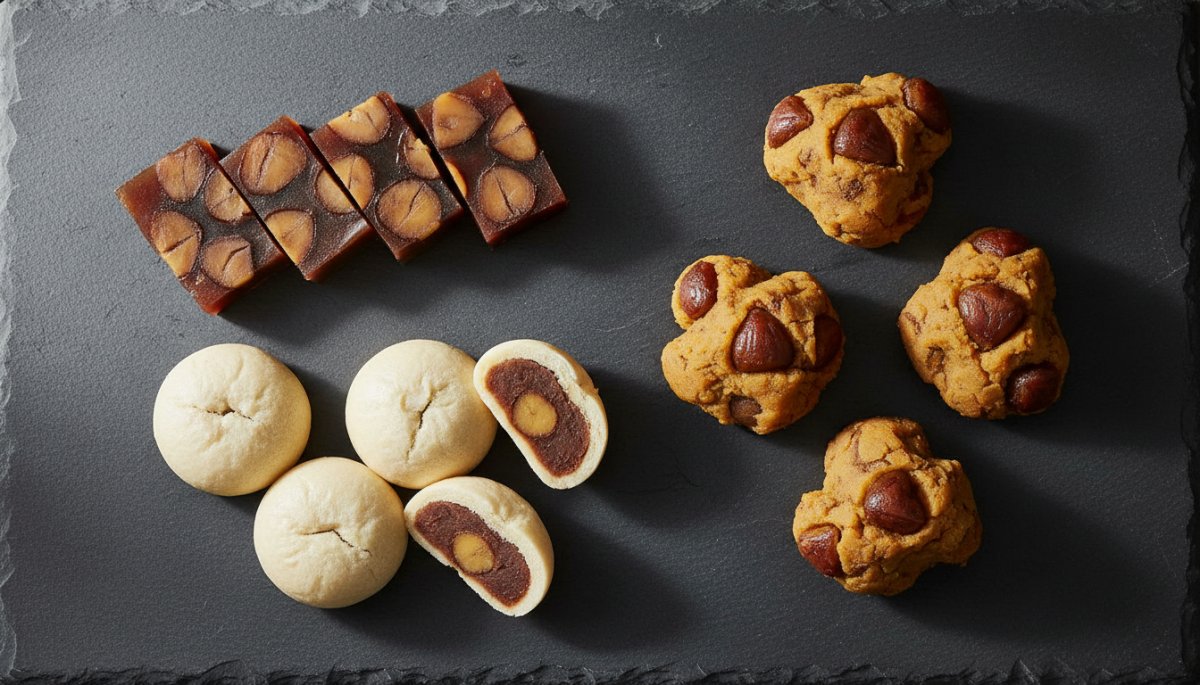
渋皮栗甘露煮は、栗羊羹や栗まんじゅうなどの和菓子に使えます。
How to Use It in Kuri-Yokan and Kuri-Manju
栗羊羹には、渋皮栗甘露煮を粗く刻んで練り込むことで、食感のアクセントと風味の深みが加わります。配合量は、断面に見せたい栗の量から試作で決めてください。
For kuri-manju, wrap shibukawa chestnut kanroni whole or cut in half into the an. The flavor of the shibukawa harmonizes with the sweetness of the an, making a piece full of seasonal feeling.
Expansion into Kuri-Kinton and Kuri-Okowa
For kuri-kinton, using shibukawa chestnut kanroni results in a grown-up flavor that is a cut above ordinary peeled chestnuts. The toastiness of the shibukawa brings out the sweetness of the sweet potato.
Shibukawa chestnut kanroni can also be used in kuri-okowa. By adding it just before the rice finishes cooking, the flavor of the shibukawa spreads throughout the rice, completing a refined-tasting kuri-okowa.
Ideas for Using the Syrup
渋皮栗甘露煮のシロップは捨てずに活用しましょう。シロップにも栗と渋皮の風味が移っているため、同じ栗菓子の蜜やシロップ掛けに回す使い方があります。
See Minoyo's Product List Here
Application to Western Confectionery: New Possibilities for Shibukawa Chestnut Kanroni
Shibukawa chestnut kanroni is a material that can be used widely not only in wagashi but also in Western confectionery.
How to Use It in Mont Blanc and Tarts
For Mont Blanc, using shibukawa chestnut kanroni made into a paste produces a deep flavor different from conventional marron cream. The flavor of the shibukawa melts into the cream, resulting in a grown-up-tasting Mont Blanc.
For tarts, cut shibukawa chestnut kanroni in half, arrange it on top of almond cream, and bake. The toastiness of the shibukawa and the flavor of the almonds match exquisitely.
Expansion into Pound Cake and Muffins
For pound cake, coarsely chop shibukawa chestnut kanroni and fold it into the batter. During baking, the flavor of the shibukawa spreads throughout the batter, making a fragrant, autumnal cake.
マフィンの生地にも、刻んで混ぜ込めます。渋皮の食感がアクセントとなり、食べ応えのあるマフィンに仕上がります。
Use in Ice Cream and Parfaits
Chop shibukawa chestnut kanroni and fold it into vanilla ice cream to complete marron ice cream. The flavor of the shibukawa tightens up the sweetness of the vanilla for a refined flavor.
Shibukawa chestnut kanroni also makes a strong impression as a parfait topping. It pairs well with fresh cream and custard, making a piece that also looks gorgeous.
Summary: To Master Shibukawa Chestnut Kanroni
Shibukawa chestnut kanroni is a luxurious wagashi material that draws out the chestnut's flavor to the fullest. Unlike peeled chestnut kanroni, the distinctive flavor and toastiness of the shibukawa lend depth to both wagashi and Western confectionery.
業務用を選ぶ際は、用途に応じたサイズと糖度を確認してください。
A wide range of applications is possible, from kuri-yokan and kuri-manju in wagashi to Mont Blanc and tarts in Western confectionery. By making use of the syrup without waste, you can enjoy the appeal of shibukawa chestnut kanroni to the fullest.
渋皮栗甘露煮の規格やサンプルは、お問い合わせから承っています。
See Minoyo's Product List Here
📦 Related Minoyo Products
Please feel free to consult us about commercial procurement and sample requests
美濃与は京都に拠点を置く京菓子原材料の専門商社です。本記事で取り上げた原料の業務用調達や、お試しサンプル、ロット・規格のご相談など、和菓子製造の現場に寄り添った提案を行っています。
For Minoyo's business and strengths, please see Our Business & Why We Are Chosen . For the actual flow of doing business, see Ordering Process & How to Order; for questions, we have compiled them at Frequently Asked Questions . For individual consultations, please use Contact or material download to get in touch.