Cornstarch: A thorough guide to wagashi applications|Usage methods and tips for proper use” style=”width: 100%;height: auto;margin-bottom: 20px; max-width: 100% !important; height: auto !important; display: block; margin: 0 auto 20px;” />
What is cornstarch? Its basic role in wagashi
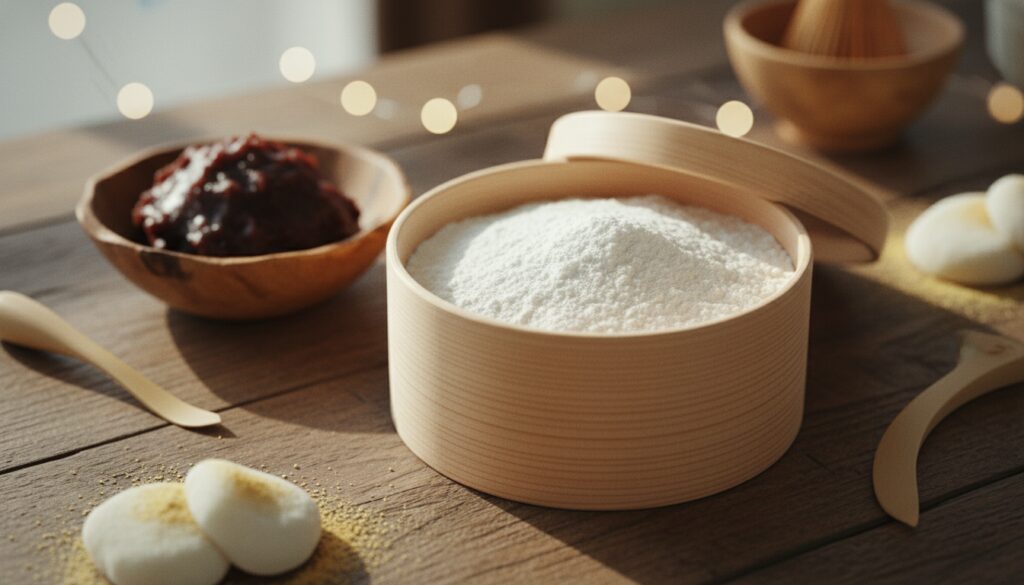
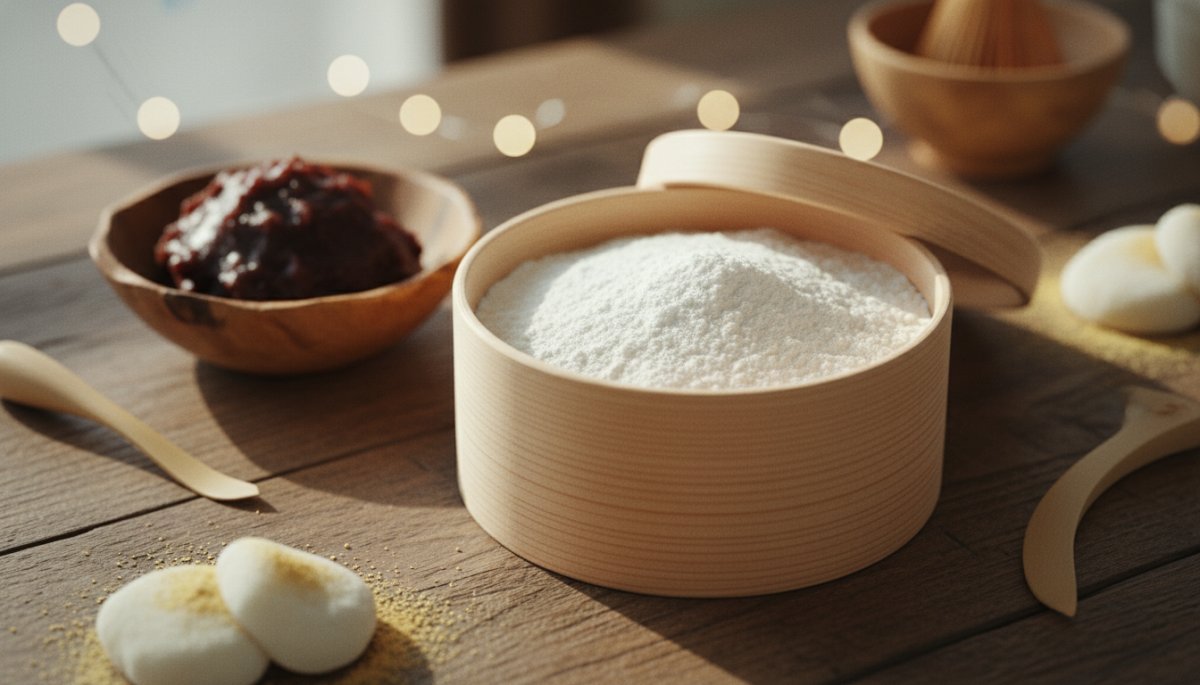
Cornstarch is a starch extracted from corn.
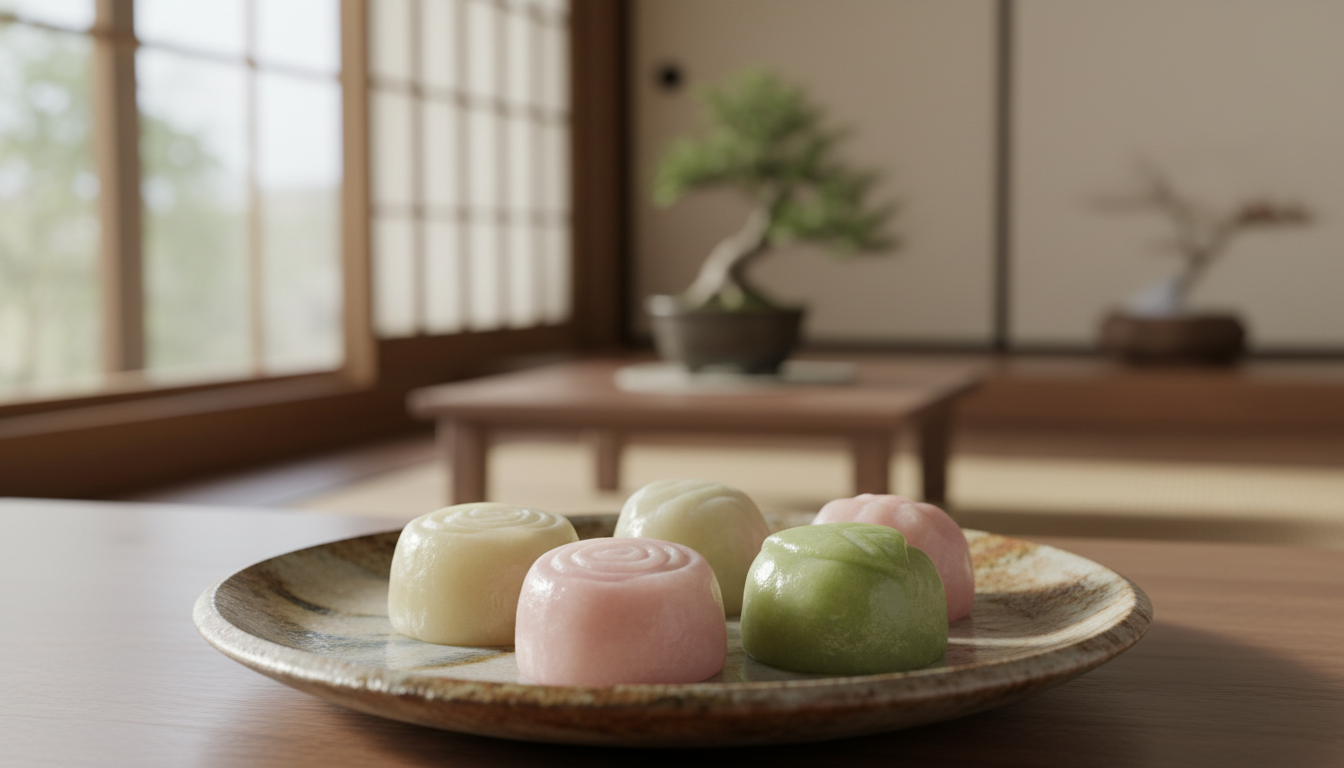
In wagashi (traditional Japanese confectionery) production, cornstarch plays a variety of roles including dusting flour, thickener, and texture adjuster. Thanks to its fine particle structure and unique physical properties, it has become an indispensable raw material for improving the quality of wagashi.
The particle size of starch varies greatly depending on the source. Potato starch is large at 15–100μm, whereas cornstarch is smaller at 5–25μm. These fine particles give wagashi their distinctive smoothness.

Cornstarch begins to gelatinize at 62–72℃, producing a gentle, cloudy thickening. Because it retains its viscosity even after cooling, it is well suited to chilled confections.
What wagashi artisans value is this stability. Its resistance to temperature changes and its ability to maintain product quality over long periods are highly regarded.
See Minoyo's Product List Here
Techniques for using cornstarch as dusting flour
Dusting flour is a fundamental technique in wagashi production.
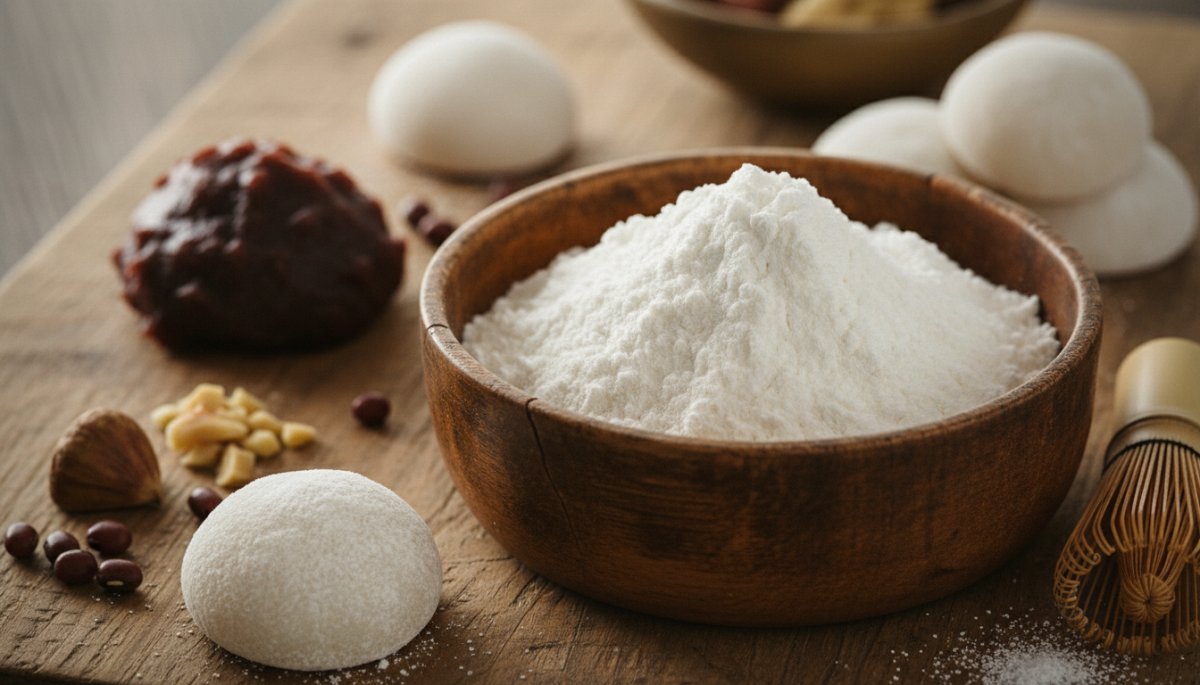
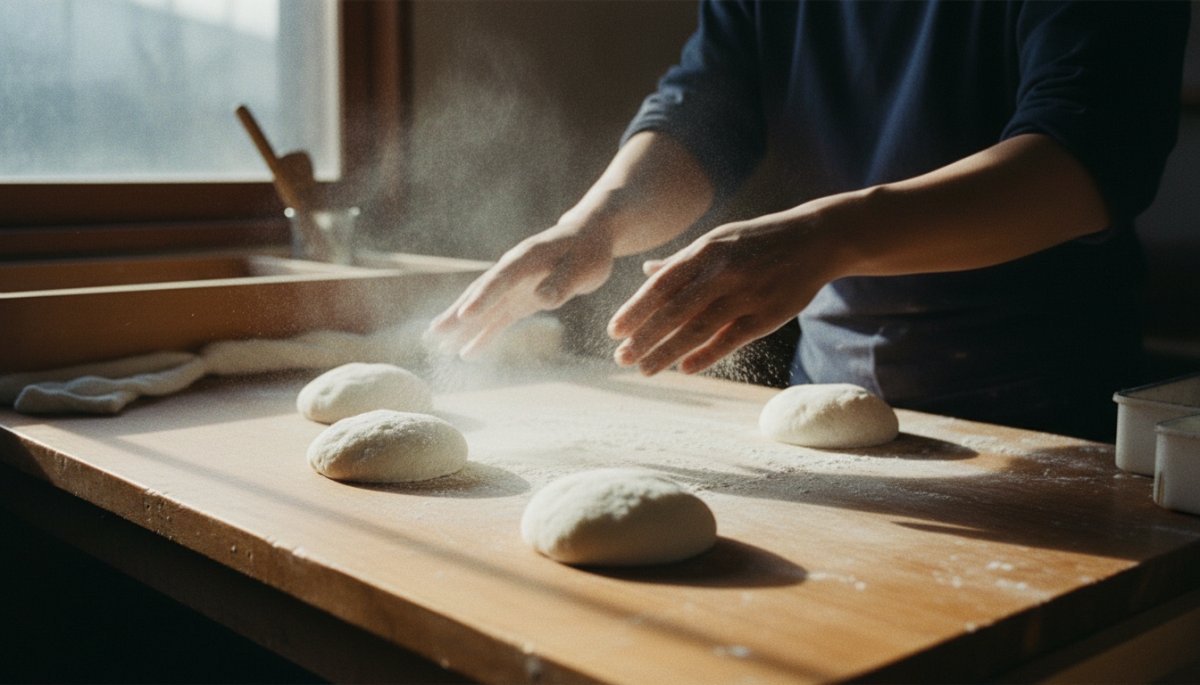
Using cornstarch as dusting flour prevents the dough from sticking while leaving an elegant whiteness in the finished product. It is especially effective when shaping gyuhi and mochi confections.
Why it is suited as dusting flour
The fine particles of cornstarch adhere evenly to the surface of the dough. Compared to potato starch, less excess flour remains, and it leaves less of a powdery mouthfeel when eaten.
In addition, because of its high whiteness, it does not detract from the appearance of pale-colored wagashi. It brings out the delicate colors of seasonal wagashi such as sakura mochi and kashiwa mochi.
Guideline amounts and points to note
The trick with dusting flour is to sprinkle it thinly and evenly. Applying too thick a layer will spoil the texture of the product.
Sprinkle it lightly onto the work surface with a tea strainer, and keep the hand flour to the bare minimum. Brushing away excess flour with a soft brush gives a beautiful finish.
How to use it as a thickener and texture adjuster
Cornstarch is a material that allows delicate adjustment of the texture of wagashi.
By adding a small amount to an (sweet bean paste) or cream mixtures, you can impart smoothness and a moderate thickness. Especially in water-based confections such as mizu-yokan and kuzu mochi, it plays the role of adjusting the texture while maintaining transparency.
Basics of the blending ratio
Generally, a blend of about 3–8% relative to the liquid is standard. It is adjusted depending on the application, but adding too much leaves a powdery taste, so caution is needed.
For water manju, 5–6% is the guideline; for steamed yokan, 3–4%. Make fine adjustments according to the characteristics of the product.
Managing heating temperature and time
Cornstarch begins to gelatinize at 62℃ and above.
If it is not heated sufficiently, the raw smell of the starch will remain. It is important to continue heating for 2–3 minutes even after boiling to gelatinize it completely.
When transparency is important, rather than heating rapidly over high heat, it is better to raise the temperature slowly over medium heat.
Proper use of different starches and tips for blending
In wagashi production, the ideal texture is achieved by using multiple starches for their respective strengths.
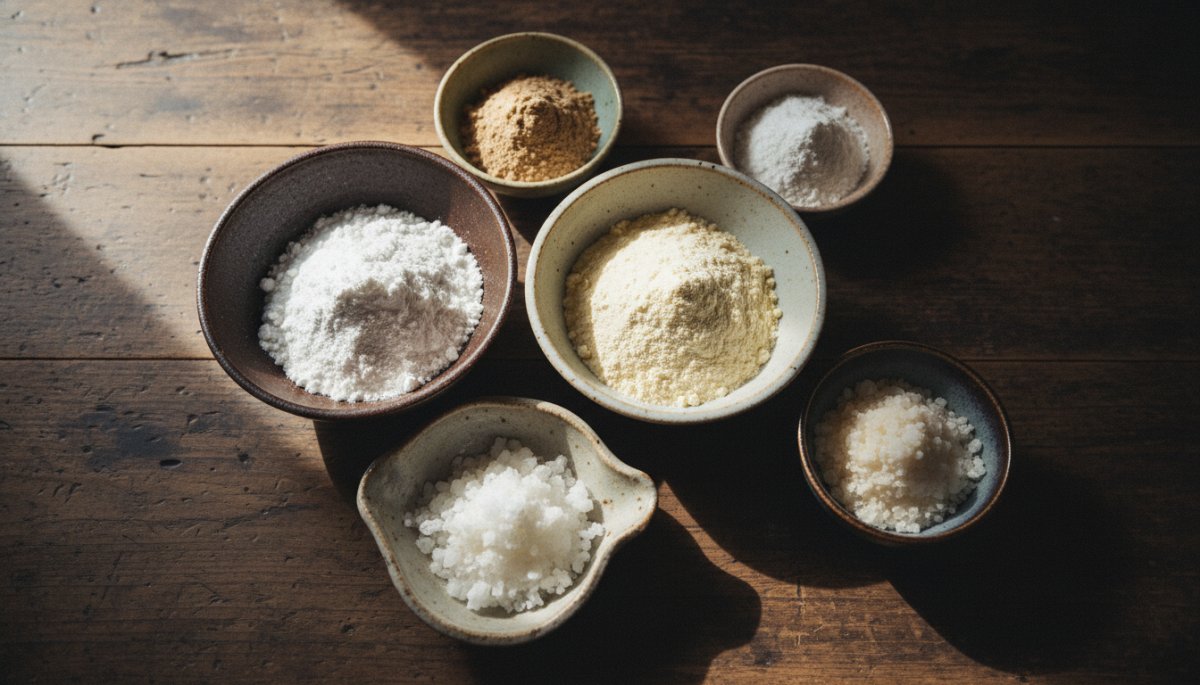
Cornstarch, potato starch, hon-kuzu (kudzu starch), and warabi (bracken) starch each have their own characteristics. Selecting the optimal starch for the purpose is a mark of professional skill.
Differences from potato starch and how to use each
Potato starch gelatinizes at 55–66℃ and is characterized by a strong, highly transparent thickening. It is ideal for warm ankake dishes, but its viscosity drops when cooled.
Cornstarch, on the other hand, retains its viscosity even when cooled, making it suited to chilled confections. For wagashi served cold, such as water manju and chilled yokan, choose cornstarch.
Combining with hon-kuzu and warabi starch
Hon-kuzu (kudzu starch) and warabi (bracken) starch are the finest starches used in premium wagashi.
They offer excellent transparency and elasticity, but their high price is a drawback. By combining them with cornstarch, you can maintain quality while keeping costs down.
As a blending example, mixing 70% hon-kuzu with 30% cornstarch makes the most of hon-kuzu's characteristics while being economical.
Techniques for blending multiple starches
When combining different starches, take into account each one's gelatinization temperature.
When using potato starch and cornstarch together, heating the potato starch first to gelatinize it and then adding the cornstarch allows you to make the most of both of their characteristics.
At Minoyo, we carry hon-kuzu,Zuiichi Hon-kuzu, potato starch, wheat starch, sweet potato starch, lotus starch, cornstarch, alpha starch, and a wide range of other starches needed for wagashi production. They are offered in large-volume commercial packages such as 5kg×3, 5kg×4, 10kg, 20kg, and 25kg, meeting the needs of professional wagashi artisans.

Summary: Master cornstarch to improve the quality of your wagashi
In wagashi production, cornstarch serves a variety of roles as dusting flour, thickener, and texture adjuster.
With its fine particles and stable physical properties, it supports the quality of delicate wagashi. By understanding how to use it alongside other starches such as potato starch and hon-kuzu, higher-quality wagashi production becomes possible.
While paying attention to temperature management and blending ratios, choose the optimal usage for your purpose. Use cornstarch, with its high viscosity stability, for chilled confections, and highly transparent potato starch for warm confections—using each for its strengths is important.
Professional wagashi artisans achieve the ideal texture and flavor by combining multiple starches. Why not start today by understanding the characteristics of cornstarch and putting them to use in your wagashi making?
See Minoyo's Product List Here
📦 Related Minoyo Products
Please feel free to consult us about commercial procurement and sample requests
Minoyo is a specialty store for Kyoto confectionery raw materials based in Kyoto. For the raw materials covered in this article, we offer proposals close to the realities of wagashi production, including commercial procurement, trial samples, and consultation on lots and specifications.
For Minoyo's business and strengths, please see Our Business & Why We Are Chosen . For the actual flow of doing business, see Ordering Process & How to Order; for questions, we have compiled them at Frequently Asked Questions . For individual consultations, please use Contact or material download to get in touch.