![]()
Before You Learn the Types of Candied Chestnuts (Marron Kanroni)
Chestnuts, cherished as a taste of autumn.
In the world of wagashi, kanroni made with chestnuts is indispensable. Yet even under the single name "marron kanroni," the types are remarkably diverse—with inner skin, peeled, cut, and more. Each has different characteristics, and using them appropriately for each purpose greatly changes the perfection of the wagashi.
By mastering the selection points that professional artisans practice, your wagashi making will gain even greater depth.
See Minoyo's Product List Here
The Difference Between Candied Chestnuts with the Inner Skin On and Off
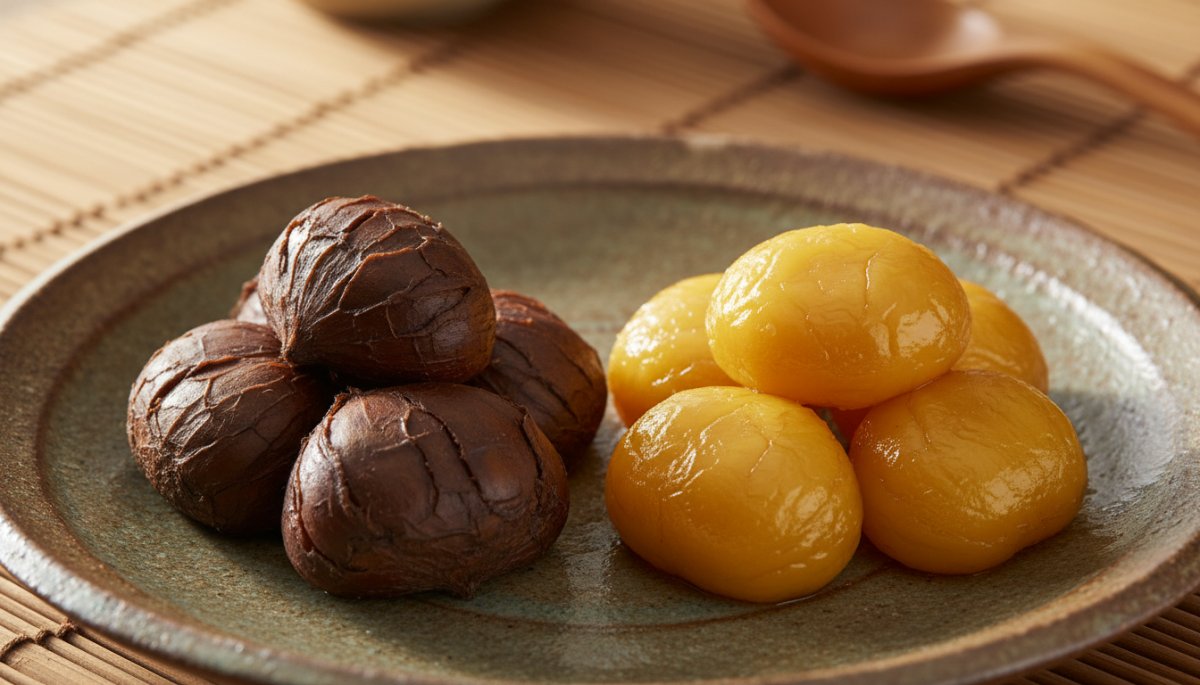
When choosing candied chestnuts, the first choice you face is whether to go with the inner skin on ("shibukawa-tsuki") or off ("shibukawa-nashi").
Candied chestnuts with the inner skin on are simmered while leaving the fibrous skin intact after peeling off the chestnut's hard outer shell. They are dark brown in appearance, and the flavor of the inner skin adds depth to the chestnut's natural taste. Leaving the inner skin on highlights the chestnut's aroma and a distinctive mild bitterness, giving a refined, grown-up flavor.
Candied chestnuts with the inner skin off, on the other hand, are simmered after the inner skin has been cleanly peeled away, giving them a bright yellow, beautiful finish at a glance. You can fully enjoy their smooth texture and the chestnut's natural sweetness. The preparation process is simple: after boiling the chestnuts until soft, you simply add sugar and mirin and slowly simmer to infuse the flavor. Because there is no need to repeatedly bring them to a boil as with shibukawa-ni, they are completed in a relatively short time.
The inner-skin-on type is ideal when you want deep flavor in your wagashi, and the inner-skin-off type is ideal when you want to make the most of a smooth texture and a beautiful yellow color.
Source Amano Jitsugyo Co., Ltd., "What's the Difference Between Shibukawa-ni, Kanroni, and Marron Glacé?"adapted from (2024)
Choosing by Size Specification
Candied chestnuts (marron kanroni) come in specifications based on size.
In Minoyo's catalog, extra-soft marron kanroni andmarron kanroni first gradeare offered in the 9・1/06 specification, making them an easy-to-use format as large-capacity commercial packaging. Large chestnuts have an impressive appearance and make a strong presence as an ingredient in kuri yokan and kuri manju. Top-grade chestnuts that hold a beautiful shape and a firm texture are well suited to dishes where you want to make the most of the chestnut's form, such as kuri okowa and kuri kinton.
Meanwhile, smaller pieces and broken ones can be used as toppings or folded into batters and doughs. For applications where shape doesn't matter, they offer an excellent cost-effective option.
Understanding the Differences in Sweetness and Flavor
The sugar content of kanro-ni (candied chestnuts) varies significantly from product to product.
The extra-soft grade is characterized by a tender texture achieved through careful simmering, with a refined sweetness that melts gently in the mouth. Its sugar content is set on the higher side, making it well suited for use as an ingredient in kuri-yokan (chestnut jelly) and kuri-manju when a moist finish is desired.
The first grade uses carefully selected large chestnuts, finished with a moderate sweetness while preserving their beautiful shape and firm texture. It is ideal for dishes where you want to showcase the presence of the chestnuts, such as kuri-okowa (chestnut sticky rice) and kuri-kinton.
Shibukawa-guri kanro-ni (candied chestnuts with the inner skin) gains the flavor of the inner skin, adding a slight bitterness within the sweetness for a complex taste. As a premium ingredient that adds depth to autumn wagashi, it is used for special applications.
How to Choose the Best Option for Each Application
In wagashi making, selecting the right kanro-ni for the application is essential.
Kuri-yokan and kuri-manjuare best made with the extra-soft grade. Its tender texture integrates seamlessly with the an (sweet bean paste), delivering a smooth mouthfeel.
Kuri-okowa and kuri-gohan (chestnut rice)are best suited to the large-size first grade. Its beautiful shape and firm texture enhance the overall appearance of the dish.
Kuri-kinton and autumn nama-gashi (fresh wagashi)are finished with an elegant, deep flavor when made with shibukawa-guri kanro-ni, as the flavor of the inner skin is added.
For toppings and decorations,even smaller pieces or broken ones are perfectly sufficient. You can enjoy the flavor of chestnuts while keeping costs down.
By choosing the right type to match the application, the quality of your wagashi will improve dramatically.
The Selection Know-How Practiced by Professionals

Professional artisans choose different kanro-ni to match the season, temperature, and humidity.
In summer, they often choose the higher-sugar extra-soft grade to enhance shelf life. From autumn through winter, on the other hand, they use shibukawa-guri kanro-ni to evoke a sense of the season.
The flavor also differs depending on where the chestnuts are grown, so kanro-ni made with domestic Japanese chestnuts is used in premium wagashi that call for a deeper flavor. Minoyo's catalog offersExtra-soft candied marrons, Marron Kanro-ni First Grade, Shibukawa-guri Kanro-ni, and a diverse range of other options, allowing you to make the ideal choice for each application.
An artisan's experience and knowledge are decisive factors that shape the flavor of wagashi.
Summary: How You Choose Marron Kanro-ni Changes the Quality of Your Wagashi
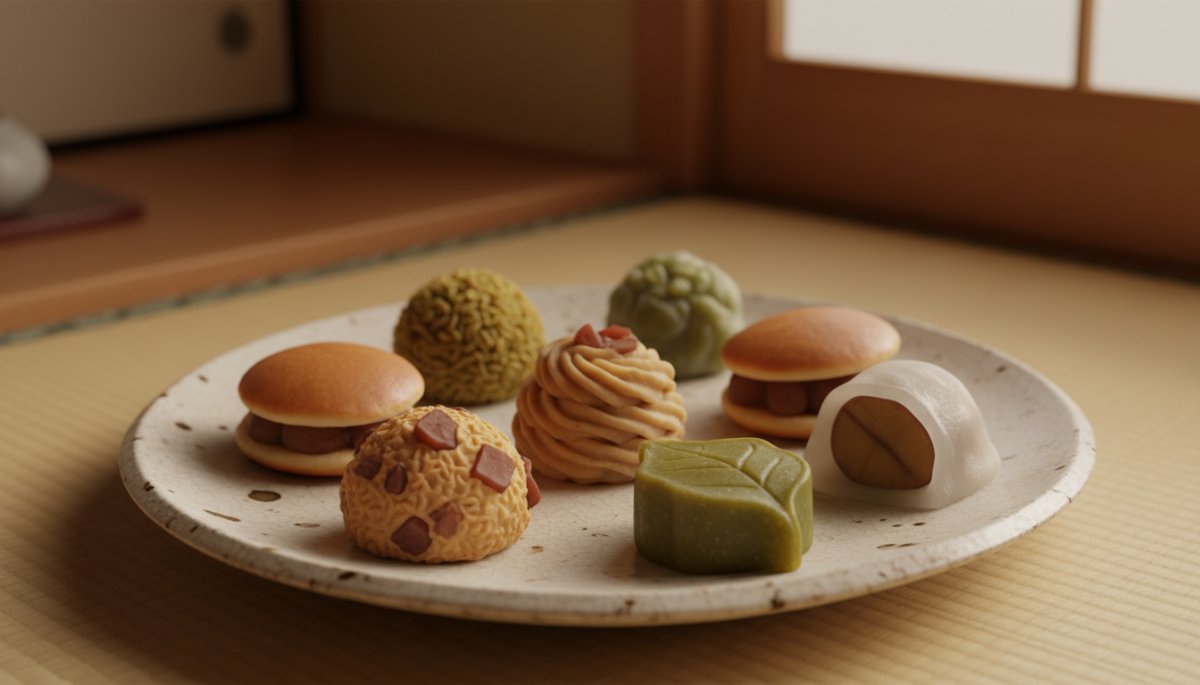
By understanding the different types of Marron Kanro-ni and using them appropriately, the flavor and appearance of your wagashi can change significantly.
It is important to understand the differences between skin-on and skin-off, size specifications, sugar content, and flavor, and to make the ideal choice for each application. By drawing on the selection know-how practiced by professional artisans, your own wagashi making will gain a whole new level of depth.
Minoyo offers a diverse range of processed chestnut products in bulk commercial packaging, including Marron Kanro-ni Extra-Soft Grade, Marron Kanro-ni First Grade, and Shibukawa-guri Kanro-ni. Elevate the quality of your wagashi with the ideal choice for your application.
See Minoyo's Product List Here
📦 Related Minoyo Products
Please feel free to consult us about commercial procurement and sample requests
Minoyo is a specialty store for Kyoto confectionery raw materials based in Kyoto. For the raw materials covered in this article, we offer proposals close to the realities of wagashi production, including commercial procurement, trial samples, and consultation on lots and specifications.
For Minoyo's business and strengths, please see Our Business & Why We Are Chosen . For the actual flow of doing business, see Ordering Process & How to Order; for questions, we have compiled them at Frequently Asked Questions . For individual consultations, please use Contact or material download to get in touch.