Recipes

A Thorough Guide to Botamochi Ingredients and Proportions | A Pro's Tips on How to Make It

March 10, 2026

Table of Contents

ぼたもちの原料と配合を徹底解説|プロが教える作り方のコツ

What Is Botamochi? A Traditional Wagashi That Colors the Spring Equinox

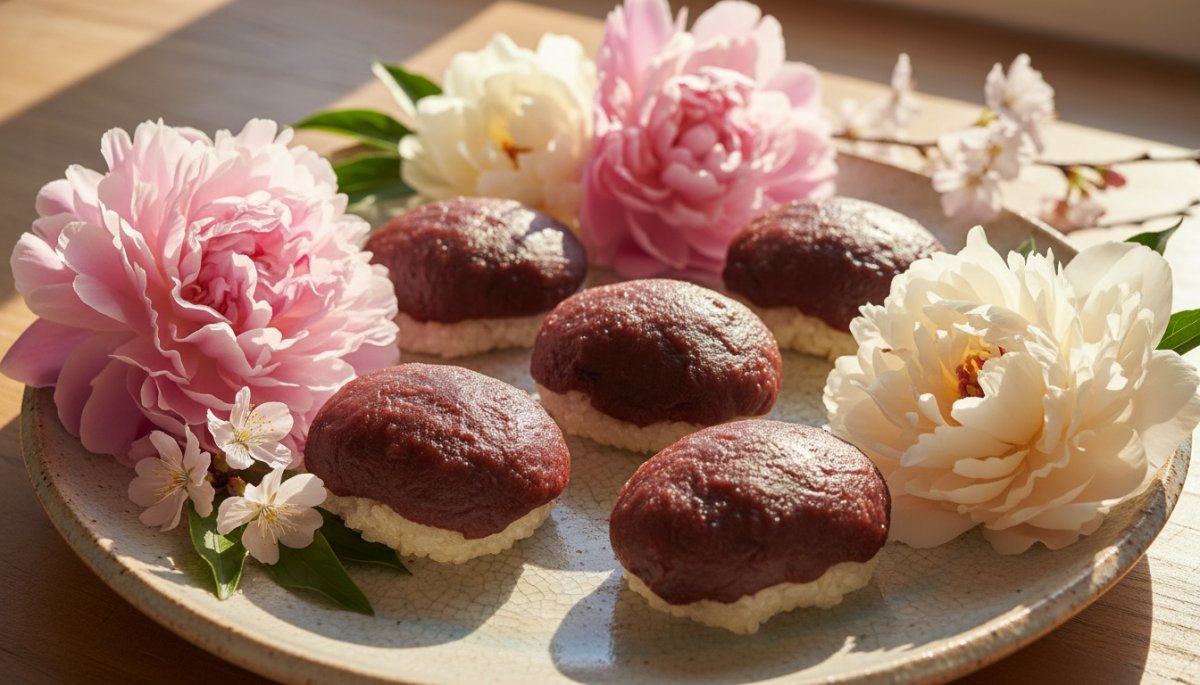
Botamochi is a traditional Japanese wagashi essential to the spring equinox (higan).

Named after the botan (peony) flower, this wagashi is made by coating a mochi-rice dough with adzuki-bean an. It has been handed down since the Edo period as a ”culinary greeting” for sharing the arrival of spring with family and guests.

In fact, "botamochi" and "ohagi" are basically the same thing: at the spring equinox they are called "botamochi" in the image of the peony, and at the autumn equinox "ohagi" in the image of the bush clover (hagi) flower. Traditionally, spring botamochi uses koshi-an (smooth paste) and autumn ohagi uses tsubu-an (chunky paste), but this is for practical reasons based on the harvest timing and storage condition of the adzuki beans.

In this article, we explain, in a way that is easy for beginners to follow, the ingredient selection and proportioning know-how that professional wagashi artisans use when making botamochi.

See Minoyo's Product List Here


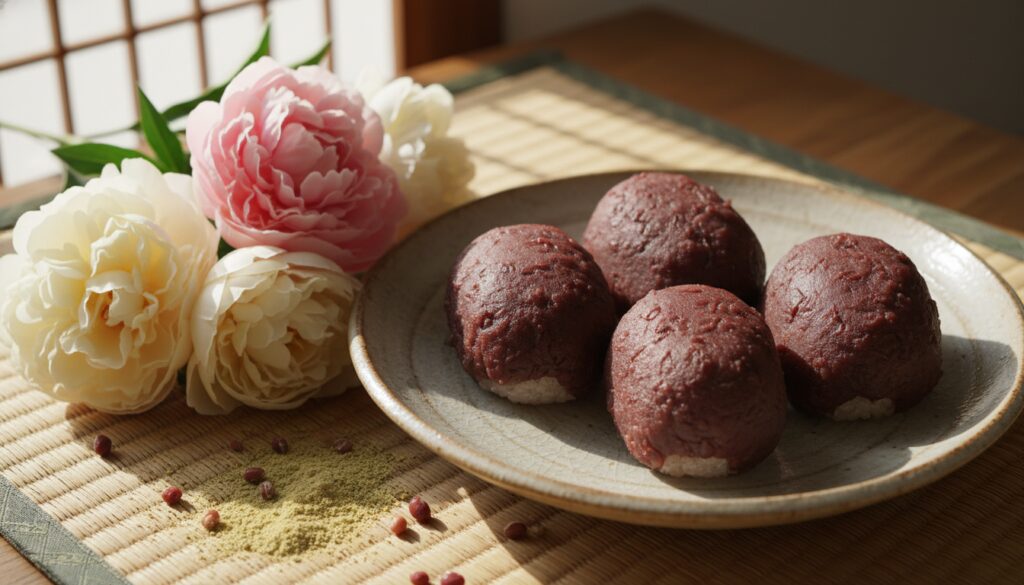
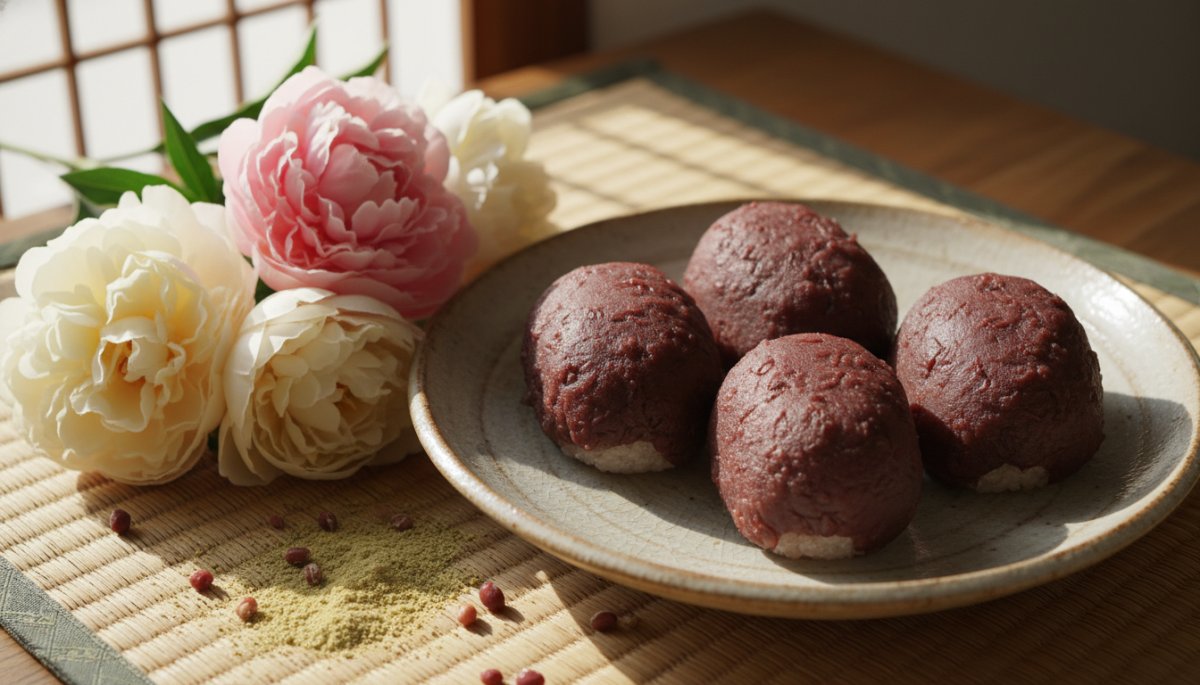
春のお彼岸に供えられたぼたもちと牡丹の花

The Basic Raw Materials for Botamochi: The Balance of Mochi Rice and Non-Glutinous Rice

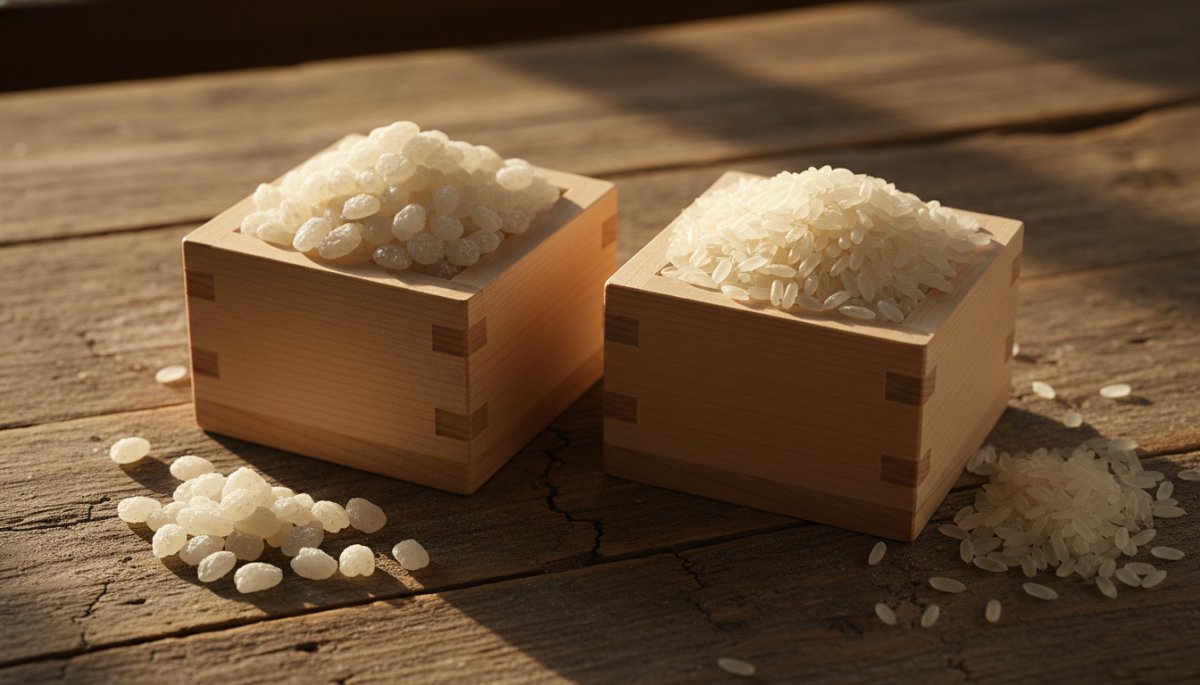
The foundation of making botamochi is the proportion of mochi rice (glutinous) and uruchi rice (non-glutinous).

Made with 100% mochi rice, you can enjoy the original grainy, chewy texture. There is no need to pound the cooked rice with a pestle, and you can fully savor the natural flavor of okowa. On the other hand, blending mochi rice with uruchi rice is also common, and many experts recommend at least 70% mochi rice. Adding uruchi rice produces a texture that is easier to eat day to day and also keeps ingredient costs down.

Characteristics of 100% Mochi Rice

When made with mochi rice alone, the "hangoroshi" step of partially crushing the rice with a pestle becomes unnecessary.

Since you can obtain a natural chewiness just by cooking it in a rice cooker, it is a method that is hard to fail even for beginners. The point is to use a little less water than for uruchi rice and to soak it for a longer time. As a guide, use 360 ml of water for 2 go of mochi rice.

Blending Mochi Rice and Non-Glutinous Rice

A blend of 70% mochi rice and 30% uruchi rice is the basic ratio. With this ratio, you can keep the chewiness while achieving a texture that is easy to eat. The higher the proportion of mochi rice, the stronger the stickiness, coming closer to the texture of traditional botamochi. When making it at home, many people adjust it based on ease of eating.

もち米とうるち米の配合比率を示す和菓子原料


How to Choose and Types of Adzuki An: Using Koshi-An and Tsubu-An Appropriately

What determines the flavor of botamochi is the choice of adzuki an.

Spring botamochi traditionally uses koshi-an. This is because it uses adzuki beans harvested the previous autumn that have overwintered, so their skins have dried and hardened over time. By removing the skins and straining the beans into a smooth koshi-an, you achieve a pleasant mouthfeel. Its smooth texture suits calm, formal occasions and can express a glossy surface like a peony bud.

On the other hand, autumn ohagi uses freshly harvested adzuki beans with soft skins, so tsubu-an, which lets you enjoy the flavor and texture as they are, is ideal. Because the natural flavor and texture of the adzuki come through, it suits seasonal events.

The Difference Between Homemade An and Store-Bought An

We recommend homemade anko, since you can adjust the sweetness and moisture content.

Because ohagi has simple ingredients, homemade an—in which the adzuki's natural flavor comes through directly—brings out more flavor than anko that is "just sweet." If you prefer a milder sweetness, use slightly less sugar than beans (270 g of sugar for 300 g of adzuki); if you want a firmly sweet taste, add sugar in the same amount as the beans or more.

When using store-bought products, note that the moisture content and sweetness are fixed, making it difficult to adjust to your preference.
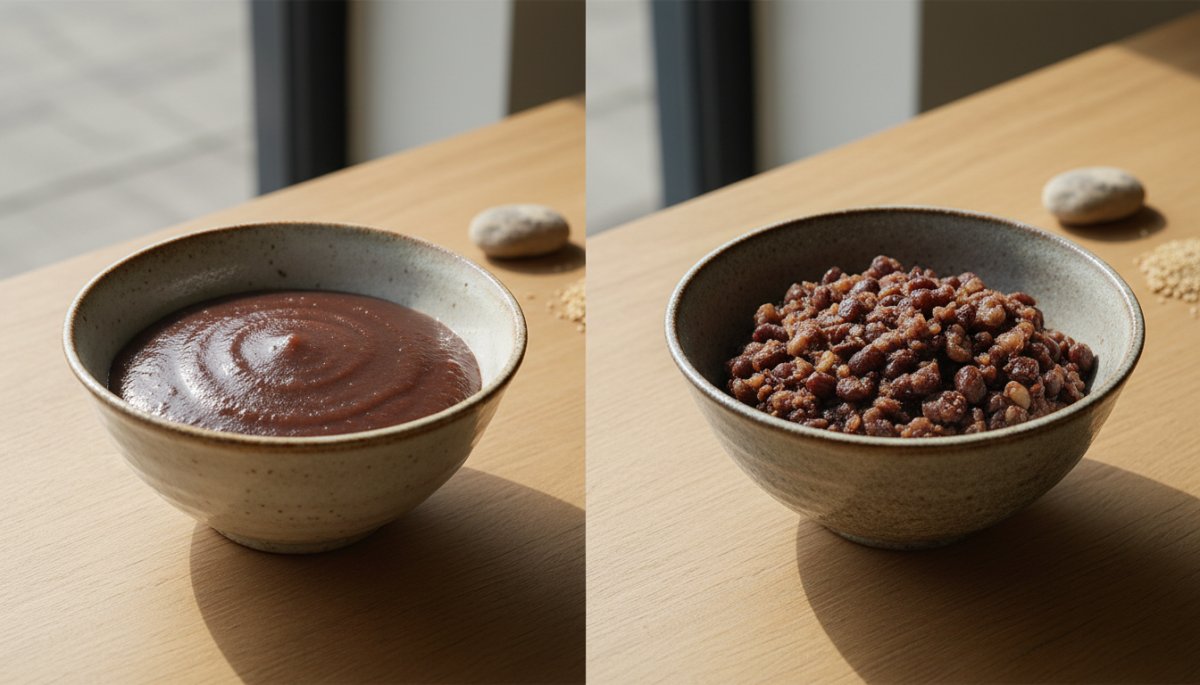
こしあんと粒あんの質感の違いを示す小豆餡


Types of Coating Ingredients: Adding Character with Kinako, Sesame, and Matcha

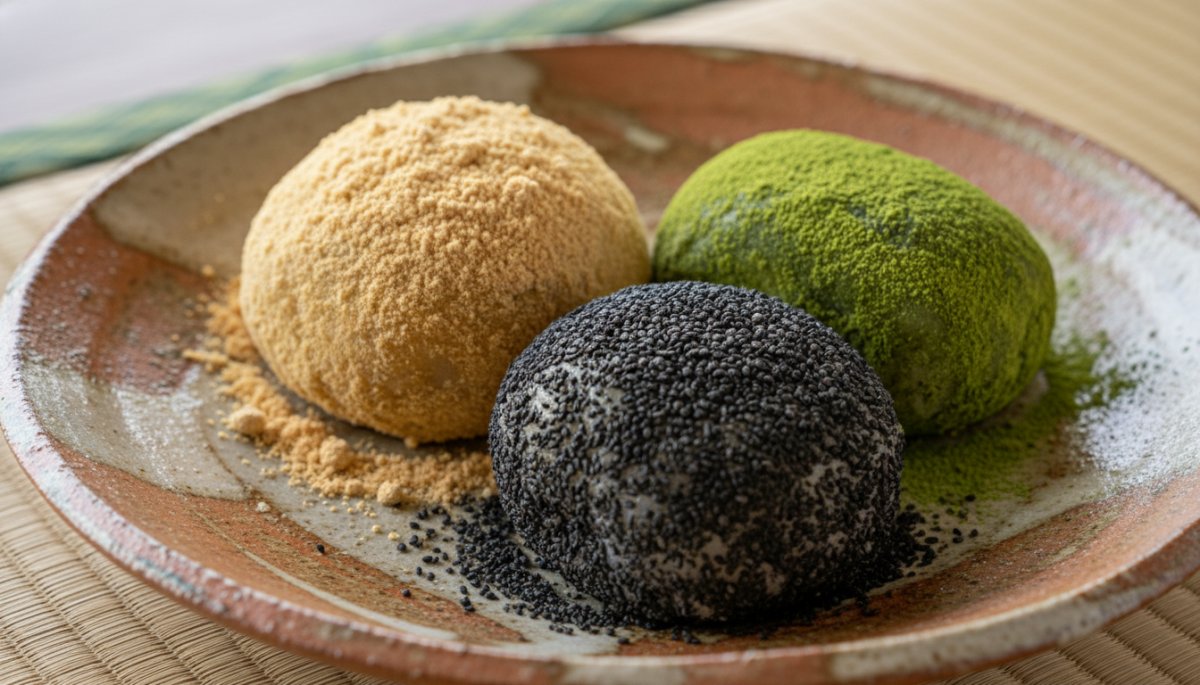
Beyond an, variations coated with kinako or sesame are popular.

Kinako and black sesame can add nutritional value and a toasty aroma. The basic proportion for kinako is 2 tablespoons kinako, just under 2 tablespoons sugar, and a pinch of salt. Ground black sesame uses the same proportions and offers a fragrant, toasty flavor. In the Kanto region there is a custom of putting anko inside, while in Kansai kinako or matcha-style coatings are standard, with a tendency toward milder sweetness.

Adding Japanese Depth with Matcha and Brown Sugar

Using matcha adds an elegant bitterness and a vivid green color. Using brown sugar (kokuto) gives a mineral-rich, softly sweet finish. Choosing a less-refined sugar such as senso-to creates a deeper flavor.

Modern Twists with Fruits and Nuts

While preserving traditional methods, modern twists are also spreading.

Options include using multigrain rice or low-sugar an for a health-conscious approach, or adding fruits and nuts to enjoy new textures. In Hokkaido and Tohoku, variations using sesame or zunda have become standard.

きな粉とごまをまぶしたぼたもちのバリエーション


The Golden Ratio Pros Use and Tips for Making It

To make delicious botamochi, there are several important tips.

Since mochi rice absorbs water easily, it is important to do the first rinse quickly. To prevent the mochi rice from absorbing the rinsing water and taking on a bran smell, pour in the first water and discard it quickly. After that, use your palms to gently rub-wash it about 10 times to thoroughly remove the rice bran.

Cooking Method and Water Ratio in a Rice Cooker

No steamer is needed; you can cook it deliciously in a rice cooker.

If you follow the water ratio and soaking time, even beginners can cook mochi rice without failure. The key is a longer soak and less water than uruchi rice. As a guide, use 360 ml of water for 2 go of mochi rice, with a soaking time of at least 1 hour, ideally about 2 hours.

How to Wrap the An and Shape the Botamochi

Spring botamochi traditionally has a large, rounded shape.

To express the plump form of the peony flower, shape it into a somewhat large round. Autumn ohagi is generally a bit smaller and made oval or bale-shaped. Spread about 45 g of an thinly across your palm, place the cooked mochi rice (about 30 g) in the center, and wrap it up.
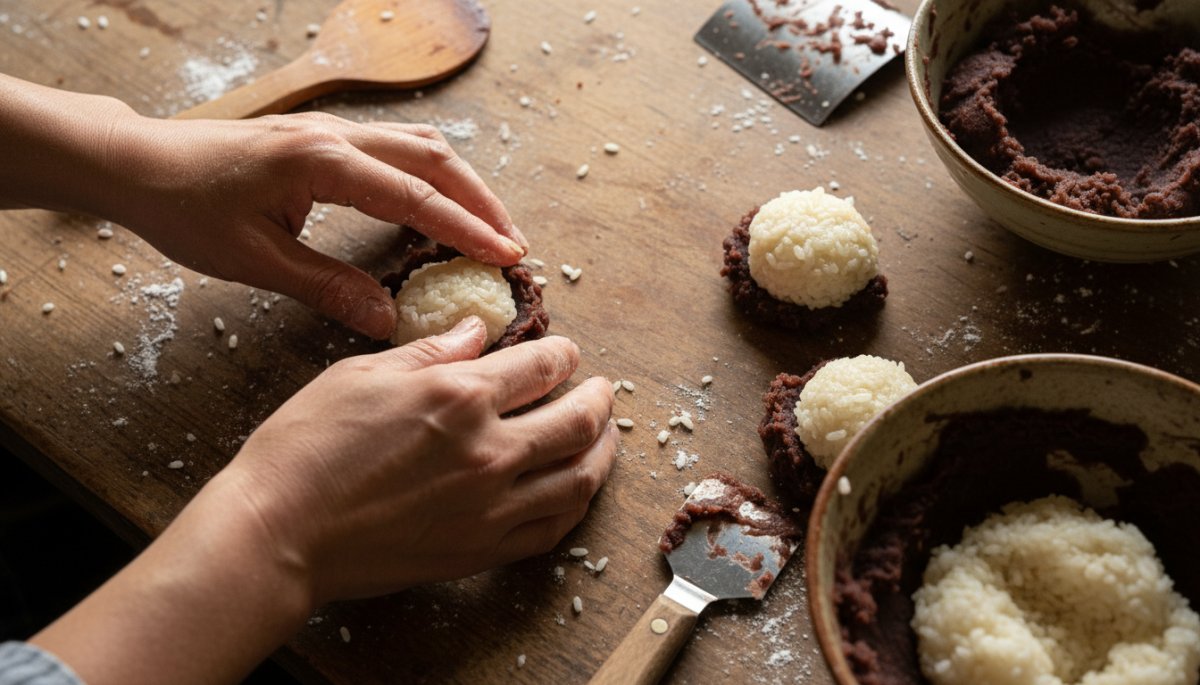
If you check the pot's condition frequently, you won't fail. The anko cooking process is simply simmering, but since scum keeps rising, it is important to skim it off frequently. Also, since moisture evaporates easily, you need to keep an eye on the water level so it always stays just covering the beans.

ぼたもちの成形過程を示す和菓子職人の手元


High-Quality Ingredients Offered by a Specialty Wagashi Raw Materials Store

The raw materials used by professional wagashi artisans are carefully selected for quality.

At Minoyo, we offer a wide range of raw materials needed for wagashi production across seven categories. In our shiruko ingredients and tanemono lineup, we carry everything from top-grade white an such as Tokuichigo Sarashi-an and Fuji-jirushi Sarashi-an, to colorful arare such as Chidori and Shiratama Arare, as well as habutae mochi and monaka shells. Sizes are offered in commercial-use bulk packages such as 12kg, 10kg, 4kg, and 2.2kg×6.

Various Starches and Chestnut & Plum Products

We also have an ample selection of starches essential to making translucent wagashi.Genuine warabi starch, betsuguchi warabi starch, hon-kuzu, Zuiichi hon-kuzu, and other top-grade items, as well as potato starch, wheat starch, sweet potato starch, lotus flour, cornstarch, and alpha starch—we carry a wide range.

For chestnut and plum products, we offer marron kanroni extra-soft grade,marron kanroni first grade, shibukawa chestnut kanroni, and other processed chestnut products, along with plum kanroni, Kishu neri-ume, plum pulp, plum juice, and other processed plum products.

The Original "Tomo" Series

We also offer original products that simplify wagashi production.

Warabi-gashi no Tomo, Kuzu-gashi no Tomo, Mushi-yokan no Tomo, Mizu Manju no Tomo, Warabi Manju no Tomo, Shin-kuzu Mochi no Tomo, Kuzu Yokan no Tomo, Renko no Tomo, Kyo Warabi Suika, and more—the "Tomo" Series is a convenient range of products that support wagashi making. Sizes are offered in 1kg and 10kg.

See Minoyo's Product List Here


Summary: Ingredient Selection and Proportions Are Key to Making Botamochi

Success in making botamochi comes down to ingredient selection and the balance of proportions.

With 100% mochi rice you can enjoy the original texture, while a blend of 70% mochi rice and 30% uruchi rice gives an easy-to-eat finish. The traditional practice of koshi-an for spring botamochi and tsubu-an for autumn ohagi is the wisdom of our predecessors, based on the harvest timing and storage condition of adzuki beans.

You can also add character with coating ingredients such as kinako, sesame, and matcha, and modern twists are spreading as well. Using a rice cooker makes it hard to fail even for beginners, and following the water ratio and soaking time is important.

The high-quality raw materials used by professional wagashi artisans can be obtained at specialty stores. At specialty wagashi raw materials stores like Minoyo, we offer a wide range of products in commercial-use bulk packages—from top-grade sarashi-an to various starches, processed chestnut and plum products, and the "Tomo" Series that simplifies wagashi production.

Please try making botamochi, a traditional Japanese wagashi, at home. Savoring carefully made wagashi while feeling the changing of the seasons is truly exceptional.

📦 Related Minoyo Products

Please feel free to consult us about commercial procurement and sample requests

Minoyo is a specialty store for Kyoto confectionery raw materials based in Kyoto. For the raw materials covered in this article, we offer proposals close to the realities of wagashi production, including commercial procurement, trial samples, and consultation on lots and specifications.

For Minoyo's business and strengths, please see Our Business & Why We Are Chosen . For the actual flow of doing business, see Ordering Process & How to Order; for questions, we have compiled them at Frequently Asked Questions . For individual consultations, please use Contact or material download to get in touch.
Related Articles

Latest Articles

Categories

Tags

Request Materials & Contact​

Please feel free to reach out with any questions about raw materials or products, or to request materials.
Our dedicated staff will respond with care.