
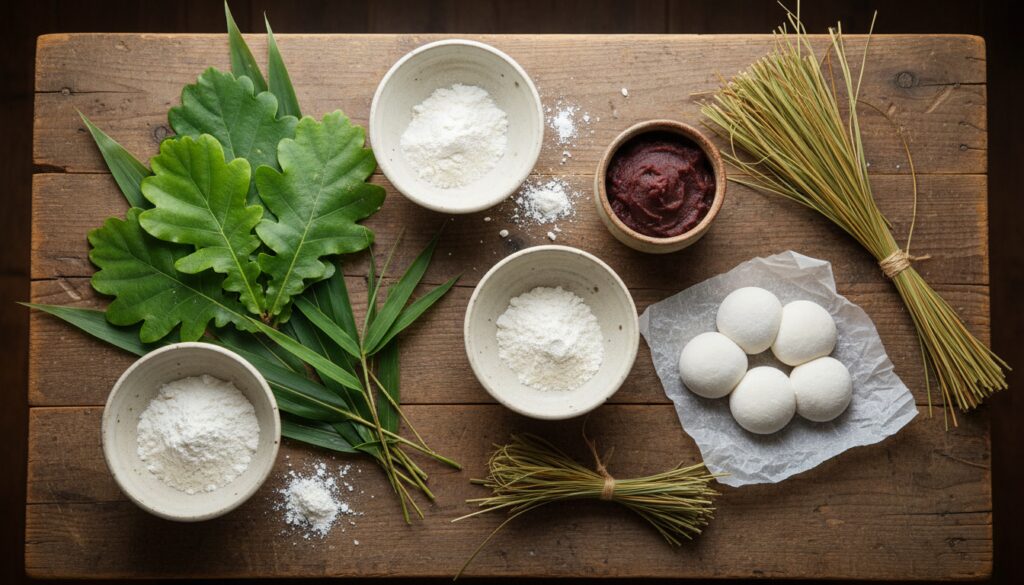
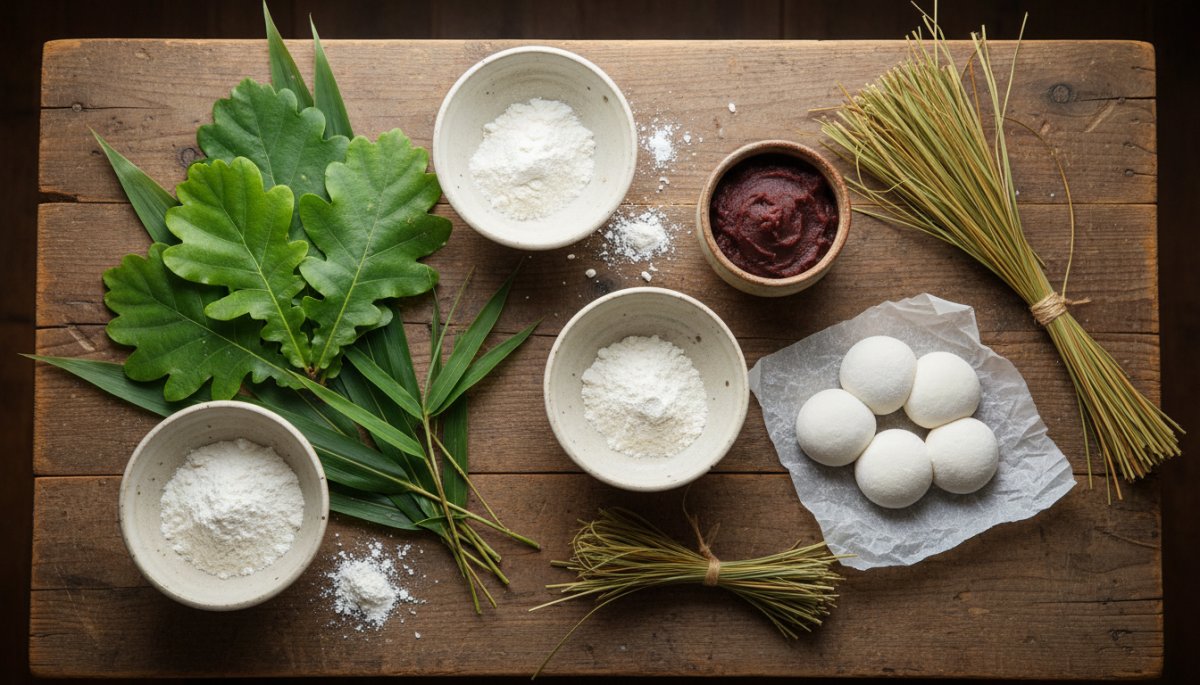
The Essential Wagashi Ingredients for the Boys' Festival (Tango no Sekku)
When it comes to the wagashi essential to the Boys' Festival (Tango no Sekku), the ones that come to mind are kashiwa mochi and chimaki.
柏餅とちまきでは、使う粉や葉が異なります。柏餅には上新粉や白玉粉、餡、そして柏の葉が必要です。ちまきには上新粉やもち粉、砂糖、笹の葉が欠かせません。それぞれの材料には特性があり、選び方次第で仕上がりが大きく変わります。
本記事では、美濃与の商品カタログをもとに、端午の節句の和菓子作りに使う材料と規格、葉の保存方法まで整理します。
See Minoyo's Product List Here
Basic Ingredients Needed to Make Kashiwa Mochi
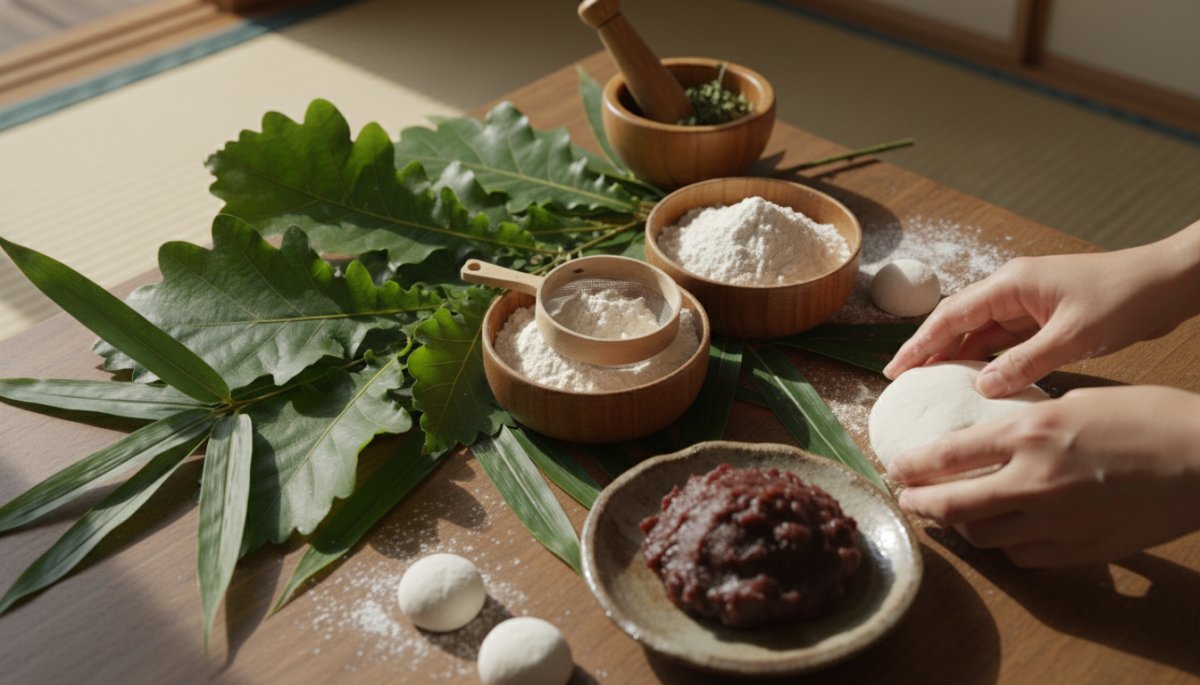
The ingredients for kashiwa mochi are simple yet profound.
Using Joshin-ko and Shiratama-ko for Different Purposes
柏餅の生地作りには、上新粉と白玉粉が使われます。上新粉はうるち米を原料とした粉で、しっかりとした食感を生み出します。一方、白玉粉はもち米を原料とし、もちもちとした弾力を与えます。上新粉と白玉粉の比率で食感が変わるため、使用する原料の規格と製法に合わせて試作で調整してください。
美濃与では、上新粉(上米の粉 22kg・特選米の粉 22kg・米の粉(気流粉砕)20kg)と白玉粉 20kgを扱っています。品質の高い粉を使うことで、なめらかで上品な仕上がりになります。
Types of an and how to choose
Kashiwamochi filling comes in two types: koshi-an (smooth paste) and tsubu-an (chunky paste).
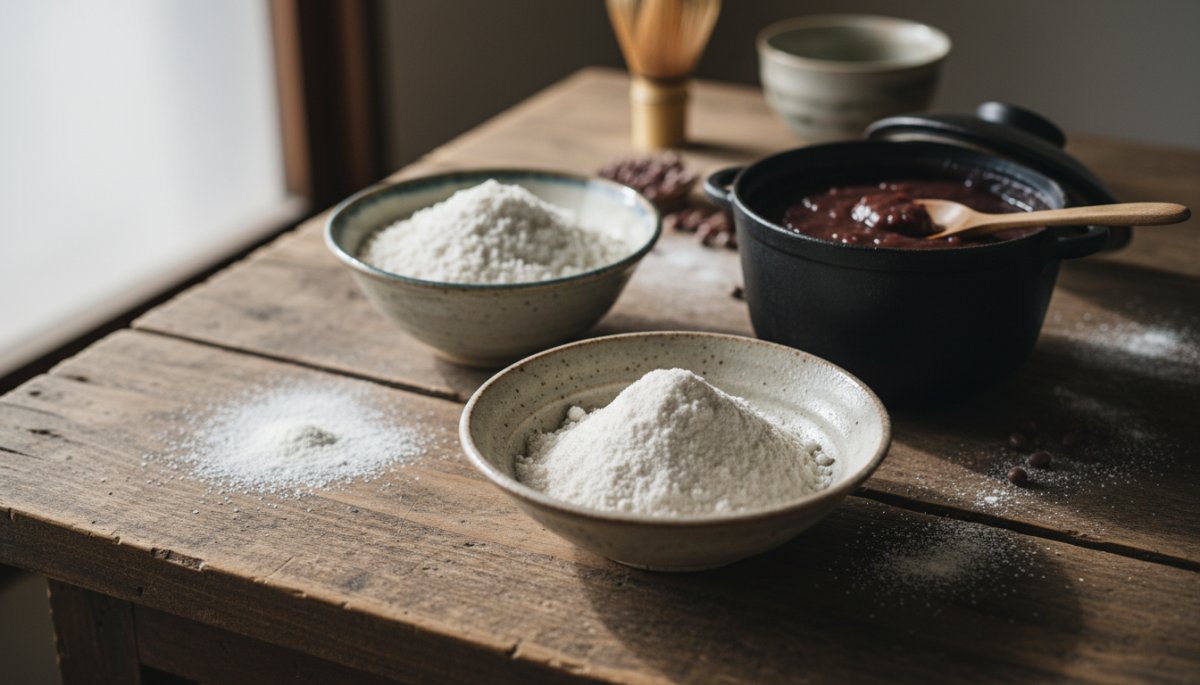
Koshi-an is a smooth paste made by removing the skins of the adzuki beans, characterized by its refined sweetness. Tsubu-an retains the whole adzuki beans, letting you enjoy the natural flavor and texture of the beans. In the Kansai region, koshi-an tends to be preferred, while in the Kanto region tsubu-an is favored. In addition, tsubu-an is often paired with dough kneaded with mugwort, while koshi-an is generally paired with white dough.
美濃与では、晒餡(特一号晒餡・冨士印晒餡・白晒餡、各12kg)を扱っています。形態や使用方法は規格書で確認してください。
Types of Kashiwa Leaves and How to Store Them
柏餅に使う柏の葉には、乾燥柏葉と特選柏青葉があります。乾燥柏葉は100枚×40束の規格で提供され、使用前に水で戻すことで新鮮な柏の香りが蘇ります。特選柏青葉は緑色の柏葉で、500枚×8Pの規格です。
柏の葉は新芽が出るまで古い葉が落ちないことから、子孫繁栄の願いが込められています。保存する際は、乾燥を防ぐために密閉容器に入れ、冷暗所で保管します。
Basic Ingredients Needed to Make Chimaki
ちまきは柏餅よりも歴史が長く、平安時代の文献にすでに名前が見られます。
ちまきの生地は上新粉ともち粉で作る
ちまきの生地には、上新粉ともち粉を組み合わせます。比率は製法と求める食感によって変わるため、使う原料で試作して決めてください。
美濃与では、餅粉(分銅印 特上餅粉・上餅粉・特選餅粉 各22kg、もち粉(気流粉砕)20kg)を扱っています。もち粉は餅米を原料としており、上新粉と組み合わせることで、ちまき特有のもっちりとした食感を実現します。
Choosing Sugar and Sweeteners
ちまきの甘さを決めるのが砂糖です。上白糖を使うのが一般的ですが、黒砂糖を使うことで茶色い生地を作ることもできます。
The amount of sugar can be adjusted to taste, but too much makes the dough too soft, while too little leaves it lacking sweetness. Professional wagashi artisans make fine adjustments to suit the season and regional preferences.
Preparing Bamboo Leaves and Rush
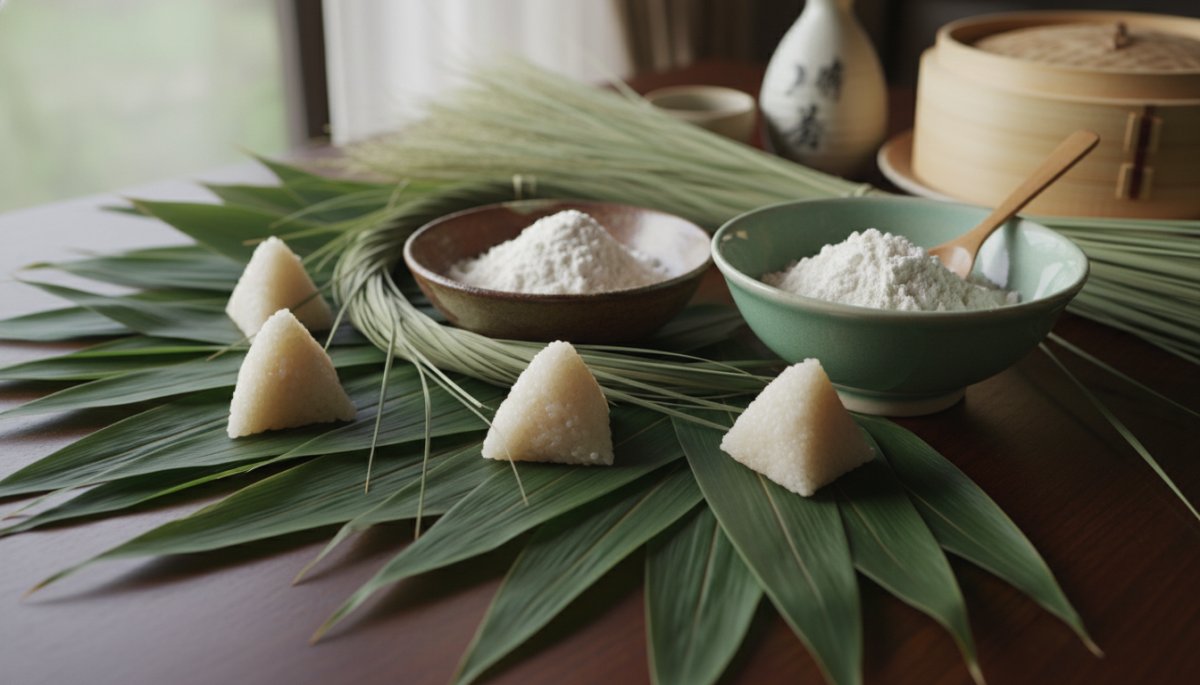
ちまきを包む笹の葉として、美濃与では青森の笹を50枚×100束の規格で扱っています。笹特有の爽やかな香りが和菓子に移ります。笹の葉は使用前によく洗い、水気を拭き取っておきます。
The rush used to tie chimaki is briefly boiled in hot water to soften and revive it. Rush is a natural material and an important element in creating the traditional charm of wagashi. Combining bamboo leaves with rush completes a chimaki that is beautiful to look at.
Specialty Ingredients Useful for Making Wagashi
端午の節句の和菓子には、基本材料のほかに澱粉や果実加工品、着色料も使われます。
Types and Uses of Starches
For making translucent wagashi, starches such as kuzu and warabi are essential.Genuine warabi starchはわらび餅などに使われる澱粉です。本葛は葛餅などに使われる澱粉で、透明感のある美しい仕上がりとなめらかで上品な食感を生み出します。
Minoyo offers hon-warabi-ko 10kg, hon-kuzu 5kg×4,Zuiichi Hon-kuzuand 5kg×3 among other formats. These starches are of a quality used by high-end wagashi shops and are ideal for making warabi-mochi, kuzu-mochi, and the like. We also carry potato starch, wheat starch, and sweet potato starch in commercial formats of 25kg and 20kg.
Fruits and Flavoring Ingredients
To create a sense of the season, fruits are sometimes added. Yuzu-related products such as yuzu slices, yuzu jam, fresh yuzu paste, and yuzu juice add a refreshing aroma and pleasant tartness to wagashi. All require refrigerated or frozen storage to preserve their fresh flavor.
Minoyo offers formats such as yuzu slices 11kg, yuzu jam 2kg and 20kg, fresh yuzu paste 11kg, and yuzu juice 2kg×6 bottles. These processed fruit products are ideal for topping habutae-mochi and fresh confectionery, letting you fully enjoy seasonal flavors.
Colorings and Color Expression
和菓子に美しい彩りを添えるのが着色料です。煉本紅、煉黄色、煉青色、煉挽茶色などの練りタイプと、赤色3号、桜花紅、青色1号、黄色4号などの粉末タイプがあります。
Minoyo offers formats such as neri hon-beni 150g and 600g, liquid pink 200g, and Red No. 3 50g and 500g. Using these colorings lets you reproduce traditional wagashi colors, completing wagashi that are visually beautiful.
Minoyo's Original "Tomo" Series
Minoyo's original "Tomo" Series simplifies the making of wagashi.
Warabi-gashi no Tomo and Kuzu-gashi no Tomo
Warabi-gashi no Tomo is a product that supports the making of warabi-mochi. Offered in 1kg and 10kg formats, it balances ease of use with quality. Kuzu-gashi no Tomo likewise simplifies the making of kuzu-mochi while delivering consistent quality.
蕨菓子の友・葛菓子の友・水まんじゅうの友はミックス粉で、水と砂糖を加えて加熱すれば生地ができます。プロの和菓子職人も、効率的な製造のために活用しています。
Mizu Manju no Tomo
水まんじゅうの友は、透明感のある水まんじゅう作りに最適です。1kg、10kgの規格で提供され、業務用としても家庭用としても使いやすい量です。
Using these products saves the effort of weighing and blending ingredients, allowing you to efficiently make wagashi of consistent quality. They are also handy when making large quantities of wagashi for the Boys' Festival.
Storing Ingredients and Quality Control
Proper storage of wagashi ingredients is essential to maintaining quality.
Storing Flours and Guarding Against Humidity
Flours such as joshin-ko, shiratama-ko, and mochi-ko dislike humidity. After opening, transfer them to an airtight container and store in a cool, dark place. Moisture can cause the flour to clump or grow mold. Extra care is needed during the rainy season and in summer.
When using large commercial packages, dividing them into smaller portions for storage makes them easier to use. Placing a desiccant in the airtight container helps preserve quality for a longer period.
Storing Leaves and Maintaining Freshness
柏の葉や笹の葉は、乾燥を防ぐために密閉容器に入れ、冷暗所で保管します。特選柏青葉などの生葉は、冷蔵保存が必要です。使用前に水で戻す乾燥柏葉は、常温保存が可能ですが、直射日光は避けてください。
Wash bamboo leaves well and wipe off moisture before use. Rush is briefly boiled in hot water to soften and revive it; keeping any unused portion refrigerated lets you use it again next time.
Storing Bean Pastes and Fruits
晒餡(12kg)の開封後の扱いは、規格書の保存条件に従ってください。果実類の柚子スライス、柚子ジャム、生柚子ペーストなどは、すべて要冷蔵または冷凍保存です。
For frozen storage, dividing into portions, wrapping in plastic wrap, and placing in freezer bags makes them easier to use. Thawing slowly in the refrigerator helps preserve quality.
Conclusion: Keys to Successful Wagashi-Making for the Boys' Festival
端午の節句の和菓子は、材料選びと保存方法で仕上がりが変わります。
柏餅には上新粉、白玉粉、餡、柏の葉が必要で、ちまきには上新粉、もち粉、砂糖、笹の葉、井草が欠かせません。それぞれの材料には特性があり、品質の高いものを選ぶことで、美味しく美しい和菓子が完成します。美濃与では、和菓子原料を業務用の規格で提供しています。
また、オリジナルの「友」シリーズを使えば、材料の計量や配合の手間を減らせます。材料の適切な保存方法を守り、新鮮な状態で使用することが、美味しい和菓子作りの秘訣です。
See Minoyo's Product List Here
📦 Related Minoyo Products
Please feel free to consult us about commercial procurement and sample requests
美濃与は京都に拠点を置く京菓子原材料の専門商社です。本記事で取り上げた原料の業務用調達や、お試しサンプル、ロット・規格のご相談など、和菓子製造の現場に寄り添った提案を行っています。
For Minoyo's business and strengths, please see Our Business & Why We Are Chosen . For the actual flow of doing business, see Ordering Process & How to Order; for questions, we have compiled them at Frequently Asked Questions . For individual consultations, please use Contact or material download to get in touch.


