Raw Materials Guide, Commercial-Use Guide

The Complete Guide to Choosing Commercial Chestnut Kanroni (Simmered Chestnut): Quality Standards and Tips for Cost Optimization

March 10, 2026

Table of Contents

<a href=Chestnut KanroniThe complete guide to choosing commercial products|Tips on quality standards and cost optimization” style=”width: 100%;height: auto;margin-bottom: 20px; max-width: 100% !important; height: auto !important; display: block; margin: 0 auto 20px;” />

To avoid failure in choosing commercial candied chestnuts

When offering chestnut products at a wagashi shop or restaurant, the choice of raw material is a crucial factor that determines the finish.

The price range of commercial candied chestnuts varies greatly depending on size, quality, and whether the inner skin is left on. By making the right choice, you can offer a high-quality product while keeping costs down.

In this article, we thoroughly explain how to choose commercial candied chestnuts wisely. We cover the practical know-how professionals should know—from the difference between chestnuts with the inner skin on and peeled chestnuts, to size specifications, quality checkpoints, and storage methods.

See Minoyo's Product List Here


The difference between chestnuts with the inner skin on and peeled chestnuts, and how to use each

Candied chestnuts are broadly divided into two types: "with the inner skin on" and "peeled chestnuts."

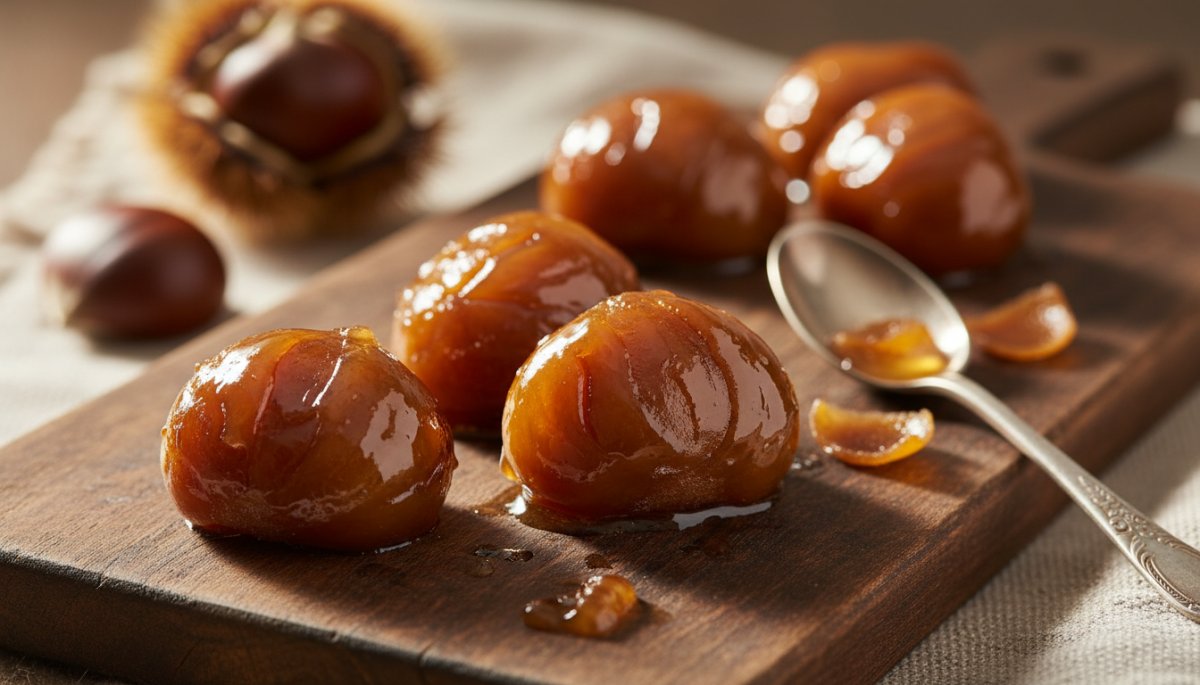
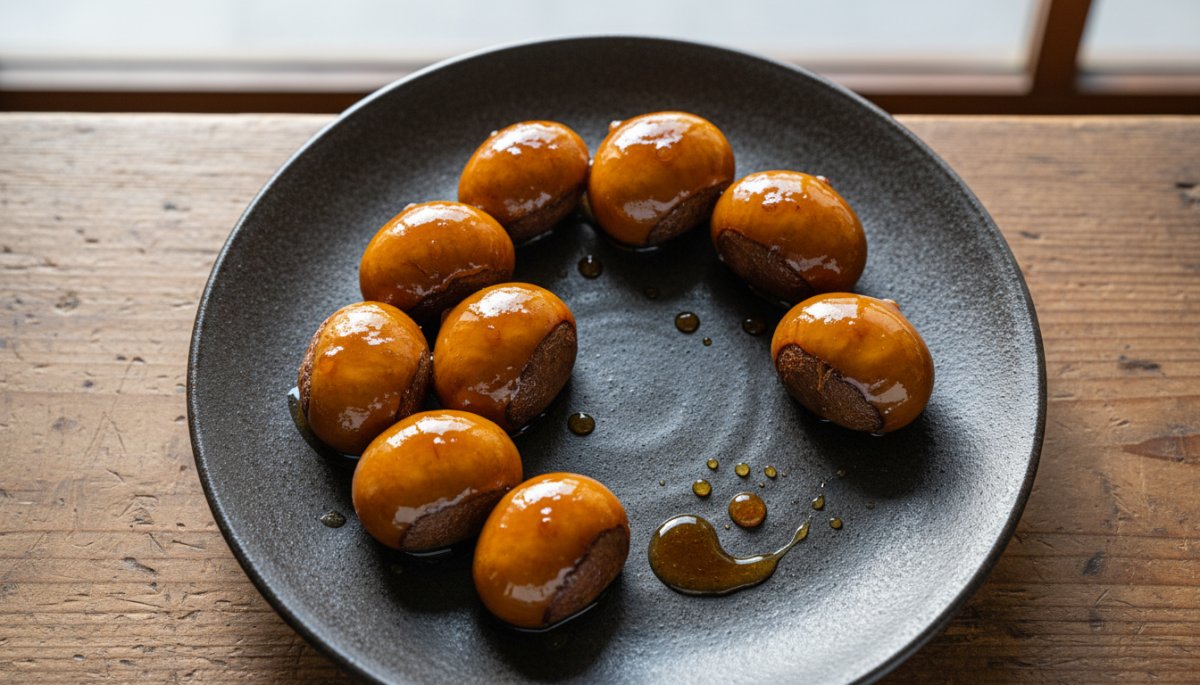
Candied chestnuts with the inner skin on are premium products that let you enjoy the chestnut's inherent flavor and texture. The polyphenols contained in the inner skin create a distinctive flavor, and they have a luxurious appearance. At wagashi shops, they are ideal for products that put the presence of the chestnut front and center, such as kuri kinton, kuri yokan, and kuri manju.

渋皮付き栗甘露煮の断面と質感

Peeled chestnuts, on the other hand, are products with the inner skin completely removed, characterized by a smooth texture. At restaurants they are used in chestnut rice and osechi kuri kinton, and at Western confectionery shops in Mont Blanc cakes and marrons glacés—a wide range of applications.

In terms of price, those with the inner skin on are somewhat more expensive, but considering the depth of flavor, they are worth the investment for wagashi. Peeled chestnuts are highly versatile and offer excellent cost performance, making them suitable when using large quantities.

How to judge the firmness of the inner skin and quality

When choosing candied chestnuts with the inner skin on, the firmness of the inner skin is an important checkpoint.

High-quality products have the inner skin finished to be moderately soft, to a degree that isn't noticeable in the mouth. An overly firm inner skin spoils the texture and becomes a cause of lower customer satisfaction. When requesting a sample, we recommend actually tasting it and checking the texture of the inner skin.


Size specifications and optimal selection by application

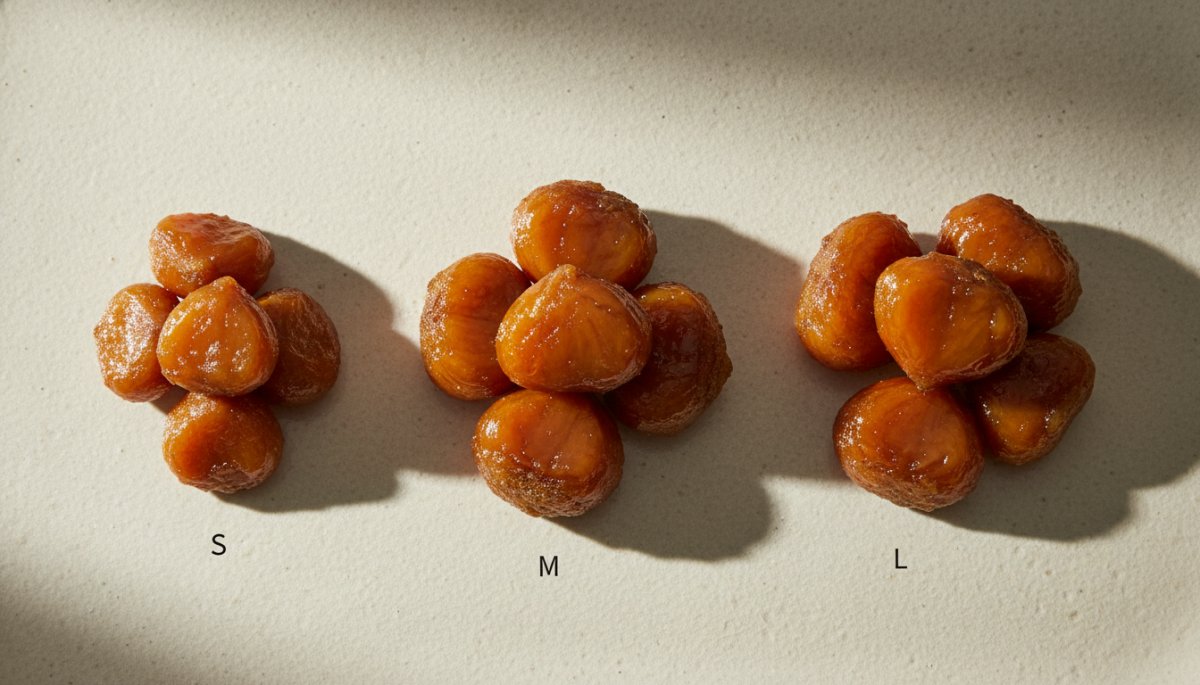
Commercial candied chestnuts are classified by size specifications such as S, M, and L.

S size (small) contains about 110–160 pieces per jar and is suited to dishes where the chestnuts are finely chopped, such as chestnut okowa and takikomi gohan. The price is also relatively reasonable, making it effective when you want to keep costs down.

M size (medium) is the most versatile, with about 40–55 pieces per jar. It can handle a wide range of applications, from wagashi fillings to dish toppings. Many commercial products use this size as standard, offering the advantage of easy inventory management.

業務用栗甘露煮のサイズ比較

L size (large) contains about 20–30 pieces per jar and is used in premium wagashi and special osechi dishes. It looks impressive and makes the most of the chestnut's presence, making it ideal for producing premium products.

Using broken pieces to cut costs

"Broken pieces" with cracks or chips allow significant cost reduction for applications where shape does not matter.

For products where the shape is ultimately not visible—such as chestnut paste, chestnut an (sweet bean paste), and folding into dough—broken pieces present no quality issues. Some manufacturers offer broken pieces made with the same raw materials and methods as regular products, maintaining the same high quality with no difference in flavor or sweetness.


Quality checkpoints and selection criteria

There are several important points for judging the quality of commercial candied chestnuts.

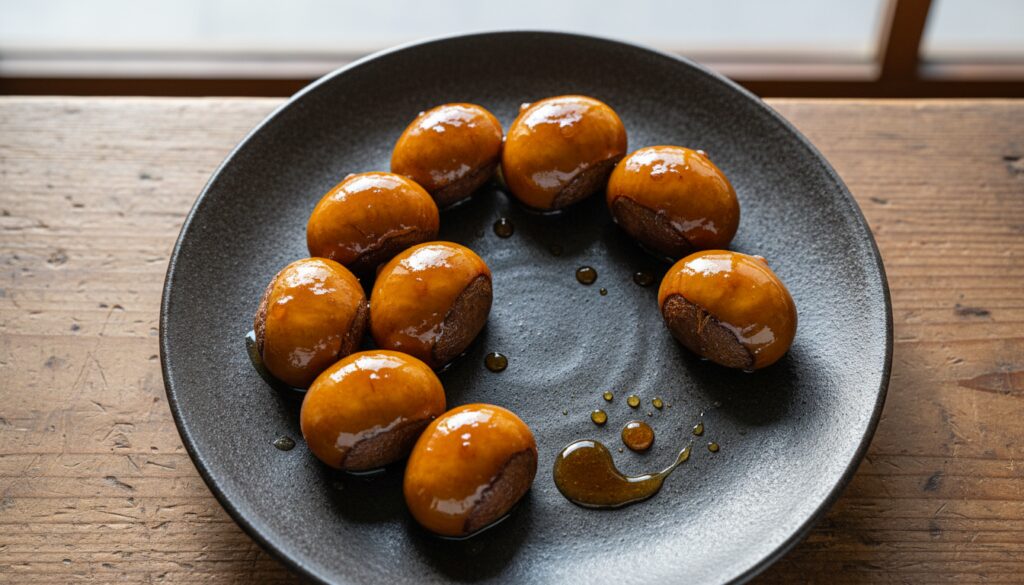
First, check the color and luster of the chestnuts. Fresh candied chestnuts show a beautiful golden to amber color, with a moderate sheen on the syrup. If there is discoloration or cloudiness, there may be a problem with storage conditions or the production period.

Next is the softness and texture of the chestnuts. Properly processed candied chestnuts have a softness that crumbles gently in the mouth while still holding their shape. If they are too firm, there is a problem with sugar-content management or heat treatment; conversely, if they are too soft, excessive processing or long-term storage may be the cause.
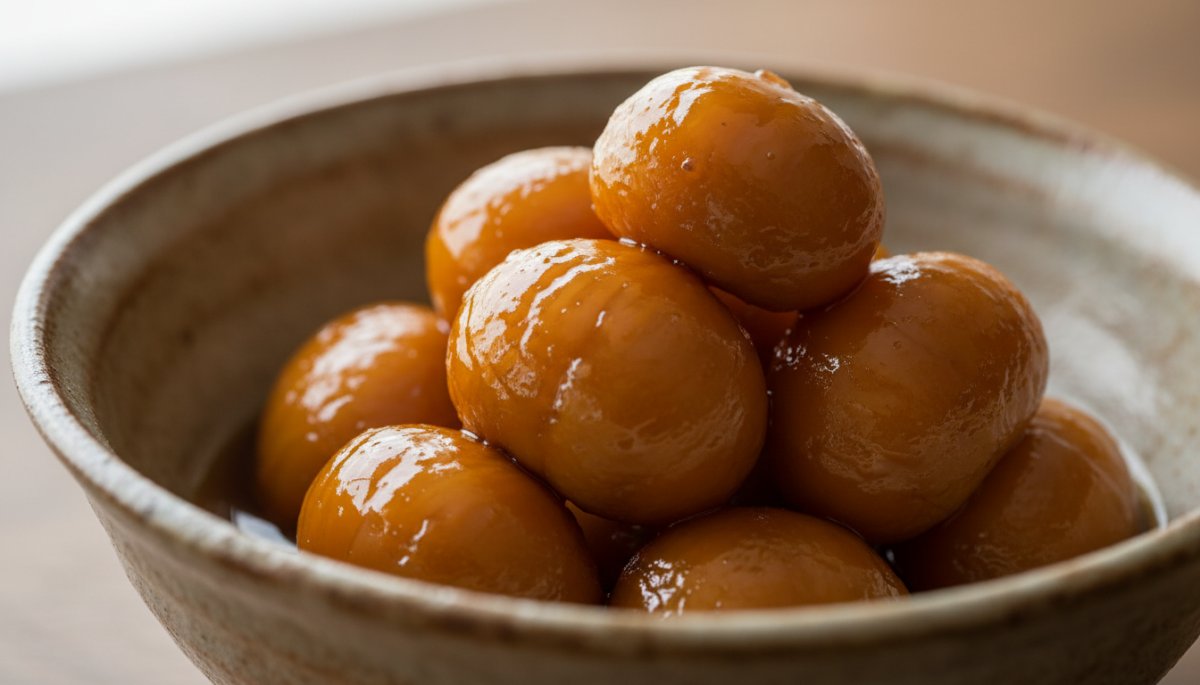
高品質な栗甘露煮の色艶と質感

The balance of sugar content and salt content

What determines the taste of candied chestnuts is the balance of sugar content and salt content.

The sugar content of typical candied chestnuts is around 40–60 degrees, but the optimal sugar content differs by application. For wagashi, the low-sugar type at 40–45 degrees is popular because it makes the most of the chestnut's inherent flavor. For osechi kuri kinton, the high-sugar type at 50–60 degrees offers an excellent balance of preservability and sweetness.

The salt content is usually around 1–2%, playing the role of enhancing the sweetness. If the salt content is too high, it spoils the chestnut's flavor; if too low, it gives a cloyingly sweet impression—so balance is important.


Storage methods and managing the best-before date

To maintain the quality of commercial candied chestnuts, proper storage management is essential.

Unopened canned or packaged products can be stored at room temperature, with a best-before date of about two years from production. Store them away from direct sunlight in a place with little temperature variation. Frozen-type chestnut paste and chestnut an can maintain quality for two years by storing at -18℃ or below.

After opening, always refrigerate and use up as quickly as possible. In the case of canned products, transferring them to another container and storing them together with the syrup prevents drying out. As a guideline, the use-by period under refrigeration is about one week after opening.

Tips for inventory management and reducing loss

Because commercial candied chestnuts are a seasonal product, planned inventory management is required.

Ahead of the autumn–winter demand period, drawing up a purchasing plan from summer creates room for stable supply and price negotiation. When stocking multiple sizes or types, thoroughly apply the FIFO (first-in, first-out) method—consuming the most frequently used items first and placing those with the nearest best-before dates at the front.
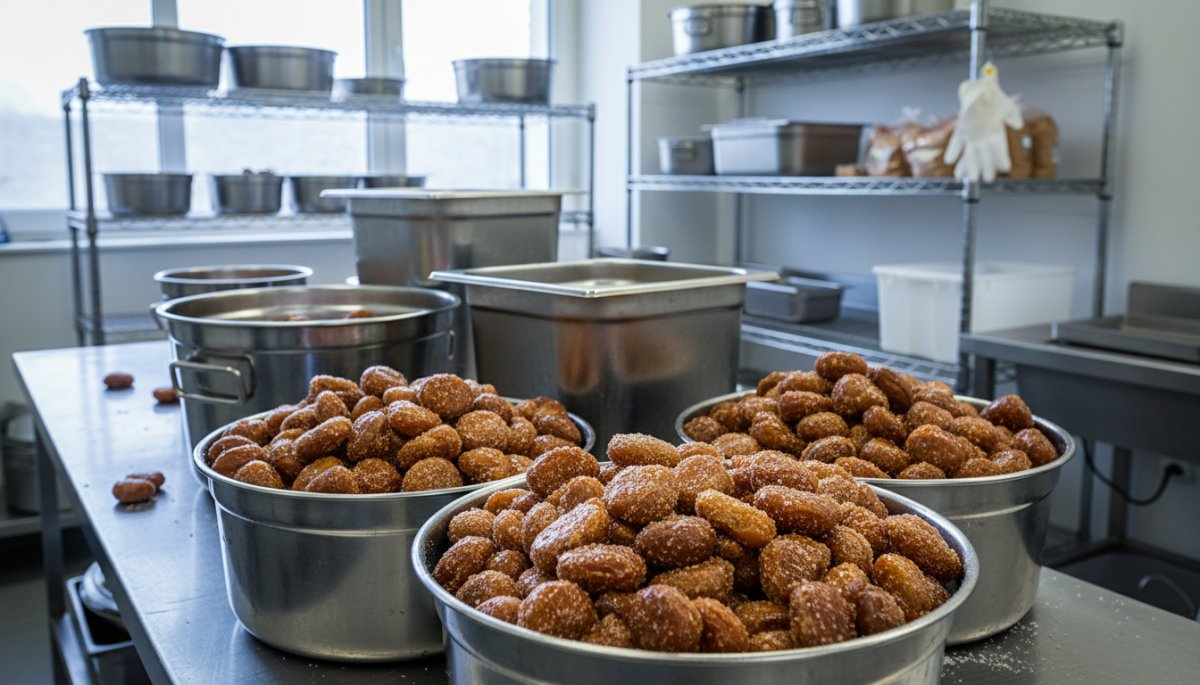
業務用栗甘露煮の適切な保存状態


Summary: Finding the optimal balance of quality and cost

The key to success in choosing commercial candied chestnuts is to weigh the three factors of application, quality, and cost in good balance.

By understanding the characteristics of chestnuts with the inner skin on versus peeled chestnuts and using each according to the features of your product, you can raise customer satisfaction. By making use of size specifications and broken pieces, you can maximize cost performance.

By keeping the quality checkpoints in mind and carrying out proper storage management, you can consistently offer products of stable quality. At Minoyo, we carry a variety of commercial chestnut products such as extra-soft candied marrons,marron kanroni first grade, and candied chestnuts with the inner skin on.

As professional wagashi shops and restaurants, choose the optimal candied chestnuts and achieve product-making that delights your customers.

See Minoyo's Product List Here

Please feel free to consult us about commercial procurement and sample requests

Minoyo is a specialty store for Kyoto confectionery raw materials based in Kyoto. For the raw materials covered in this article, we offer proposals close to the realities of wagashi production, including commercial procurement, trial samples, and consultation on lots and specifications.

For Minoyo's business and strengths, please see Our Business & Why We Are Chosen . For the actual flow of doing business, see Ordering Process & How to Order; for questions, we have compiled them at Frequently Asked Questions . For individual consultations, please use Contact or material download to get in touch.

Related Articles

What Is Cacao Allergy? A Guide to the Three Types of Causes and How to Choose Alternative Ingredients

We explain the main causes of cacao allergy (the cacao bean itself, sub-ingredients, and cross-contamination) and how to choose alternative ingredients. From flavor-profile comparisons of carob, soy cacao, and Japanese ingredients to allergen management in product development and OEM, we organize it all from the perspective of Minoyo, which has handled Kyoto confectionery raw materials for 120 years.

Halal Chocolate Ingredients and Certification | A Business-Focused Guide Including Cacao Alternatives

We comprehensively explain the ingredient design and certification points for halal chocolate, covering emulsifiers, dairy, sweeteners, and cacao alternatives. From the appropriate use of certification bodies such as JHA, JAKIM, and BPJPH to the decision criteria for OEM consultations with export channels in mind, we organize it all from the perspective of Minoyo, which has handled Kyoto confectionery raw materials for 120 years.

Latest Articles

Categories

Tags

Request Materials & Contact​

Please feel free to reach out with any questions about raw materials or products, or to request materials.
Our dedicated staff will respond with care.