Recipes

A Thorough Guide to Daifuku Ingredients and Proportions | A Pro's Tips for a Chewy Texture

March 10, 2026

Table of Contents

大福の材料と配合を徹底解説|もちもち食感を作るプロのコツ

The basic ingredients essential for making daifuku

The most important thing in making daifuku is the choice of ingredients.

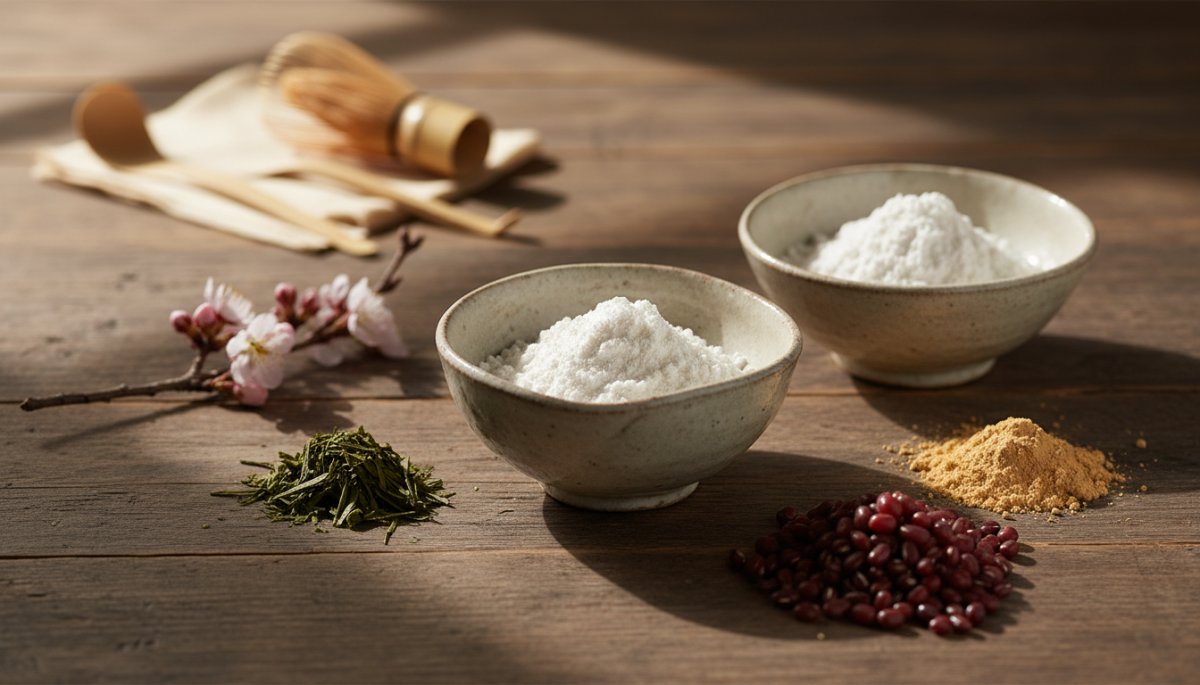
For the gyuhi dough that produces the chewy texture, shiratama-ko (glutinous rice flour) or mochi-ko is used. Shiratama-ko is a flour made by washing glutinous rice, grinding it, soaking it in water, and drying it; it has fine particles and dissolves easily in water. Mochi-ko, on the other hand, is made by grinding glutinous rice without washing it, and differs in that its particles are coarser than shiratama-ko and its flavor is stronger.

Shiratama-ko gives better stretch to gyuhi and is easier to handle even for beginners, so shiratama-ko is recommended when making daifuku at home. Mochi-ko can be used as a substitute, though the texture changes slightly. However, joshin-ko (rice flour) is a flour made from non-glutinous rice, so the texture of the mochi skin is more crisp than stretchy—it is suited to kashiwa mochi and the like, and is not suitable for making daifuku.

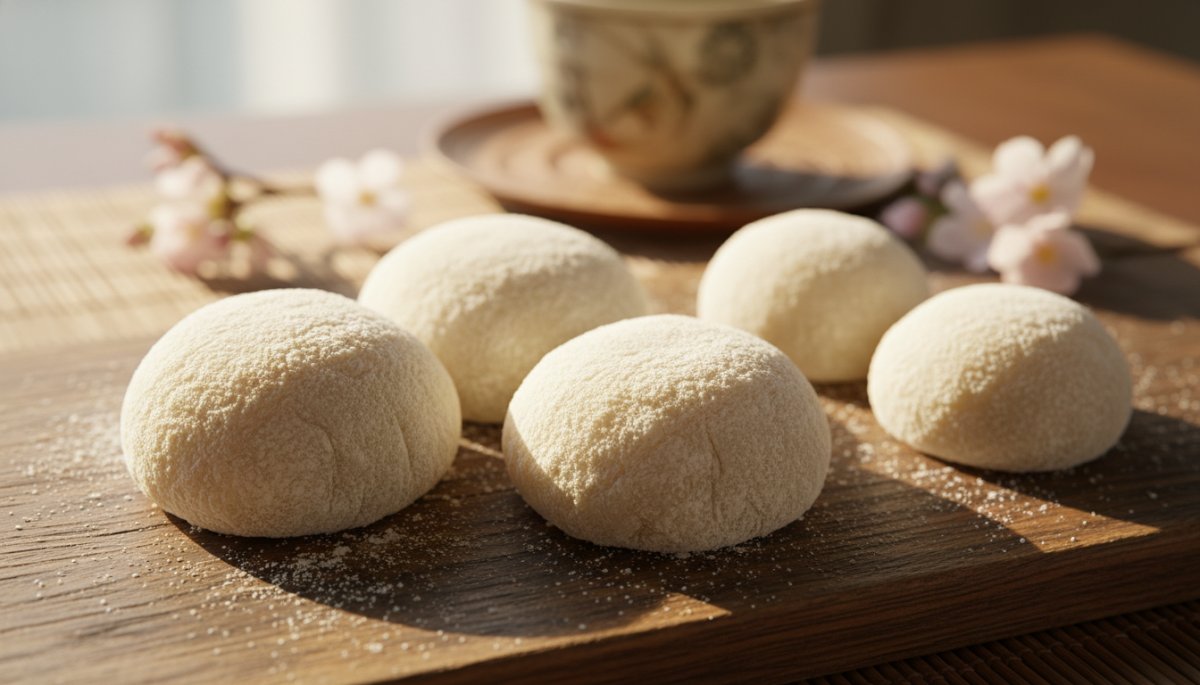
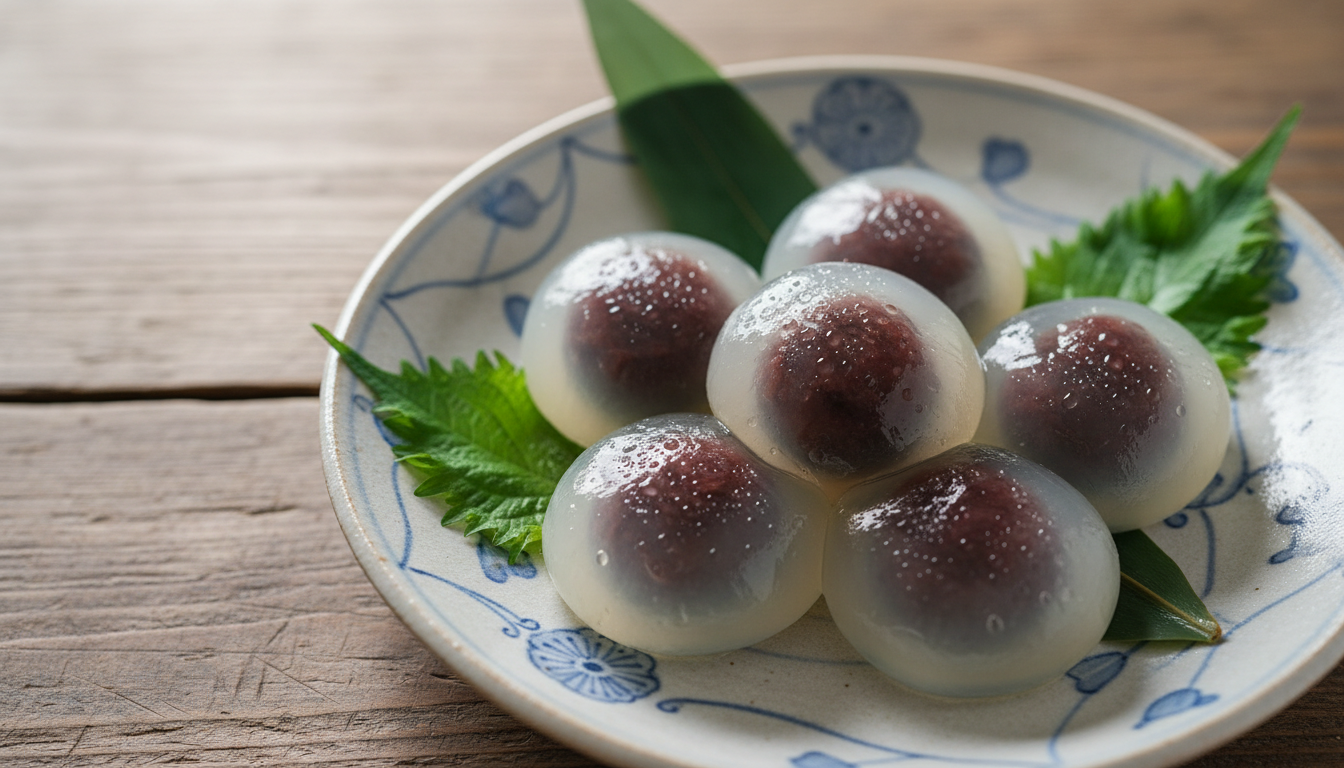
白玉粉ともち粉の違いを示す和菓子材料


The blending ratio of gyuhi and its balance

The basic blend for making daifuku gyuhi is generally 50–80g of sugar and 150–180ml of water per 100g of shiratama-ko.

The amount of sugar can be adjusted to your preference for sweetness, but too much sugar makes the dough too soft and hard to handle. Too little, on the other hand, causes it to lose its chewiness and become hard. The amount of water is also important: too much makes it sticky, and too little leaves a powdery taste.

When making it in a microwave, the point is to first mix the shiratama-ko and sugar together, then add water little by little, mixing thoroughly until there are no lumps. Cover loosely with plastic wrap, heat at 600W for 2–3 minutes, remove once and mix well, then heat again—repeating this process completes a translucent, uniform gyuhi.

Tips for blending and points to note

To avoid failure in making gyuhi, keep the following points in mind.

  • Mix the shiratama-ko and sugar together thoroughly at the start
  • Add water little by little, without forming lumps
  • Always mix after heating to eliminate unevenness
  • Repeat heating until it becomes translucent
  • Turn it out onto a tray dusted with potato starch and shape it while hot

The dough is easy to handle while hot, but it hardens as it cools, so working quickly is important.
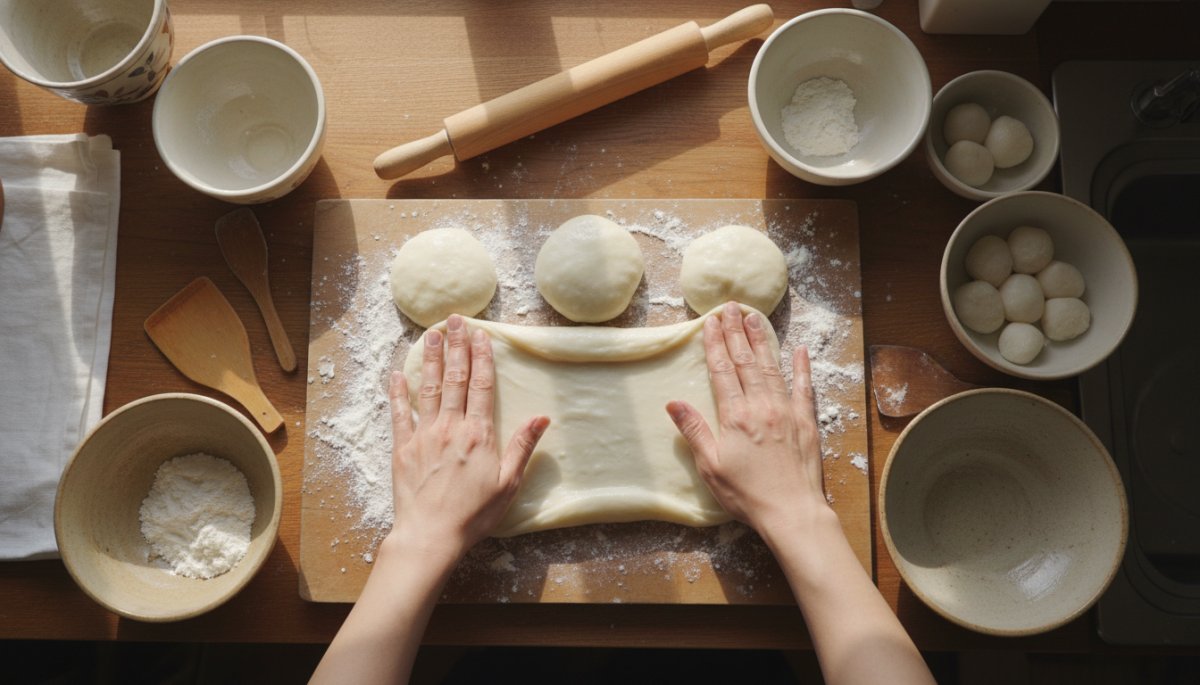
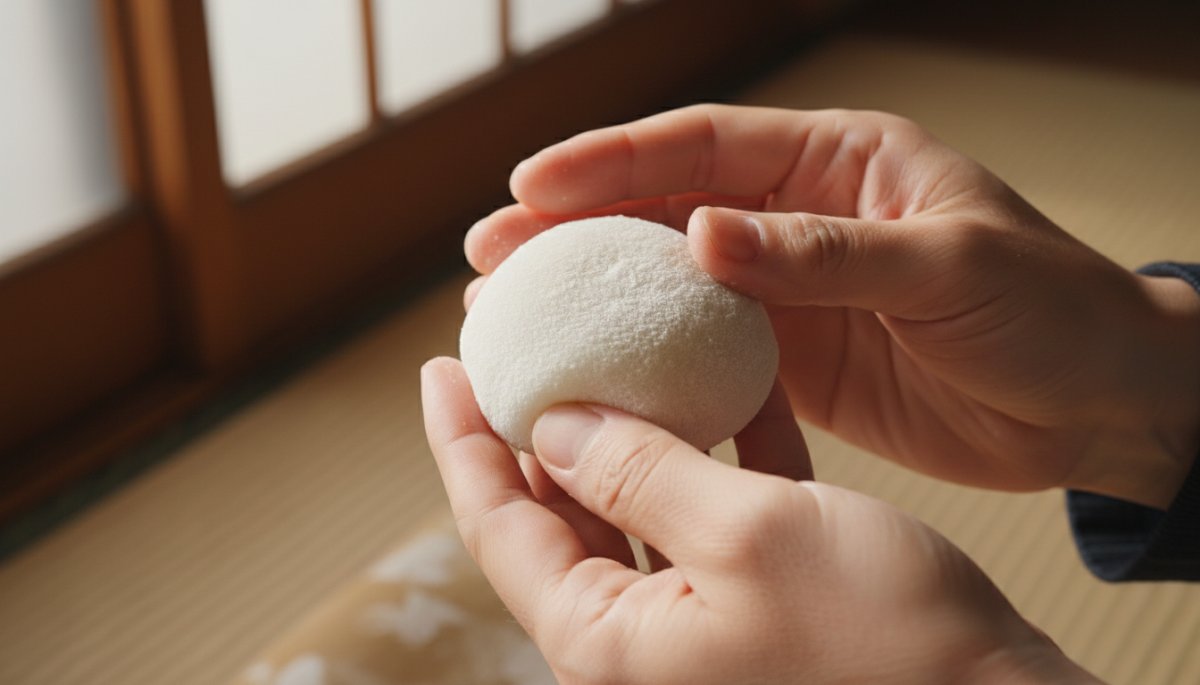
大福の求肥生地を作る工程


Types of an and how to choose

The an (sweet bean paste) that becomes the filling of daifuku is a crucial element that determines the taste.

Traditional daifuku uses koshi-an or tsubu-an, but in recent years the variety has grown to include shiro-an, matcha cream cheese an, chocolate an, and more. Koshi-an is a smooth paste made by simmering adzuki beans and passing them through a sieve, characterized by an elegant sweetness. Tsubu-an is a paste that leaves the adzuki bean grains intact, letting you enjoy texture and flavor.

Shiro-an is a pure-white paste using white kidney beans or white adzuki beans, ideal for making wagashi that showcase color. When making fruit daifuku, using shiro-an makes the fruit's color stand out. In the case of strawberry daifuku, the common method is to divide koshi-an into six portions, flatten them, and wrap a hulled strawberry.

Arrangements with modern anko

Not only traditional an, but daifuku using Western-style fillings are also popular. You can enjoy unique combinations such as vanilla custard an, matcha cream cheese an, and chocolate-and-peanut-butter an. When using cream-based an, chilling it in the refrigerator before wrapping makes the work easier.

An an that combines fruit purée and cream—like mango cream daifuku—can also create a sense of the season.
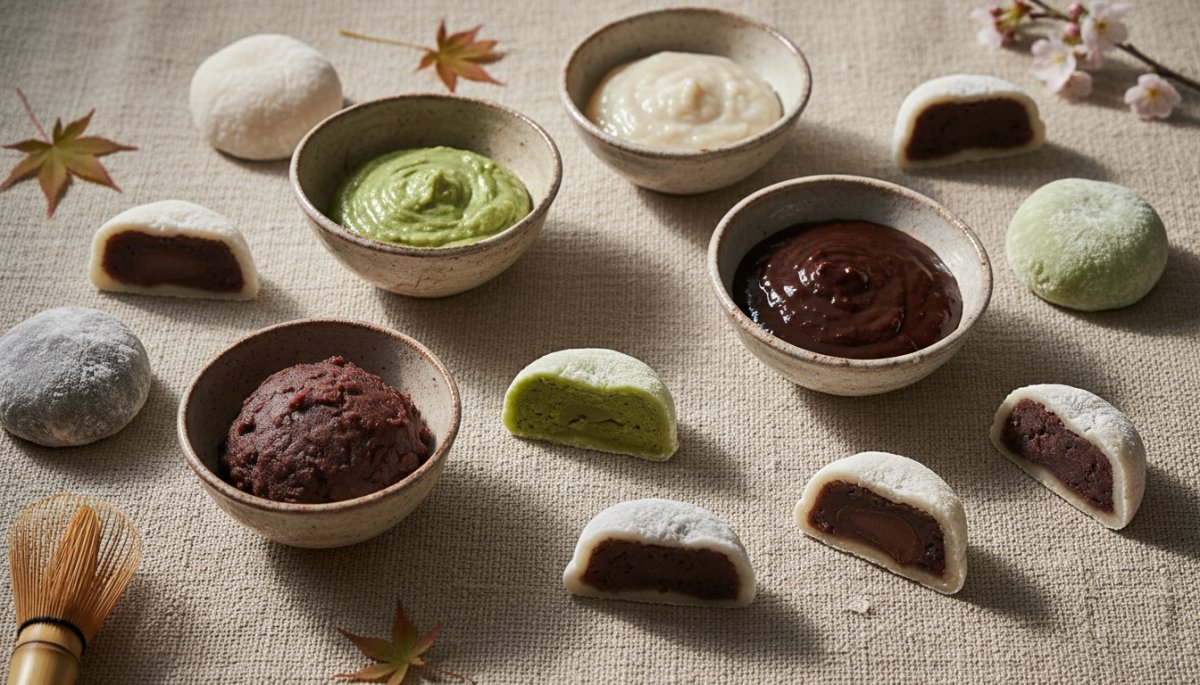
様々な種類の餡と大福の断面


Professional techniques for producing a chewy texture

The chewy texture of daifuku is determined by both the choice of ingredients and the cooking method.

Shiratama-ko has fine particles and dissolves easily in water, giving good stretch to the gyuhi and producing a chewy texture. The heating method is also important: when using a microwave, repeating the process of heating at 600W for 2 minutes, mixing well, and heating again for 30 seconds to 2 minutes completes a translucent, uniform dough.

When using a steamer, steaming thoroughly over high heat makes it delicious by driving off the powdery smell. The point is to heat until the dough becomes translucent and develops a sheen. Also, using too much potato starch when making gyuhi spoils the texture, so using a moderate amount is important.

Points to note to avoid failure

Common failures in making daifuku include the dough becoming hard, sticky, or prone to tearing.

The dough becoming hard is caused by insufficient moisture or overheating. It can be improved by adjusting the amount of water and shortening the heating time. Stickiness is likely due to too much moisture or insufficient heating. Heating thoroughly until it becomes translucent and dusting moderately with potato starch makes it easier to handle.

If the dough is prone to tearing, try reconsidering the quality and blending ratio of the shiratama-ko. Because shiratama-ko has good stretch, it tears less easily than mochi-ko and is suited to beginners.

もちもち食感の大福を手で持つ様子


Making use of a specialist that handles wagashi raw materials

Authentic daifuku making calls for high-quality raw materials.

Minoyo is a business specializing in wagashi raw materials, offering the raw materials needed for wagashi production across seven categories: shiruko ingredients and toppings, fruits, leaves and other plant materials, various starches, chestnuts and plums, original products, and colorings. From the finest shiro-an such as Toku-Ichigo Sarashi-an and Fuji-jirushi Sarashi-an, toGenuine warabi starch, hon-kuzu, Zuiichi Hon-kuzu, and other finest starches, the materials used by professional wagashi artisans are all here.

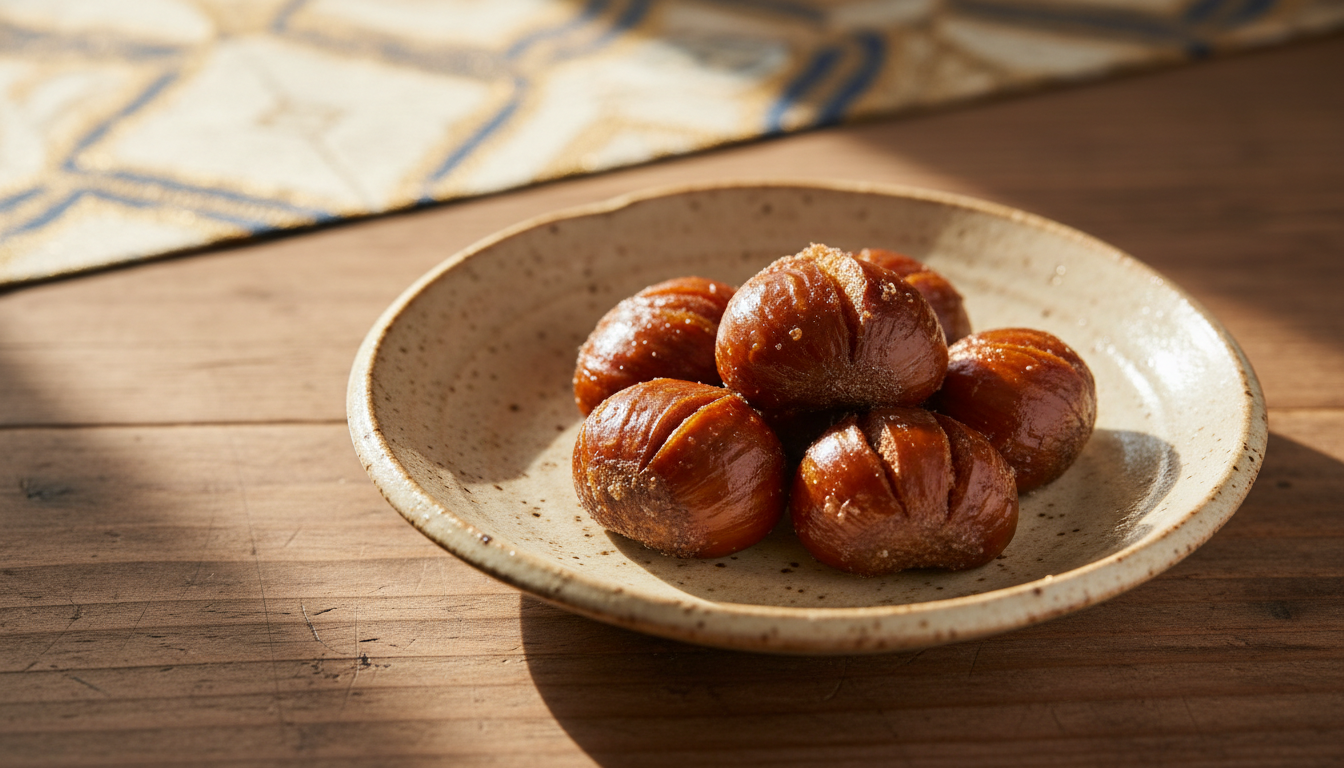
Even when making daifuku at home, using such a specialist's raw materials lets you reproduce a shop-quality authentic taste. From basic ingredients such as shiratama-ko, joshin-ko (rice flour), and potato starch, to premium materials such as yuzu paste andChestnut Kanroni, there is a wide range of options.

See Minoyo's Product List Here

Making use of the original "Tomo" Series

At Minoyo, we offer the original "Tomo" Series that simplifies wagashi production. Pre-blended raw materials that are hard to fail with even for beginners—such as Warabi Confection Tomo, Kuzu Confection Tomo, and Water Manju Tomo—are all here, letting you easily enjoy authentic wagashi making.

Because the blending ratios of these products are optimized, you can make wagashi of stable quality.


Summary: The secret to success in making daifuku

The most important thing in making daifuku is the balance of ingredient selection and blending ratio.

By using shiratama-ko, you can make a dough with a chewy texture and good stretch. The basic blend is 50–80g of sugar and 150–180ml of water per 100g of shiratama-ko, but you can adjust it to your preference. With a microwave, you can easily make gyuhi even at home, but the point is to heat thoroughly until it becomes translucent.

An can be enjoyed in a rich variety—not only traditional koshi-an and tsubu-an, but also shiro-an, cream-based, and fruit-based. By using high-quality raw materials, you can reproduce a shop-quality authentic taste. By making use of raw materials from a specialist like Minoyo, authentic daifuku making is possible even at home, with the materials that professional wagashi artisans use.

Because daifuku is most delicious freshly made, please enjoy it as soon as possible. Once you master the ingredients and blending tips, anyone can make delicious daifuku. By all means, use this article as a reference and try your hand at making chewy daifuku.

See Minoyo's Product List Here

📦 Related Minoyo Products

Please feel free to consult us about commercial procurement and sample requests

Minoyo is a specialty store for Kyoto confectionery raw materials based in Kyoto. For the raw materials covered in this article, we offer proposals close to the realities of wagashi production, including commercial procurement, trial samples, and consultation on lots and specifications.

For Minoyo's business and strengths, please see Our Business & Why We Are Chosen . For the actual flow of doing business, see Ordering Process & How to Order; for questions, we have compiled them at Frequently Asked Questions . For individual consultations, please use Contact or material download to get in touch.
Related Articles

Latest Articles

Categories

Tags

Request Materials & Contact​

Please feel free to reach out with any questions about raw materials or products, or to request materials.
Our dedicated staff will respond with care.