Raw Materials Guide

The Complete Guide to Choosing Domestic Chestnut Ingredients: The Best Varieties and Uses for Wagashi

March 10, 2026

Table of Contents

国産栗素材の選び方完全ガイド|和菓子に最適な品種と活用法

In wagashi making, the choice of chestnut material greatly influences the finish.

Flavor and texture differ by origin and variety, and the processed forms are also diverse. Are you unsure which chestnut to choose?

In this article, we thoroughly explain how to choose domestic chestnut materials. From characteristics by origin, to flavor by variety, to using each processed form appropriately, we introduce them in detail from a professional perspective. If you want to make high-quality chestnut wagashi, please read to the end.


Why domestic chestnut materials are chosen for wagashi

国産栗素材 和菓子原料 品質管理

Domestic chestnuts have earned deep trust from the wagashi industry for their rich flavor and stable quality.

Compared with foreign chestnuts, domestic chestnuts have a standout sweetness and aroma, making them ideal for expressing the delicate flavors distinctive to wagashi. In wagashi that make the chestnut the star—such as kuri kinton, kuri yokan, and kuri daifuku—this difference in flavor is clearly apparent.

In addition, domestic chestnuts are often processed soon after harvest, keeping their freshness intact. Because high-freshness chestnuts allow the chestnut's natural sweetness and texture to be drawn out to the fullest, they are highly valued by wagashi artisans.

Furthermore, domestic chestnuts are also superior from the standpoint of traceability. The clear origin and producer, and the thorough quality control, mean they can be used with peace of mind—a major appeal as well.


Characteristics of domestic chestnuts by origin

Chestnuts of the Tono region, Gifu Prefecture

The Tono region of Gifu Prefecture, particularly Nakatsugawa City, is nationally famous for "kuri kinton."

This region has cultivated chestnuts actively since the Edo period and has a history of flourishing as a post town on the Nakasendo. It is said that wagashi using wild chestnuts were created one after another to entertain travelers, and among them the prototype of kuri kinton was born.

The chestnuts of the Tono region are suited to simple wagashi making that brings out the flavor of the chestnut itself, and many long-established wagashi shops still preserve traditional methods to this day. However, because local chestnuts alone cannot keep up with production volume in autumn—the peak season for chestnut confections—carefully selected domestic chestnuts from other regions are also used in combination.

Chestnuts of Obuse, Nagano Prefecture

The town of Obuse in Nagano Prefecture is a producing region for high-quality chestnuts known as Obuse chestnuts.

Obuse chestnuts are characterized by their large grains and strong sweetness. Many of the wagashi made with this region's chestnuts are products that put the chestnut's natural deliciousness front and center, processed into chestnut an, honey-preserved chestnuts, and the like.

Local wagashi shops, starting with Chikufudo, use only superior domestic chestnuts centered on Obuse chestnuts, maintaining a stance of having nothing at all to do with foreign products. They are thorough in scrutinizing the yearly quality at the source and checking it strictly before purchasing.

Other major producing regions

Ibaraki and Kumamoto Prefectures are also well known as major producing regions for domestic chestnuts.

Ibaraki Prefecture produces an abundance of varieties such as Tsukuba, prized for their large size and rich, deep sweetness. Kumamoto Prefecture is also an active producer of Tsukuba, growing chestnuts well suited to boiled chestnuts and shibukawa-ni (chestnuts simmered in their inner skin).

Chestnuts from these regions are used selectively according to the characteristics of each variety in wagashi production, contributing to product-making that draws out the best of each one's distinctive qualities.


Chestnut Varieties and Characteristics Best Suited to Wagashi

栗品種 筑波 銀寄 丹沢 和菓子素材

Tsukuba

Tsukuba is a variety characterized by its large size and rich, deep sweetness.

Ideal for boiled chestnuts and shibukawa-ni, it is perfectly suited to chestnut wagashi that use whole chestnuts. Because it gives the chestnut a strong presence, it is frequently used in confections such as chestnut monaka and chestnut daifuku.

Widely produced in Ibaraki and Kumamoto Prefectures, it is highly trusted by wagashi artisans, offering the naturally fluffy texture and rich flavor of chestnuts.

Ginyose

Ginyose is widely known as a representative variety of Japanese chestnut.

Characterized by its refined sweetness and fluffy texture, it is used in a wide range of wagashi such as kuri kinton and kuri yokan. Its well-balanced flavor harmonizes well with other ingredients, making it a highly versatile variety in wagashi making.

Long-established wagashi shops in Gifu Prefecture also carefully select and use fine varieties including Ginyose, with choices grounded in many years of experience.

Tanzawa

Tanzawa is characterized by its low stickiness and crumbly texture.

With its restrained sweetness and aroma, it pairs easily with a variety of ingredients and is valued when processing chestnuts into paste or an (sweet bean paste style filling). Its appeal lies in giving the chestnut a moderate presence without overpowering the flavors of other ingredients.

It can be described as a variety that shines in wagashi production whenever a delicate balance of flavors is required.

Other Superior Varieties

Ishizuchi, Kunimi, Gannese, and Ibuki are also highly regarded as chestnuts for wagashi.

These varieties excel in color, luster, shape, size, and weight, and are sometimes purchased specifically as chestnuts for kuri kinton. In many cases they are selected through the proprietor's years of experience and processed carefully by hand, peeling the inner skin one by one without any use of machinery.


Processing Forms of Chestnut Ingredients and How to Choose by Application

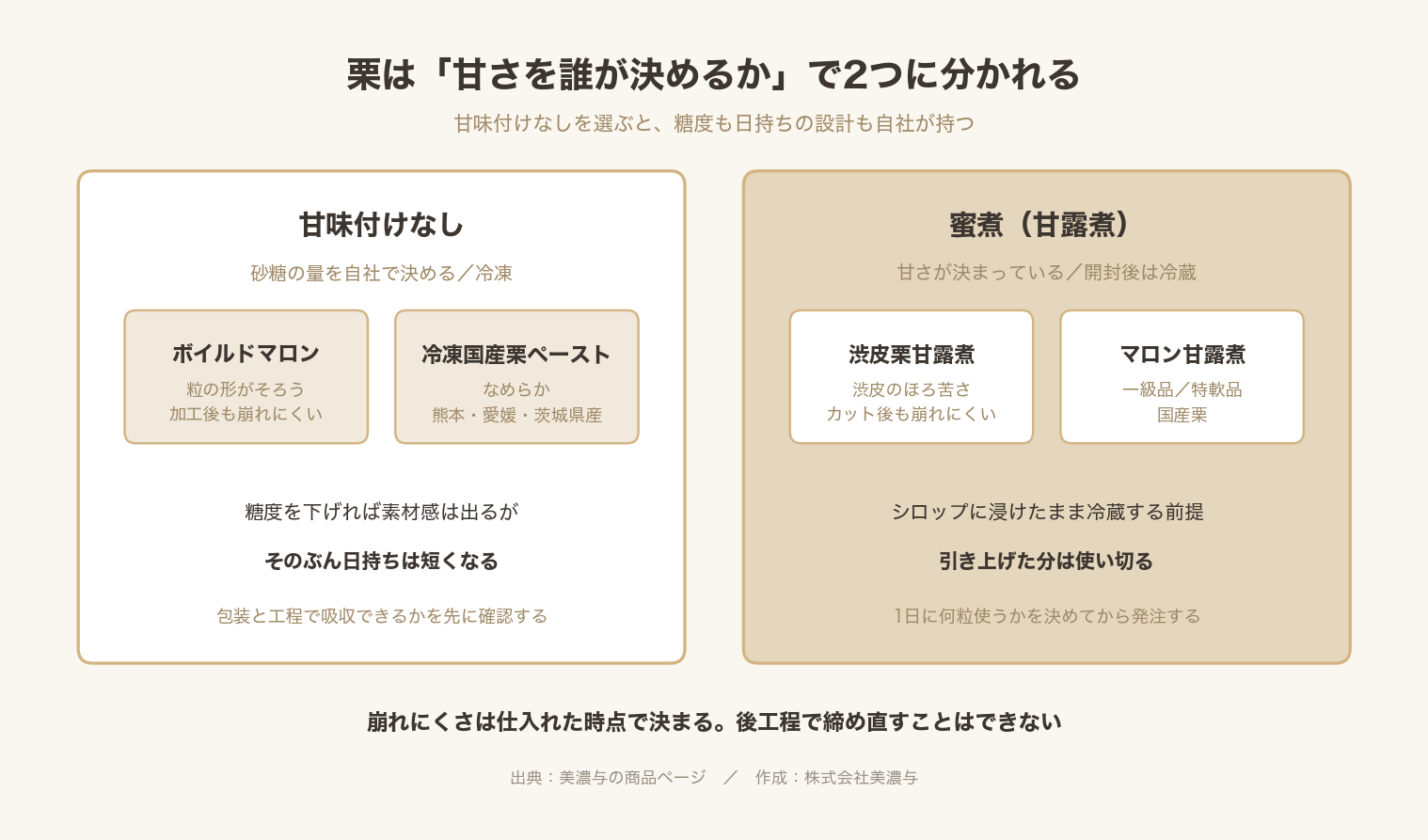
Chestnut Paste

Chestnut paste is a processed form in which chestnuts are strained smooth.

Ideal for wagashi that call for a smooth texture, such as kuri kinton, kuri yokan, and chestnut an. By cooking it down together with sugar, you can bring out the chestnut's natural flavor while achieving a refined sweetness.

Carefully processed to keep the chestnuts from breaking apart, this paste is an important ingredient that determines the quality of the wagashi.

Kanroni / Honey-Steeped Chestnuts

Kanroni and honey-steeped chestnuts are a processed form in which chestnuts are simmered down in sugar.

While retaining the shape and texture of the chestnut, sweetness is added, and they are used in confections such as chestnut daifuku, chestnut monaka, and chestnut dorayaki. Since the size of the pieces changes the sense of satisfaction, it is important to choose according to the intended use.

At long-established makers such as Chikufudo, honey-steeped chestnuts are prepared through in-house processing, worked quickly while accounting for the subtle differences in chestnut characteristics by region, season, and variety.

Chestnut An

Chestnut an is made by simmering chestnuts into a paste and then kneading it with added sugar.

It is used in an-based wagashi such as kuri kanoko and chestnut manju. Because it retains the chestnut's flavor while achieving a smooth mouthfeel, it can be applied to a wide range of wagashi.

The quality of chestnut an varies greatly depending on the chestnut variety used and the processing technique.

Shibukawa-ni

Shibukawa-ni is a processed form in which chestnuts are simmered in sugar while leaving the inner skin intact.

Because it lets you enjoy the flavor of the inner skin along with the chestnut's natural taste, it is also used in premium wagashi and Western confectionery. It is ideal for products that bring the chestnut's character to the forefront, such as shibukawa chestnut nama-dora and chestnut daifuku.

Shibukawa-ni is a labor-intensive processing method, but it achieves a correspondingly deep, rich flavor.


Minoyo's Quality Control Standards for Chestnut Ingredients

品質管理 栗素材 和菓子原料 美濃与

Minoyo is a company specializing in wagashi and confectionery raw materials, with a 120-year history since its founding.

In selecting domestic chestnut ingredients as well, we carry out quality control based on the experience and rigorous standards cultivated over many years. A distinctive strength is our proposal-based sales, developed to match each customer's needs by drawing on the track record we have built in Kyoto and our connections with wagashi shops nationwide.

In handling chestnut-confection ingredients, we carefully select the optimal materials for each region, variety, and processing form. Grounded in the trust built on tradition and our track record with long-established wagashi shops, we create original products using our own factory and roasting expertise.

We have also built a framework, leveraging our nationwide network of wagashi shops, that responds flexibly and continuously to a wide range of needs. With a product lineup and stable supply capable of meeting the demands of nationwide manufacturers, we provide an environment where the chestnut ingredients required for wagashi production can be procured with confidence.

Minoyo's strength lies in a safe, high-quality, fully integrated system run in-house. Our soybean roastery has obtained FSSC 22000 and ISO 22000 certification and enforces thorough hygiene management. As a countermeasure against foreign-matter contamination, we design production lines that minimize human contact and separate the roasting, filling, and packaging work rooms to achieve thorough hygiene control.


Tips for Chestnut Wagashi Making That Professionals Practice

Prioritize Chestnut Freshness Above All

The single most important factor affecting the quality of chestnut wagashi is the freshness of the chestnuts.

Processing them immediately after harvest draws out the natural sweetness and aroma of the chestnut to the fullest. A long-established wagashi shop in Gifu Prefecture processes carefully selected chestnuts delivered from contracted growers at its main factory the very next day after harvest.

Highly fresh chestnuts have a pronounced flavor and make a significant difference in the finished wagashi.

Understand the Characteristics of Each Variety and Use Them Selectively

Because flavor and texture differ by chestnut variety, it is important to choose according to the wagashi you want to make.

Using a large, rich variety like Tsukuba for wagashi that feature whole chestnuts, and choosing Ginyose or Tanzawa when a smooth texture is desired—this kind of selective use grounded in an understanding of each variety's characteristics can be called the mark of a professional.

Draw Out the Flavor Through Processing Technique

The processing technique for chestnuts also directly affects the quality of the wagashi.

In the case of kuri kinton, cooking the chestnuts down with a small amount of sugar and then shaping them into chakin-shibori with a dampened cloth produces a simple finish in which the chestnut's own flavor comes alive. When using a golden-blend sweet potato an, delicate technique is required—instantly judging the state of the potato as it simmers over a direct flame, and kneading it while adding two kinds of sugar at staggered intervals.

Enforce Thorough Hygiene Management

In wagashi production, hygiene management is indispensable.

Establishing a thorough hygiene management system—as Minoyo does by obtaining FSSC 22000 and ISO 22000 and designing production lines free of human contact as a countermeasure against foreign-matter contamination—is the foundation of safe, high-quality wagashi making.


Summary: High-Quality Wagashi with Domestic Chestnut Ingredients

国産栗 和菓子 完成品 高品質

How you choose domestic chestnut ingredients has a major impact on the quality of your wagashi.

By understanding the characteristics of each producing region and grasping the flavor and texture of each variety, you can choose the chestnut best suited to the wagashi you want to make. By also using different processing forms according to the application, you can draw out the natural appeal of chestnuts to the fullest.

By partnering with a reliable raw-materials supplier like Minoyo, you can secure chestnut ingredients of consistent quality and achieve high-quality chestnut wagashi making. Why not make use of Minoyo's distinctive strengths—its 120-year history and track record, its fully integrated in-house system, and its proposal-based sales built on a nationwide network of wagashi shops?

In chestnut wagashi making, ingredient selection is the most important step. Please refer to the selection points introduced in this article and make full use of high-quality domestic chestnut ingredients.

If you would like to learn more about domestic chestnut ingredients and wagashi raw materials,Minoyoplease visit the official website. Our dedicated staff will assist you attentively and propose the ingredients best suited to your needs.

Please feel free to consult us about commercial procurement and sample requests

Minoyo is a specialty store for Kyoto confectionery raw materials based in Kyoto. For the raw materials covered in this article, we offer proposals close to the realities of wagashi production, including commercial procurement, trial samples, and consultation on lots and specifications.

For Minoyo's business and strengths, please see Our Business & Why We Are Chosen . For the actual flow of doing business, see Ordering Process & How to Order; for questions, we have compiled them at Frequently Asked Questions . For individual consultations, please use Contact or material download to get in touch.

Related Articles

What Is Cacao Allergy? A Guide to the Three Types of Causes and How to Choose Alternative Ingredients

We explain the main causes of cacao allergy (the cacao bean itself, sub-ingredients, and cross-contamination) and how to choose alternative ingredients. From flavor-profile comparisons of carob, soy cacao, and Japanese ingredients to allergen management in product development and OEM, we organize it all from the perspective of Minoyo, which has handled Kyoto confectionery raw materials for 120 years.

Halal Chocolate Ingredients and Certification | A Business-Focused Guide Including Cacao Alternatives

We comprehensively explain the ingredient design and certification points for halal chocolate, covering emulsifiers, dairy, sweeteners, and cacao alternatives. From the appropriate use of certification bodies such as JHA, JAKIM, and BPJPH to the decision criteria for OEM consultations with export channels in mind, we organize it all from the perspective of Minoyo, which has handled Kyoto confectionery raw materials for 120 years.

Latest Articles

Categories

Tags

Request Materials & Contact​

Please feel free to reach out with any questions about raw materials or products, or to request materials.
Our dedicated staff will respond with care.