
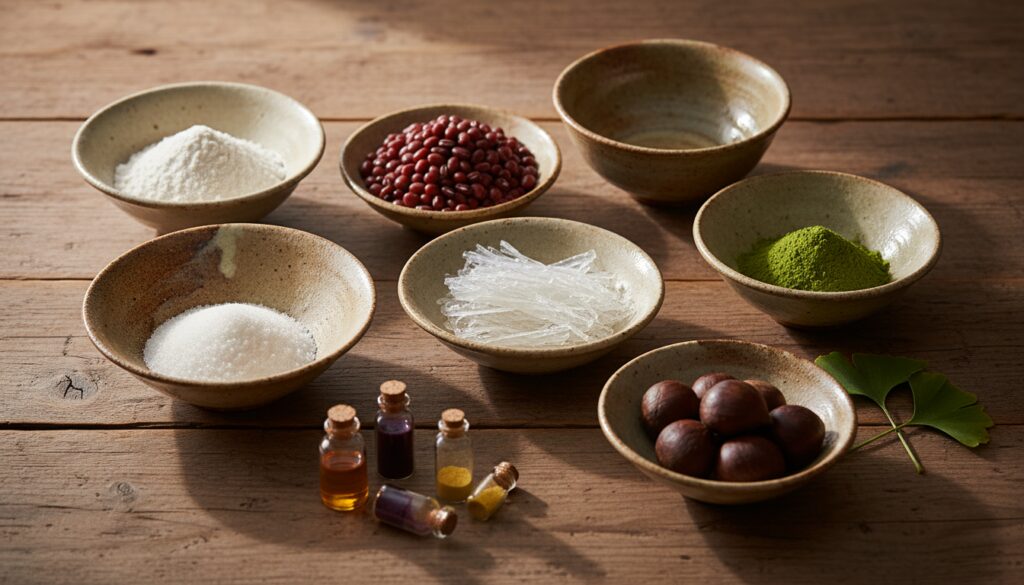
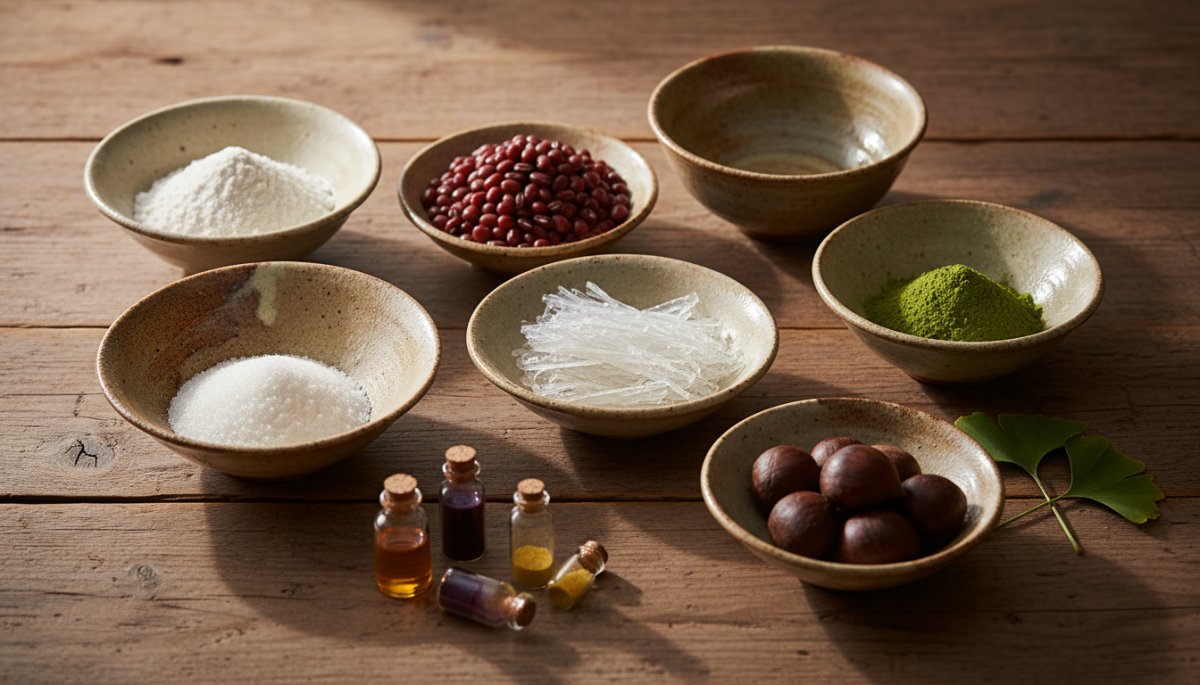
和菓子原料を7つに分ける
Raw materials are indispensable to making wagashi. Their variety is truly diverse.
本記事では、和菓子原料を穀物粉類、豆類、甘味料、凝固剤、風味素材、着色料、その他副材料の7つに分けて整理します。それぞれのカテゴリーには役割があり、和菓子の味わい、食感、見た目を左右する重要な要素となっているのです。
例えば、穀物粉類は生地の骨格を作り、豆類は餡の主原料として和菓子の味の中心を担います。甘味料は単なる甘さだけでなく、保存性や食感にも影響を与え、凝固剤は水菓子や羊羹の独特な食感を生み出します。風味素材と着色料は四季折々の風情を表現し、その他副材料が和菓子に個性と奥深さを加えるのです。
原料を7つに分けておくと、規格書や在庫を整理するときの目安になります。原料選びの基準が明確になり、製造工程での判断もスムーズになるでしょう。
Grain Flours | The Basic Raw Materials That Form the Foundation of Wagashi
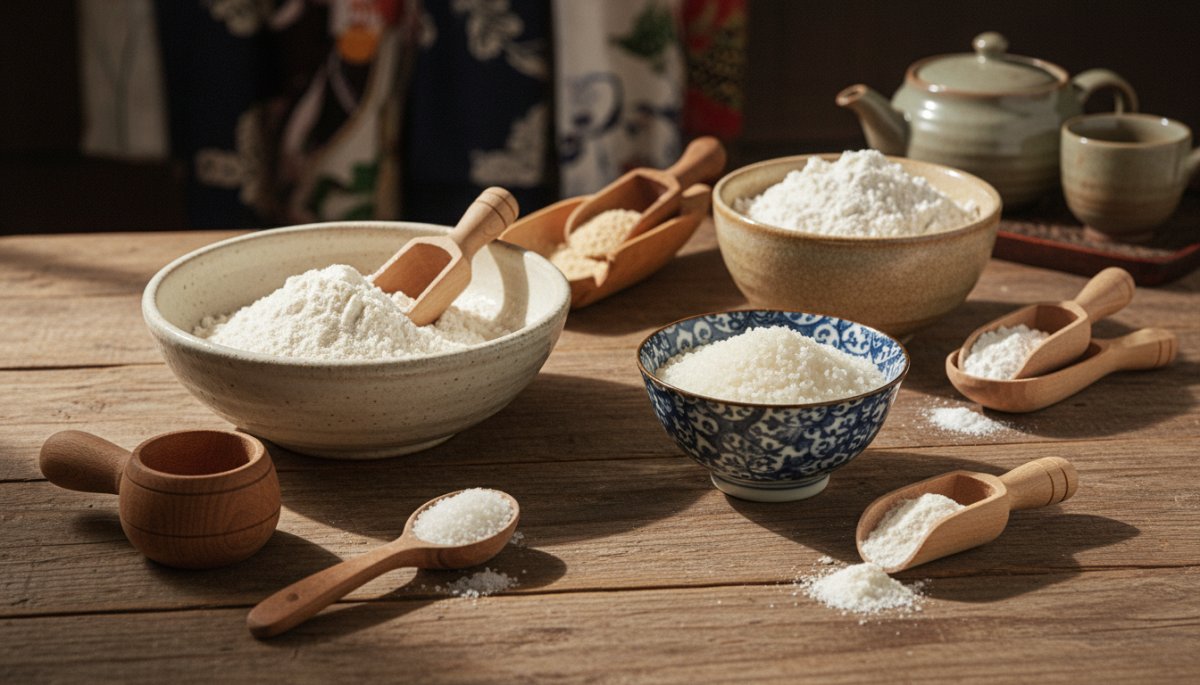
Grain flours are the base raw materials that form the dough and skins of wagashi.
Rice flour, mochi-ko, joshin-ko, shiratama-ko, wheat flour, and various starches belong to this category. Each flour differs in particle fineness and processing method, producing significant differences in the finished texture and flavor.
Among rice flours, joshin-ko is used for the skins of kashiwamochi and kusa-mochi, and shiratama-ko for chewy-textured dango. Mochi-ko is indispensable as a raw material for gyuhi and habutae-mochi. Wheat flour is used for manju skins and castella batter, and wheat starch (ukiko) is used to make translucent dough.
Among starches,Genuine warabi starchや本葛は和菓子でよく知られた原料です。本蕨粉は独特の透明感と弾力のある食感が特徴で、本格的なわらび餅作りには欠かせない存在です。本葛は吉野葛などが有名で、透明度と滑らかな食感に優れ、葛餅や葛きりの製造に最適とされています。
馬鈴薯澱粉(片栗粉)、甘薯澱粉、コーンスターチなども用途に応じて使い分けられ、それぞれが和菓子に独特の食感と風味を与えているのです。
Beans | The Traditional Ingredient That Stars in Bean Paste
It is beans that carry the core of the wagashi's flavor.
Adzuki beans, white adzuki beans, white kidney beans, and soybeans are used as principal raw materials. These beans are indispensable to making bean paste and are important ingredients that determine the flavor of wagashi.
Adzuki beans are most commonly used as the raw material for tsubu-an and koshi-an. Carefully simmered adzuki paste harmonizes a refined sweetness with the natural flavor of the beans and is used in many wagashi such as dorayaki, oshiruko, and monaka.
白小豆や白いんげん豆から作られる白餡は、色を活かした和菓子作りに最適です。フルーツ餡や色物の和菓子の土台として使われます。白餡の原料として、美濃与では特一号晒餡・冨士印晒餡・白晒餡(各12kg)を扱っており、形態や使い方は規格書でご案内しています。
大豆はきな粉の原料として使用され、わらび餅や団子にまぶすことで香ばしい風味を加えます。
In choosing beans, the region of origin, variety, grain size, and color and luster are important judgment criteria. Choosing high-quality beans is the first step toward making delicious bean paste.
Sweeteners | A Key Element Determining Taste and Shelf Life
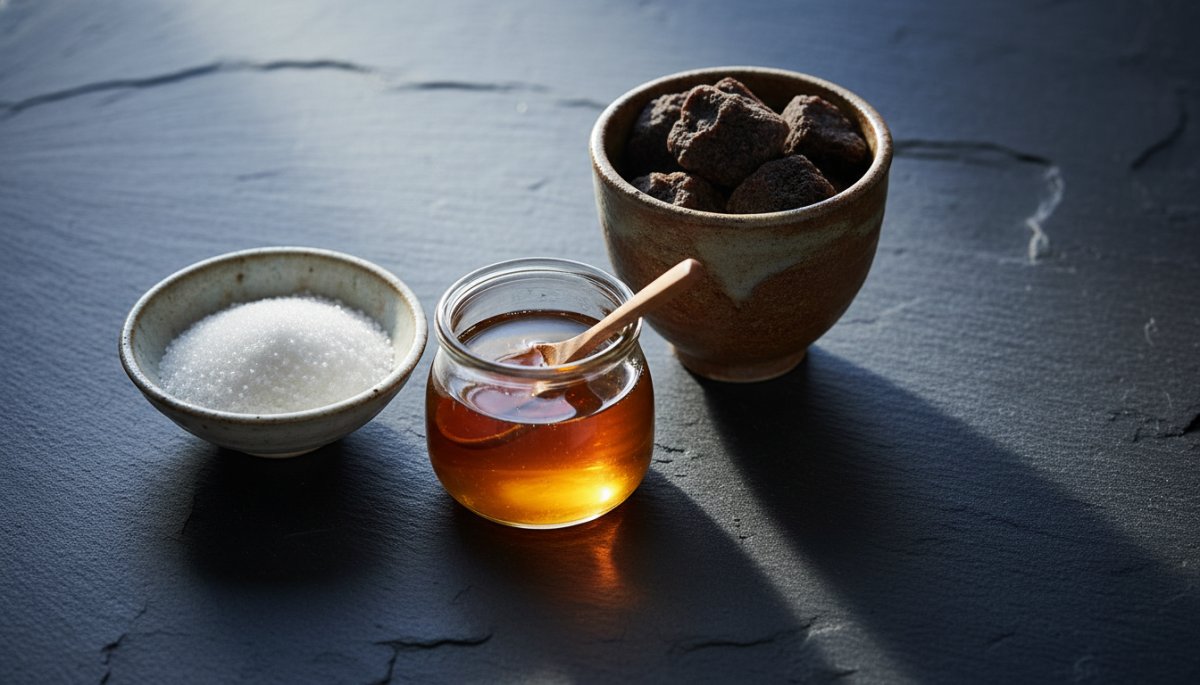
Sweeteners are core raw materials that determine the flavor of wagashi.
Sugar, mizuame, honey, and brown sugar are used as principal sweeteners. These not only add sweetness but also play important roles in improving shelf life and adjusting texture.
砂糖には上白糖、グラニュー糖、和三盆などがあり、それぞれ甘さの質や風味が異なります。上白糖は一般的な和菓子に広く使用され、和三盆は、干菓子などに使われる砂糖です。粒子が細かく、口溶けが良く、上品な甘さが特徴です。
Mizuame is used to glaze bean paste and maintain its softness. Adding mizuame to bean paste, which tends to harden with sugar alone, keeps a moist texture for a long time. It is also indispensable in making gyuhi and habutae-mochi.
蜂蜜は独特の風味と香りを持ち、カステラや一部の饅頭に使用されます。黒糖は沖縄や奄美地方の特産品で、深いコクのある甘さと色が特徴です。黒糖を使うと、和菓子に独特の風味と茶褐色の色合いが出ます。
The choice and blending ratio of sweeteners are important elements that greatly influence the flavor and quality of wagashi.
Gelling Agents | The Technical Element That Determines Texture and Shape
Gelling agents are technically important raw materials that determine the texture and shape of wagashi.
Agar, gelatin, kuzu powder, and warabi powder belong to this category. These are indispensable for making chilled confections, yokan, kuzu-mochi, and the like, each creating a distinctive texture.
寒天は天草などの海藻から作られる伝統的な凝固剤で、糸寒天と粉末寒天があります。糸寒天は水菓子や羊羹の製造に使用され、独特の歯切れの良い食感が特徴です。粉末寒天は溶かしやすく、羊羹や水菓子に使われます。寒天は常温で固まり、口の中で溶けにくいため、夏の涼菓に最適なのです。
Gelatin is an animal-based gelling agent that produces a softer, smoother texture than agar. With a good melt in the mouth that dissolves at body temperature, it is sometimes used in fresh confectionery and mousse-style wagashi.
Kuzu powder and warabi powder are starch-based gelling agents that form a translucent gel when heated. Kuzu-mochi made with hon-kuzu and warabi-mochi made with hon-warabi-ko are prized as high-end wagashi with high translucency and distinctive elasticity and smoothness.
Choosing gelling agents and adjusting the amount used are important points that test the skill and experience of the wagashi artisan.
風味素材と着色料|季節の香りと色を出す原料
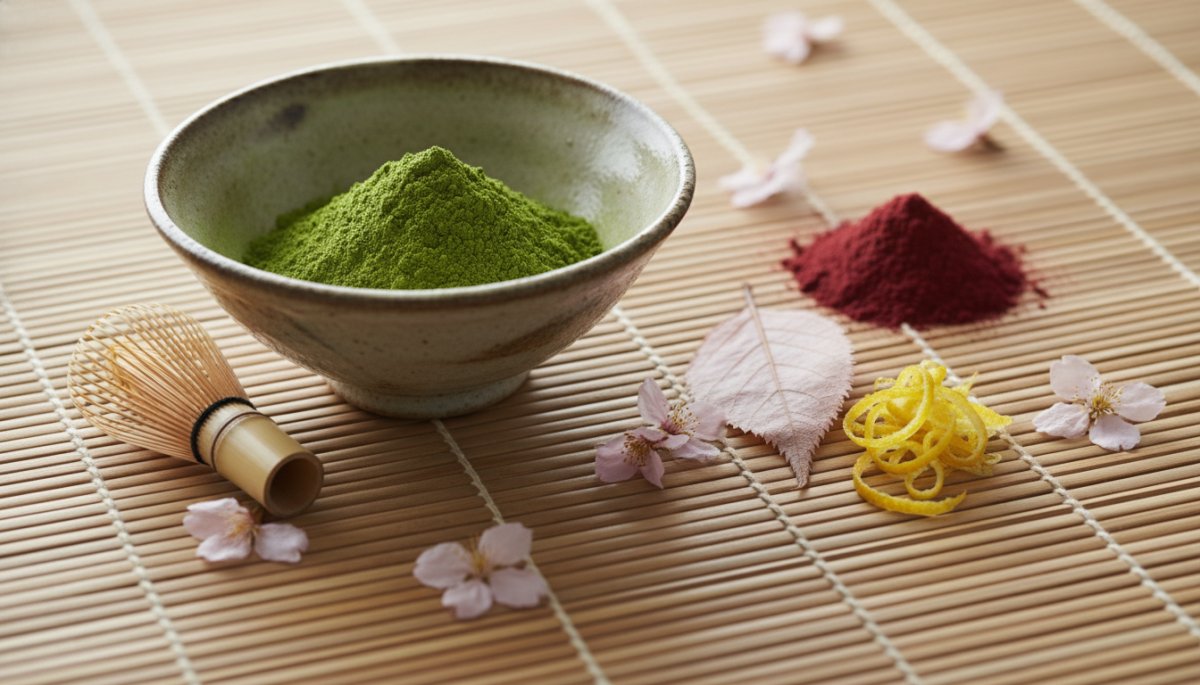
風味素材と着色料は和菓子に季節感と彩りを与える原料です。
Matcha, yuzu, sakura leaves, shiso, neri hon-beni, neri ki-iro, neri ao-iro, and others are used as representative materials. These add aroma and color to wagashi, playing an important role in expressing the charm of the four seasons.
抹茶は香りづけにも色づけにも使える素材です。鮮やかな緑色と独特の香りが和菓子に上品さを加え、抹茶を使った生菓子や饅頭は春から初夏の定番商品となっています。
柚子は爽やかな香りが特徴で、柚子スライス、柚子ジャム、生柚子ペースト、柚子果汁などの形態で使われます。冬の和菓子に柚子の香りを添えることで、季節感を演出できるのです。
桜葉や桜の花塩漬は春の和菓子に欠かせない香りづけの素材です。桜餅を包む桜葉は、独特の香りが餅に移り、春らしい風味を楽しめます。桜の花塩漬は水で塩抜きして使用し、春の生菓子の飾りとして美しさと香りを添えます。
Colorings include paste types such as neri hon-beni (neri-beni), neri ki-iro (neri-ki), and neri ao-iro (neri-kusa), and powder types such as Red No. 3, ouka-beni, Blue No. 1, and Yellow No. 4. Combining these adds beautiful hues to wagashi and lets you express the changing seasons and natural scenery.
赤色3号・青色1号・黄色4号は合成着色料(タール色素)です。使う色素ごとに、表示のしかたと使用基準を規格書で確認してください。
Other Supplementary Ingredients | The Elements That Add Individuality and Depth
Other supplementary ingredients are a diverse group of raw materials that add individuality and depth to wagashi.
This category includes a wide range of materials, from natural ingredients such as chestnut, plum, fruits, kashiwa leaves, bamboo leaves, and bamboo sheaths, to the original "Tomo" Series products. These play an important role in giving wagashi distinctive flavor, texture, and visual beauty.
Chestnut is a representative ingredient of autumn wagashi, used in forms such as extra-soft marron kanro-ni,marron kanroni first grade, and shibukawa chestnut kanro-ni. Carefully simmered chestnut kanro-ni is characterized by a texture that crumbles gently in the mouth and a refined sweetness, making it ideal as a filling for chestnut yokan and chestnut manju. Frozen domestic chestnut paste concentrates the natural flavor and sweetness of chestnut and is prized for making chestnut yokan and chestnut an.
Plum is used in forms such as plum kanro-ni, Kishu neri-ume, plum pulp, and plum juice, with the balance of plum's natural tartness and sweetness serving as an accent in wagashi. Characterized by a refreshing flavor, it gives a cooling sensation to summer wagashi.
Leaves such as kashiwa leaves, bamboo leaves, and sakura leaves are natural materials used to wrap wagashi or add aroma. The kashiwa leaves used for kashiwamochi are indispensable for the Boys' Festival, and the bamboo leaves used to wrap sasa dango and sasa-mochi transfer their refreshing aroma to the wagashi. These leaves create traditional charm in wagashi through their visual beauty and aroma.
The "Tomo" Series is a line of original products that simplify wagashi production, including Warabi-gashi no Tomo, Kuzu-gashi no Tomo, Mushi-yokan no Tomo, and Mizu-manju no Tomo. These balance ease of use with quality, allowing efficient production of wagashi with consistent quality.
原料を選ぶときに確認すること
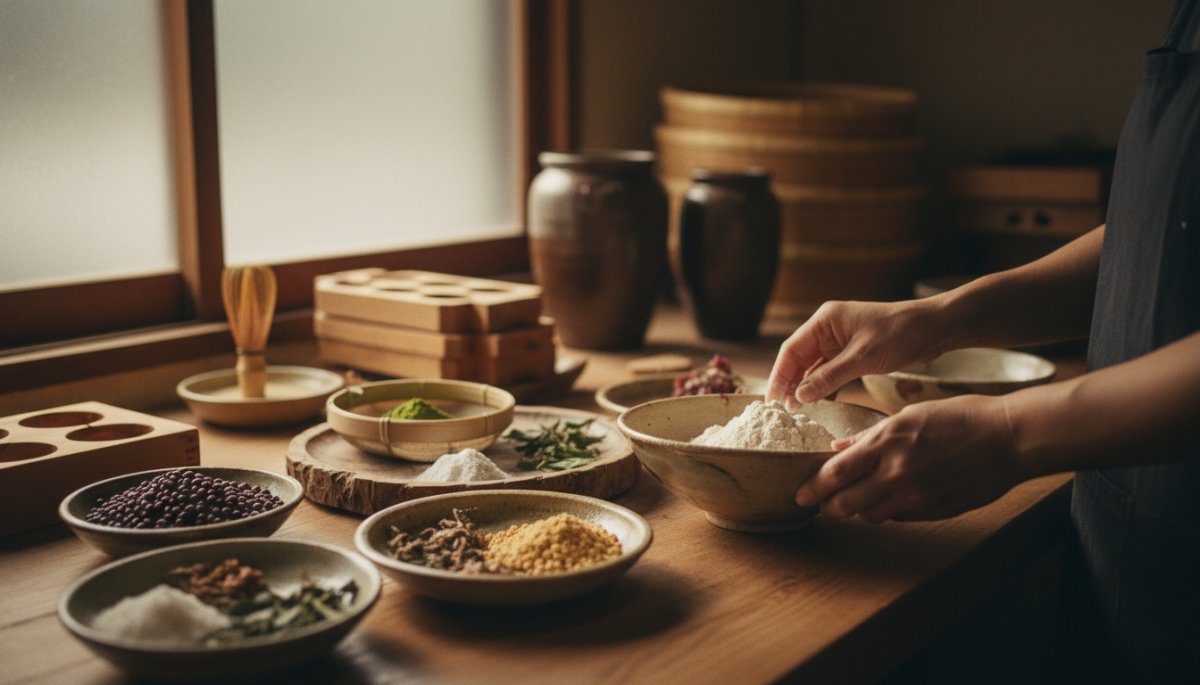
There are several important points to keep in mind when choosing wagashi raw materials.
First, selecting raw materials according to the application is fundamental. The optimal raw material differs depending on the type of wagashi being made. For example, use hon-kuzu or hon-warabi-ko when making translucent chilled confections, and choose shiratama-ko when making chewy-textured dango.
Judging quality is also an important point. For grain flours, particle fineness and color and luster; for beans, grain size and uniformity of color; and for starches, translucency and viscosity serve as indicators of quality. Choosing high-quality raw materials also improves the quality of the finished wagashi.
Managing shelf life and freshness is also essential. Fresh raw materials such as fruits and leaves require refrigerated or frozen storage. Refrigerating yuzu slices and yuzu jam and freezing yuzu juice lets you enjoy yuzu's natural flavor while preserving freshness. Storing dried raw materials away from humidity also maintains quality for a long time.
規格とパッケージサイズの選択も実践的なポイントです。業務用の荷姿は原料ごとに異なります。使用頻度や保存スペースに応じてサイズを選んでください。開封後の品質劣化を防ぐため、使用量に見合ったサイズを選ぶことをおすすめします。
Securing a reliable supplier is also important. Purchasing from a business that specializes in wagashi raw materials ensures stable quality and continuity of supply. Specialist suppliers also provide advice on the characteristics and use of raw materials, which helps improve the quality of wagashi production.
See Minoyo's Product List Here
Conclusion | Quality Control Achieved Through Seven Categories
Understanding wagashi raw materials in seven categories systematizes raw material management.
穀物粉類、豆類、甘味料、凝固剤、風味素材、着色料、その他副材料という分類は、単なる整理方法ではありません。それぞれのカテゴリーが和菓子製造における明確な役割を持ち、相互に補完し合いながら、美味しい和菓子を生み出しているのです。
By understanding the characteristics of raw materials and choosing them appropriately according to the application, the quality of wagashi improves dramatically. Choosing high-quality raw materials, storing and managing them properly, and using them correctly in the production process are the basics required of a professional wagashi artisan.
原料ごとの規格のご確認やサンプルのご請求は、お問い合わせから承っています。
See Minoyo's Product List Here
Please feel free to consult us about commercial procurement and sample requests
美濃与は京都に拠点を置く京菓子原材料の専門商社です。本記事で取り上げた原料の業務用調達や、お試しサンプル、ロット・規格のご相談など、和菓子製造の現場に寄り添った提案を行っています。
For Minoyo's business and strengths, please see Our Business & Why We Are Chosen . For the actual flow of doing business, see Ordering Process & How to Order; for questions, we have compiled them at Frequently Asked Questions . For individual consultations, please use Contact or material download to get in touch.


