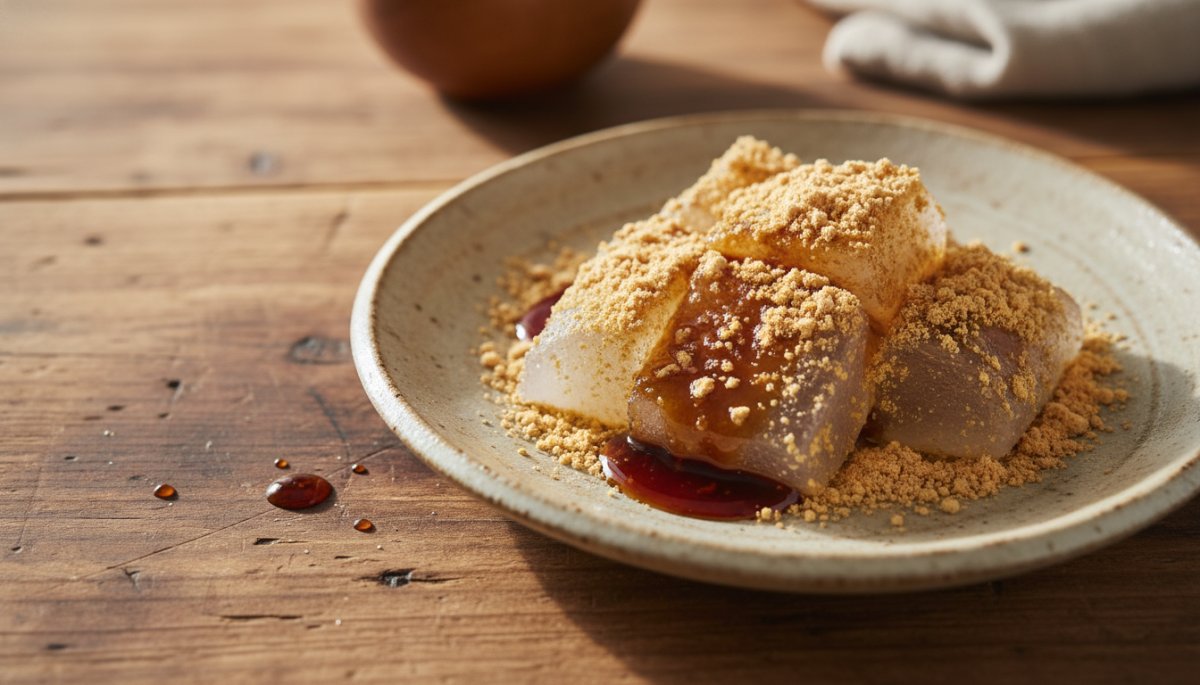
The Essential Basic Ingredients for Making Warabi Mochi
When making warabi mochi, it all starts with choosing your ingredients.
The ingredients needed for authentic warabi mochi are actually very simple. Just three—warabi (bracken) starch, sugar, and water—produce that translucent, chewy texture. That said, the choice of these three ingredients and their balance greatly determine the final result.
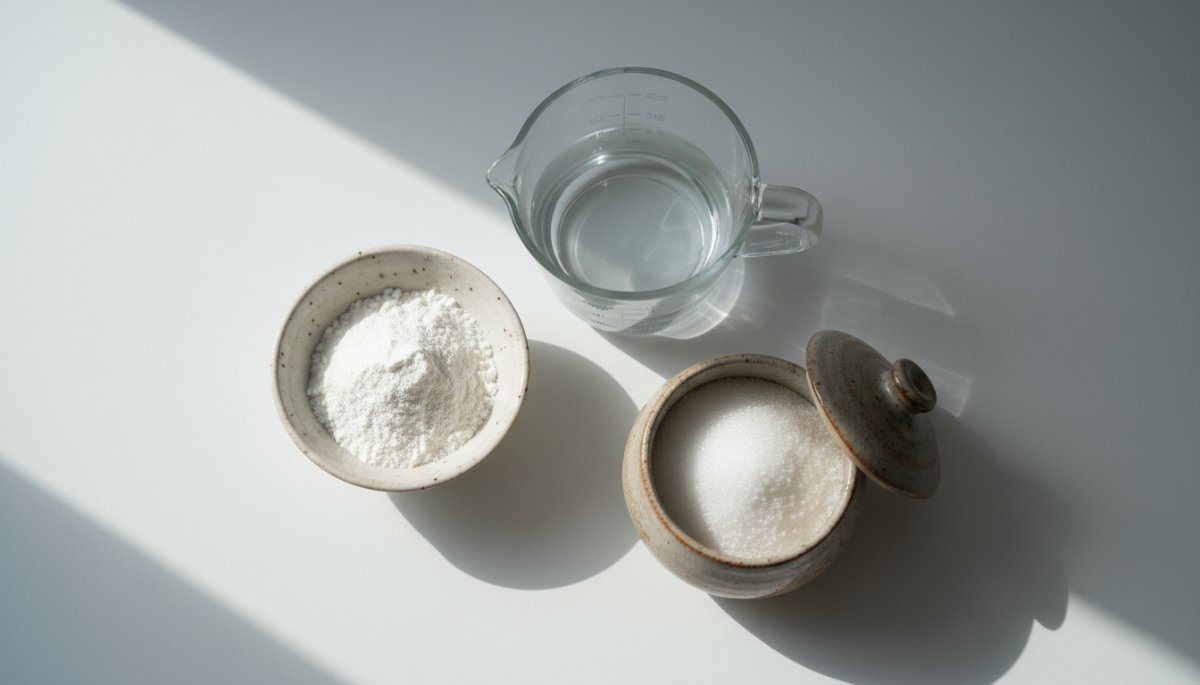
わらび粉は、わらびの根茎から採取されるでんぷんを乾燥させたものです。根から採れるでんぷんがごくわずかで精製にも手間がかかるため、本わらび粉100%の製品は高価になります。市販品には本わらび粉100%のもの、本わらび粉を数パーセント配合したもの、芋系でんぷん100%のものの3種類があり、それぞれ食感や透明感が異なります。
Granulated sugar or superfine sugar is standard, but using wasanbon or brown sugar gives a richer finish. Water is basically 4 to 5 times the weight of the starch, and this ratio is a crucial point that determines the texture.
How to Choose Pure Bracken Starch and How the Types Differ
Choosing your bracken starch is the first step in determining the quality of your warabi mochi.
本わらび粉100%の製品は、独特の透明感と強い弾力が特徴で、高級和菓子店で使用されています。粘りが強く、黒っぽい仕上がりになるのが特徴です。一方、本わらび粉を5〜10%配合したタイプは、適度にわらび粉の香りも感じられて粘りもしっかりめで、コストと風味の折り合いを付けやすいタイプです。
芋系でんぷん100%のわらび粉は最も流通しているタイプで、価格も手頃です。透明感は本わらび粉に劣りますが、扱いやすいという利点があります。美濃与では本蕨粉や別口蕨粉を取り扱っています。
わらび粉の状態と保管
開封時にわらび特有の香りがほのかに感じられるものが新鮮です。保存状態が悪いと湿気を吸って固まったり、変色したりするため、密閉容器で保管することが大切です。
わらび粉・砂糖・水の配合比率
天極堂プロの比較記事をもとに、配合比率を整理します。
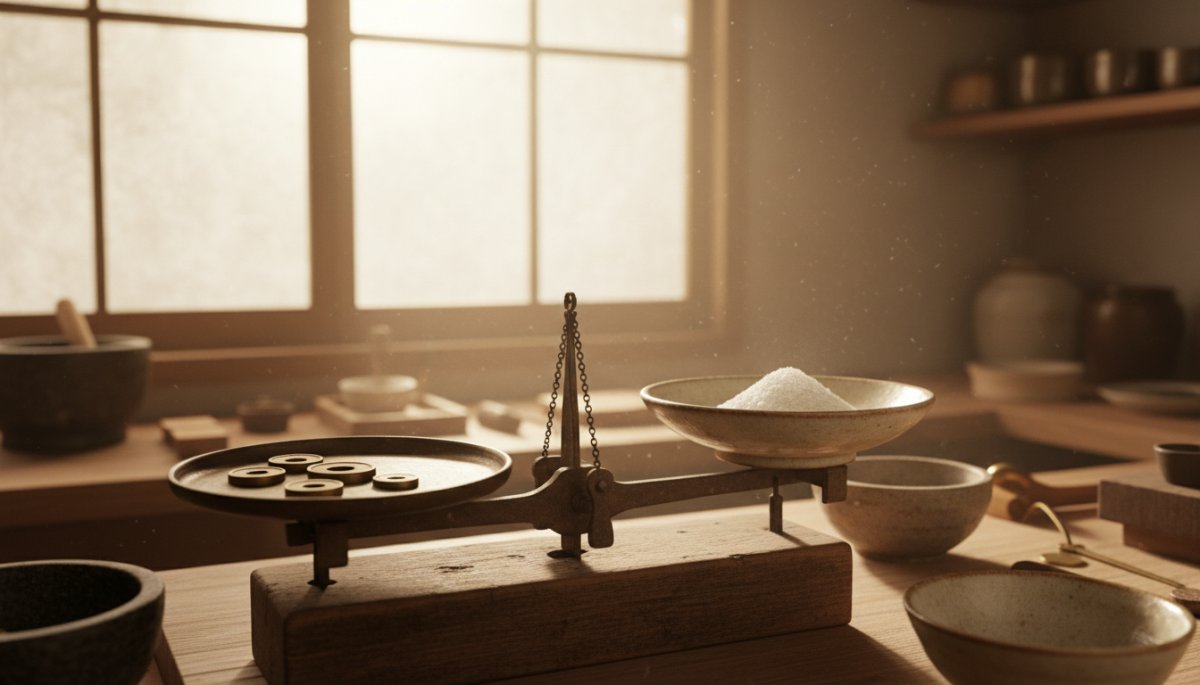
The basic blend is 100g of bracken starch to 100g of sugar and 400g of water. It is an easy-to-remember ratio of starch to sugar at 1 to 1, and water at 4 times the starch. This blend produces warabi mochi that retains strong elasticity while also offering a chewy softness.
砂糖の量は好みに応じて調整可能で、60gならあっさりめ、100gならしっかり甘めの仕上がりに。水の量を変えることで食感も大きく変化します。水を粉の3倍量にすると歯切れがよく弾力の強い固めの食感に、5倍量にするともちもちととろりの中間くらいの柔らかさになります。
How the Amount of Water Changes the Texture
水の量を粉の6倍量まで増やすと、粘り強さと柔らかさが両立したふわふわとした軽い食感が生まれます。長く引き伸ばしても生地が切れず、とろけるような口当たりになるのです。逆に水を減らすと、しっかりとした弾力のある食感になります。好みの食感に合わせて、水の量を調整してみてください。
SourceTenkyudo Pro, "Warabi Mochi | Comparing Results by Preparation Method"adapted from
透明感ともちもち食感は練る時間で変わる
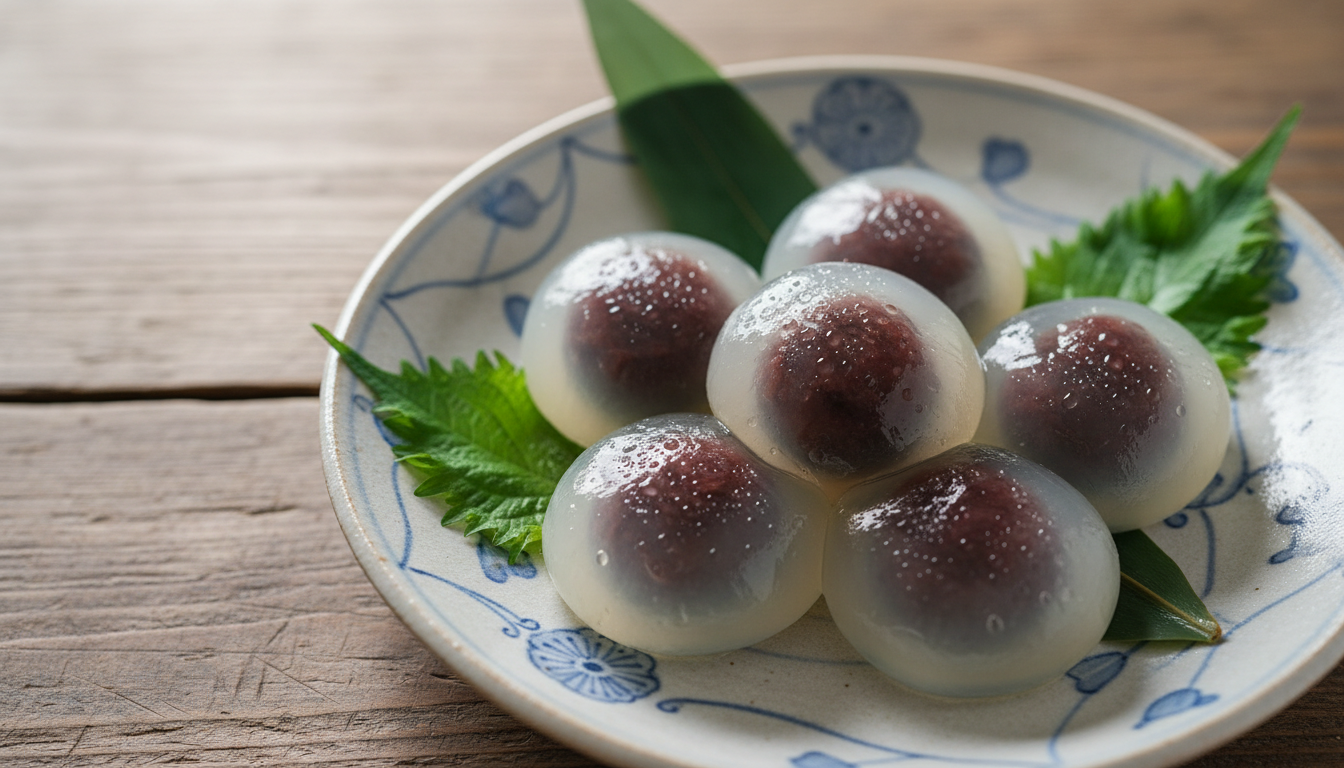
The appeal of warabi mochi lies in that transparent beauty and its distinctive texture.
透明感とコシは、加熱しながら練る時間で変わります。
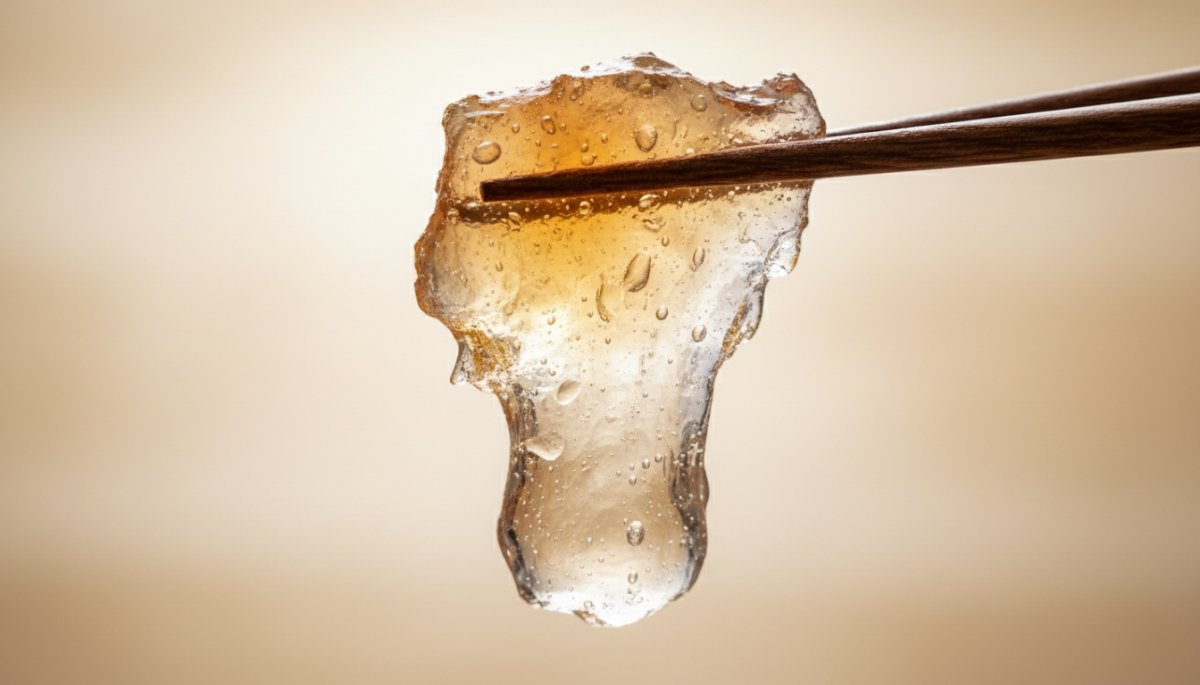
Heat control is also important: heat over medium-low heat at first, and lower the heat once stickiness develops. Once it becomes entirely transparent, reduce to low heat, switch your grip to hold the spatula like a fist, and knead the whole mass firmly from the bottom of the pot for about 5 minutes over heat. This process produces warabi mochi with luster and body.
How Cooling Changes the Texture
To enjoy warabi mochi at its best, it is important not to over-chill it. Transfer the warabi mochi to a tray, let it sit at room temperature until it cools to below body temperature, and refrigerate it ideally 20 to 30 minutes before eating. Over-chilling hardens the texture and robs it of its precious elasticity. When refrigerating, press plastic wrap directly onto the surface to prevent odor transfer.
SourceShirogohan.com, "How to Make / Recipe for Homemade Warabi Mochi"adapted from
Making Authentic Warabi Mochi with Minoyo's Wagashi Raw Materials
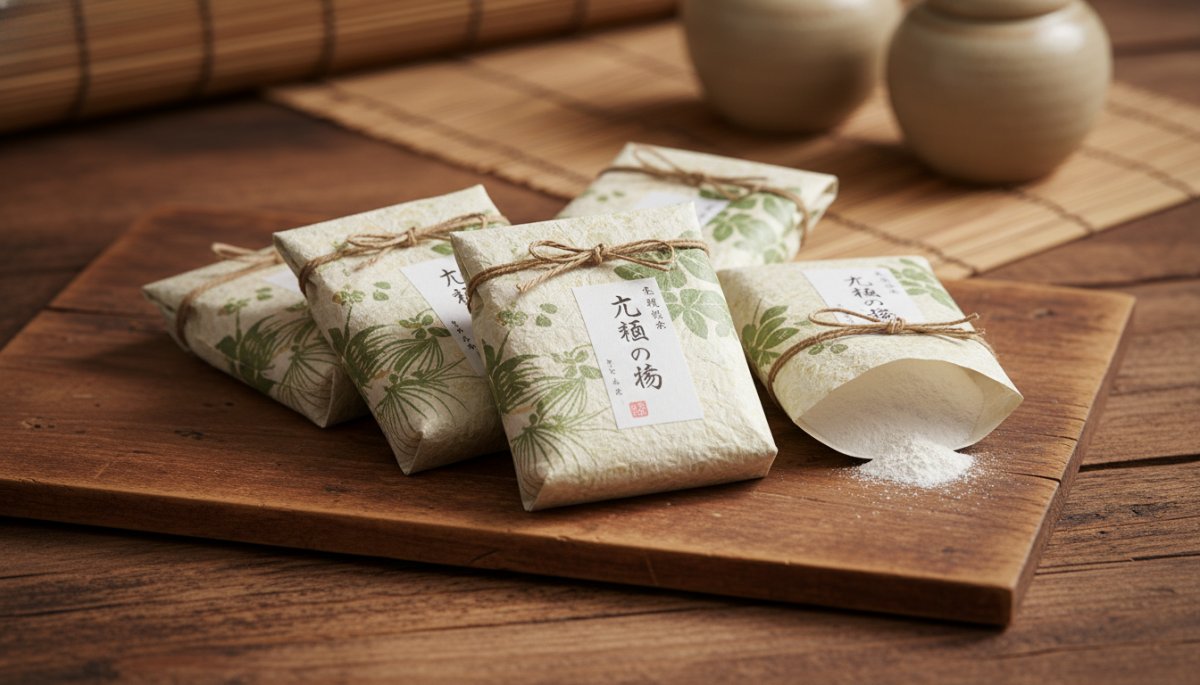
美濃与は120年の歴史を持つ和菓子原料の専門事業者で、本蕨粉や別口蕨粉などの澱粉類を取り扱っています。本蕨粉は10kg規格の業務用の荷姿です。
わらび餅作りには、本蕨粉のほか、砂糖や水あめなどの糖類も使います。美濃与では米飴、黒糖パウダー、粉糖などの糖類も扱っています。また、オリジナル商品として「蕨菓子の友」といった、和菓子製造を簡便化するミックス粉も展開しています。
Finishing with Kinako or Brown Sugar Syrup
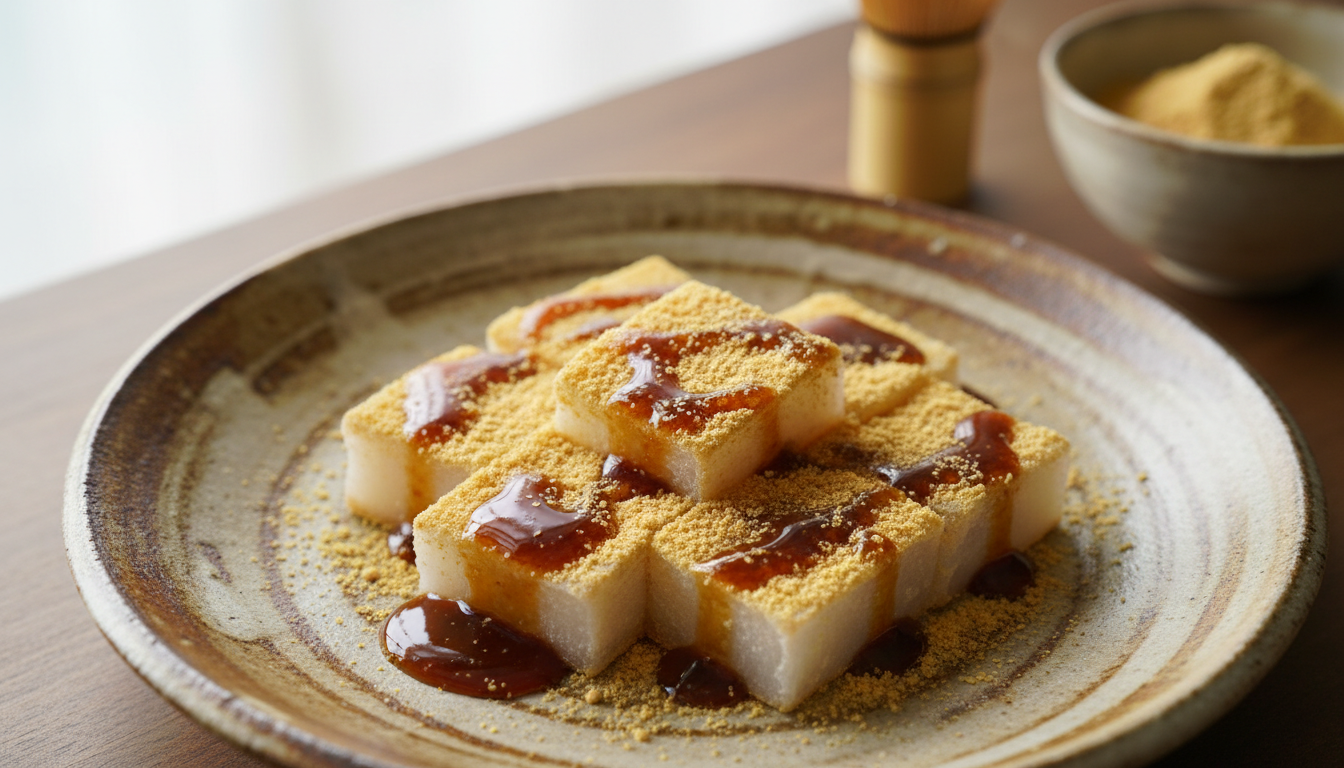
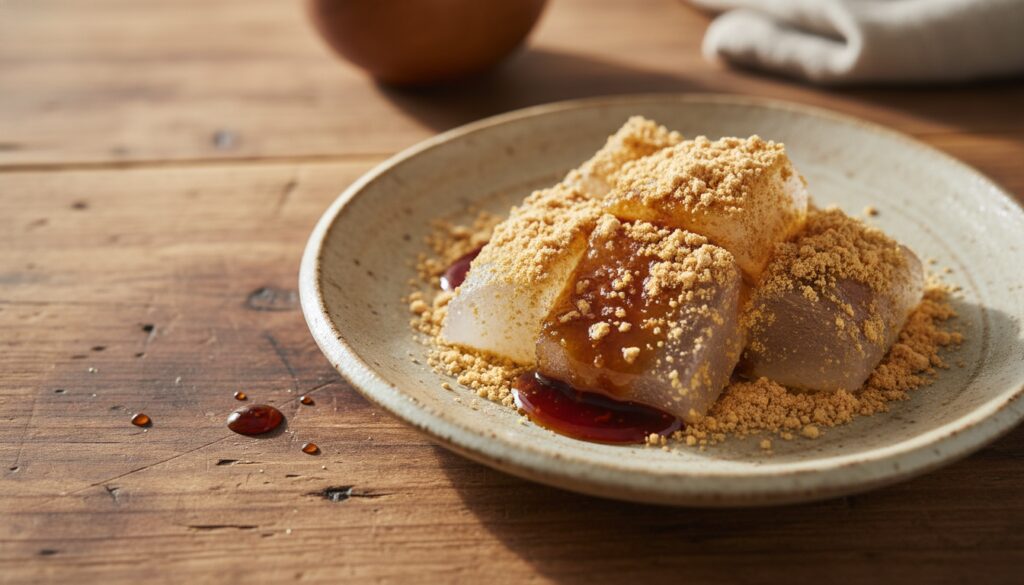
わらび餅の仕上げには、きな粉や黒蜜が欠かせません。美濃与では国産大豆を自社焙煎したきな粉を提供しています。焙煎の深さが異なる「美濃与きなこ」と「深煎りきな粉」の2品があります。黒蜜は濃厚な甘みとコクがあり、わらび餅によく合わせられます。
Summary: Ingredient Selection and Blending Are the Deciding Factors for Warabi Mochi
In making warabi mochi, ingredient selection and blending balance are everything.
本わらび粉100%の製品を選べば、透明感と強い弾力のある高級な仕上がりに。本わらび粉を数パーセント配合したものは、コストと風味の折り合いを付けやすいタイプです。基本の配合は、わらび粉100gに対して砂糖100g、水400gですが、水の量を調整することで、固めからとろとろまで、好みの食感に仕上げられます。
📦 Related Minoyo Products
Please feel free to consult us about commercial procurement and sample requests
美濃与は京都に拠点を置く京菓子原材料の専門商社です。本記事で取り上げた原料を取り扱っています。サンプルのご請求も承っています。
For Minoyo's business and strengths, please see Our Business & Why We Are Chosen . For the actual flow of doing business, see Ordering Process & How to Order; for questions, we have compiled them at Frequently Asked Questions . For individual consultations, please use Contact or material download to get in touch.