柚子を使った菓子で最も相談が多いのが、焼いたら香りが飛んだというものです。
原因は配合量の問題ではありません。柚子の原料には、加熱に耐えるものと耐えないものがあります。同じ柚子でも、どう加工されているかで香りの残り方が変わります。

柚子の原料は4つの形態がある
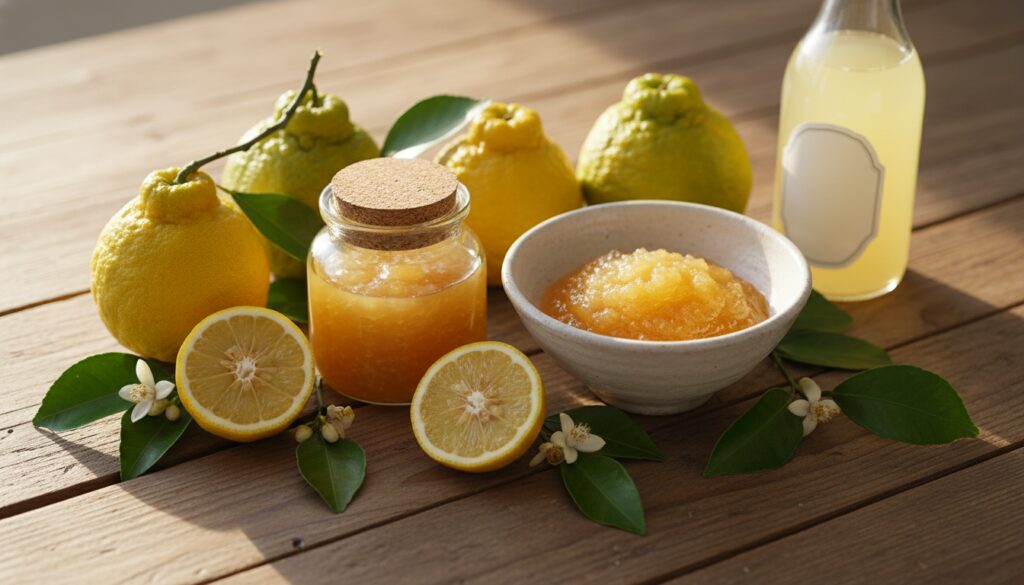
美濃与で扱っている柚子は4形態です。まず全体を並べます。
| 形態 | 何が入っているか | 強い加熱 | 保管 | Specification |
|---|---|---|---|---|
| Yuzu Juice | 果汁のみ | 耐える。加熱後も酸味と香りが感じられる | 冷凍 | 2kg×6 |
| Yuzu Slices | 果皮と果肉 | 耐える。加熱後も香りが残りやすい | 冷蔵 | 11kg |
| Fresh Yuzu Paste | 果皮と果汁 | 弱まる。仕上げ工程での使用を推奨 | 冷蔵 | 11kg |
| Yuzu Jam | 果皮と果汁 | 弱まる。仕上げ工程での使用を推奨 | 冷蔵 | 2kg / 20kg |
3列目が本題です。4形態のうち2つは、強い加熱をかけると香りが弱まります。
果皮の香りを含む2品は、強い加熱で弱まる
差が出るのは、果皮由来の香りを含んでいるかどうかです。ジャムとペーストは果皮と果汁を使っており、この2品だけが仕上げ工程での使用を推奨されています。
作り方にも理由が書かれています。
柚子ジャムは香りを損なわないよう低温管理のもとで炊き上げたジャムで、加熱しすぎない製法のため香り立ちが良い、と説明されています。生柚子ペーストも加熱を最小限に抑えてペースト状に加工した原料です。
どちらも冷蔵管理なのはこのためです。柚子ジャムのFAQは、冷蔵保管が必要な理由を香りと風味を保つため、加熱を抑えた製法のためと答えています。生柚子ペーストも香りを保つため、加熱を抑えた製法のためと同じ趣旨で答えています。
つまりこの2品は、製造の段階で香りを飛ばさないよう作られている原料です。そこに使う側が強い加熱をかけると、作り手が避けたことを後工程でやることになります。商品ページのFAQも、強い加熱を行うと香りが弱まるため仕上げ工程での使用がおすすめだ、と明記しています。
焼き菓子に入れるなら形態を変える
焼成のように高温で長く加熱する設計なら、ジャムやペーストを生地に練り込むのは噛み合いません。
柚子スライスは加熱後も香りが残りやすい原料とされており、商品ページも焼き菓子やチョコレート、ケーキを用途に挙げています。柚子果汁も、加熱して使用できるかというFAQに使用できます。加熱後も柚子の酸味と香りが感じられますと答えています。
生地に入れて焼くなら、柚子スライスか柚子果汁に寄せてください。
なお柚子ジャムの商品ページは、食パンや菓子パンの塗り込み・包餡を用途に挙げ、焼成後も柚子の香りが感じられるとしています。製パンの焼成条件と、製菓の高温長時間の焼成では結論が変わります。加熱条件に応じた各形態の特徴は、商品ページと規格書で確認してください。柚子を使った焼き菓子を設計するときは、まずこの振り分けをしてください。
原料の規格や製造工程をまとめた資料をご用意しています。選定の判断材料としてお使いください。
果皮が入っているかで苦味が決まる
2つ目の分かれ目が果皮です。
柚子の苦味は果皮に由来します。ジャムは柚子特有の爽やかな香りとほのかな苦味、やさしい酸味がバランスよく感じられるとされ、ペーストも爽やかな香りとやさしい酸味、ほのかな苦味が特長です。スライスは果皮由来のほろ苦さを持ちます。
一方、柚子果汁は搾汁した果汁だけなので、キレのある酸味が前に出ます。果皮由来の苦味とコクは入りません。
苦味は甘さを引き締める
苦味は欠点ではありません。ジャムとペーストの商品ページはどちらも、柚子の香りが甘さを引き締め後味に爽やかさを残す、という書き方をしています。スライスも、香りとほろ苦さが甘味を引き締める、とされています。
餡やクリームのように糖度の高い相手と合わせるとき、この苦味が効きます。果汁だけで作ると、酸味は立つが後味が軽くなるということが起こります。
逆に、飲料やゼリーのように軽さを狙う商品なら、苦味が入りにくい果汁のほうが合います。商品ページも果汁の用途に柚子ドリンク、炭酸飲料、割材用果汁を挙げています。
果皮の食感を残すかどうか
果皮の入り方も3品で違います。
ジャムは果皮の食感を程よく残しており、なめらかさの中に柚子らしい存在感がある仕上がりです。ペーストは細かく均一なペースト状なので、配合しても食感としては出ません。スライスは果皮と果肉のバランスを保ちながら使いやすい厚みにスライスしてあり、形がそのまま残ります。
クリームやムースに均一に混ぜたいならペースト、噛んだときに柚子が出てほしいならジャム、見た目のアクセントにするならスライス。同じ「果皮入り」でも、狙える表現が違います。
柚子はアレルゲン表示の対象に入らない
購買と品質保証の側で押さえておきたい点があります。柚子を1品足しても、アレルゲンの表示欄は変わりません。
消費者庁の「食品表示基準について」別添 アレルゲンを含む食品に関する表示によれば、表示が義務付けられている特定原材料は9品目、表示を可能な限り行うよう努めることとされている特定原材料に準ずるものは20品目です。柑橘のなかではオレンジが準ずるもの20品目に入っています。
「オレンジ」の範囲は別表で定められている
ここで確認しておきたいのが範囲の定義です。同資料は、特定原材料等の範囲は原則として別表1のとおり日本標準商品分類の番号で指定されている範囲のものを指す、としています。
その別表1で「オレンジ」として日本標準商品分類の番号とともに挙げられているのは、ネーブルオレンジとバレンシアオレンジです。柑橘であればすべて対象になるわけではなく、柚子は特定原材料9品目にも準ずるもの20品目にも含まれていません。
柑橘だからオレンジと同じ扱いになるのでは、と考えて表示を足す必要はありません。逆に、オレンジ果汁を併用する商品では、そちらが推奨表示の対象になります。柚子とオレンジを組み合わせた設計にするなら、ここで扱いが分かれることを頭に入れておいてください。
なお義務表示の9品目という数字は、2026年4月1日施行の改正でカシューナッツが追加された後のものです(経過措置は2028年3月31日まで)。8品目の様式で運用している規格書や社内資料があれば、そちらの更新もあわせて確認してください。
アレルゲン表示の考え方全般は「和菓子原料の規格書と表示の見方|栄養成分・アレルゲン・原材料」で整理しています。
冷凍は1品だけ、残り3品は冷蔵
選定の最後に効いてくるのが保管です。
柚子果汁は風味を損なわないよう急速冷凍した果汁原料で、冷凍品です。ジャム・ペースト・スライスは要冷蔵です。4品を同じ棚で回すことはできません。
冷凍果汁は解凍したら戻せない
果汁のFAQには押さえておきたい記載があります。解凍後の再冷凍について品質低下の恐れがあるため、解凍後の再冷凍は推奨していませんと答えています。
荷姿は2kg×6本です。1本を解凍したら、その2kgを使い切る前提で仕込みを組むことになります。少量ずつ使いたい商品なら、6本を一度に解凍しない運用が必要です。
解凍方法についても記載があります。冷蔵解凍または流水解凍がおすすめで、完全解凍後に軽く攪拌してから使用してください、とされています。攪拌が要るということは、解凍直後は成分が均一でないということです。この一手間は工程書に入れておいてください。
冷蔵3品は倉庫の場所を取る
ジャムは2kgと20kg、ペーストとスライスは11kgです。冷蔵で置く必要があるため、11kgや20kgを開けたときにどこに置くかを先に決めてから発注してください。
柚子は季節商材として扱われることが多く、年間を通して同じペースでは減りません。使い切るまでの期間が長くなるほど、冷蔵庫を占有する時間も長くなります。ジャムに2kgの規格があるのは、ここに効きます。
加熱工程から候補を絞る
| 狙い | 候補 | 商品ページの根拠 |
|---|---|---|
| 焼き菓子の生地に入れたい | 柚子スライス/柚子果汁 | 加熱後も香りが残りやすい/加熱後も酸味と香りが感じられる |
| クリームやムースに均一に混ぜたい | Fresh Yuzu Paste | 細かく均一なペースト状で他素材となじみやすい |
| 包餡・塗り込みに使いたい | Yuzu Jam | 食パンや菓子パンの塗り込み、包餡に使用できる |
| 見た目のアクセントにしたい | Yuzu Slices | 形がそろっているため見た目が安定する |
| 苦味を入れずに酸味だけ足したい | Yuzu Juice | 搾汁した果汁。キレのある酸味 |
| 飲料や割材に使いたい | Yuzu Juice | 柚子ドリンク、炭酸飲料、割材用果汁に使用できる |
| 柚子茶やシロップ漬けを作りたい | Yuzu Slices | 柚子茶、シロップ漬け、ドリンク用素材として使用できる |
発注前に確認しておく項目
| 確認すること | なぜ見るか |
|---|---|
| 加熱工程の温度と時間 | 強い加熱があるかどうかで、選べる形態が2つに絞られる |
| 苦味を入れるか | 果皮の有無で決まる。果汁は苦味が入りにくい |
| 食感を残すか | ペーストは残らない、ジャムは程よく残る、スライスは形が残る |
| 冷蔵か冷凍か | 果汁だけ冷凍。4品を同じ棚では回せない |
| 1回の解凍量 | 冷凍果汁は再冷凍を推奨していない。2kg単位で使い切れるか |
| 荷姿と使用ペース | 11kg・20kgを冷蔵で置ける場所があるか。季節商材は減りが読みにくい |
| 解凍後の攪拌 | 果汁は完全解凍後に攪拌が要る。工程書に入れておく |
| 他の柑橘との併用 | 柚子は表示対象外だが、オレンジを併用すると推奨表示の対象になる |
Frequently asked questions
焼き菓子に柚子ジャムを練り込んでもいいですか
できますが、香りは弱まります。商品ページも、強い加熱を行うと香りが弱まるため仕上げ工程での使用がおすすめだ、としています。焼成後に載せる・挟む形にするか、生地に入れるなら柚子スライスや柚子果汁に替えてください。
柚子果汁とペーストはどちらが香りますか
香りの出方が違います。果汁はキレのある酸味が前に出て、果皮由来の苦味とコクは入りません。ペーストは果皮を含むため、果汁だけでは出しにくい香りとコクが加わります。少量でも風味が立ちやすいのはペーストのほうです。
苦味を抑えたいのですが
柚子の苦味は果皮に由来します。果皮を含まない柚子果汁を選ぶと、苦味は入りにくくなります。ただし後味の締まりも同時になくなるので、糖度の高い商品では物足りなくなることがあります。試作で確かめてください。
柚子を足すとアレルゲン表示は増えますか
増えません。柚子は特定原材料9品目にも準ずるもの20品目にも入っていません。準ずるものに入っている「オレンジ」については、別表1でネーブルオレンジとバレンシアオレンジが挙げられています。ただしオレンジ果汁を併用する設計なら、そちらは推奨表示の対象になります。
冷凍果汁を解凍したあと、余った分はどうすればいいですか
再冷凍は推奨していません。2kg×6本の荷姿なので、1本を解凍したらその分は使い切る前提で仕込みを組んでください。少量ずつ使う設計なら、解凍する本数を絞る運用が要ります。
1つの商品に2形態を使うことはありますか
あります。生地に柚子スライスを入れて焼き、仕上げに柚子ジャムを載せる、という組み方なら、加熱に強い形態と香りの立つ形態を1つの商品で両立できます。形態を1つに絞る前に、工程のどこで柚子を入れられるかを洗い出してみてください。
あわせて読みたい
- 柚子ペーストは和菓子・洋菓子にどう使う?使いどころと保存
- 保存料と日持ち向上剤の違い|不使用表示の落とし穴
- 季節資材はいつ押さえる?桜・柏・笹・椿の発注カレンダー
- 京都の和菓子を支える原材料は?薯蕷粉や丹波大納言小豆の特徴
📦 Related Minoyo Products
Please feel free to consult us about commercial procurement and sample requests
柚子は形態を間違えると、配合をどう変えても狙った香りになりません。まず加熱工程を確認してください。そこから使える形態が絞られ、苦味を入れるかどうかで候補が決まります。
原料の選定でお困りではありませんか
素材開発や品質管理、OEM事例、製造工程をまとめた資料をご用意しています。必要事項をご入力いただくとダウンロードできます。
ご相談は京都本社・東京営業所で承っています。


