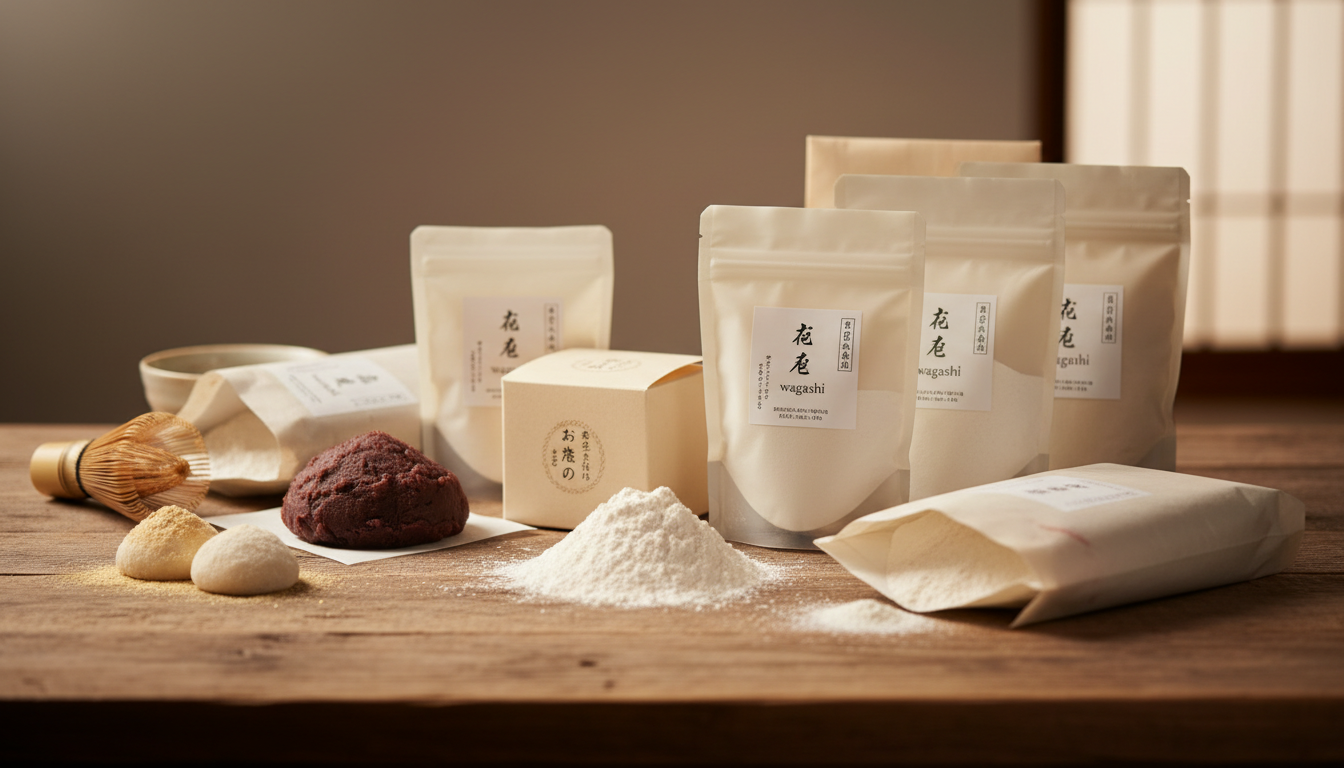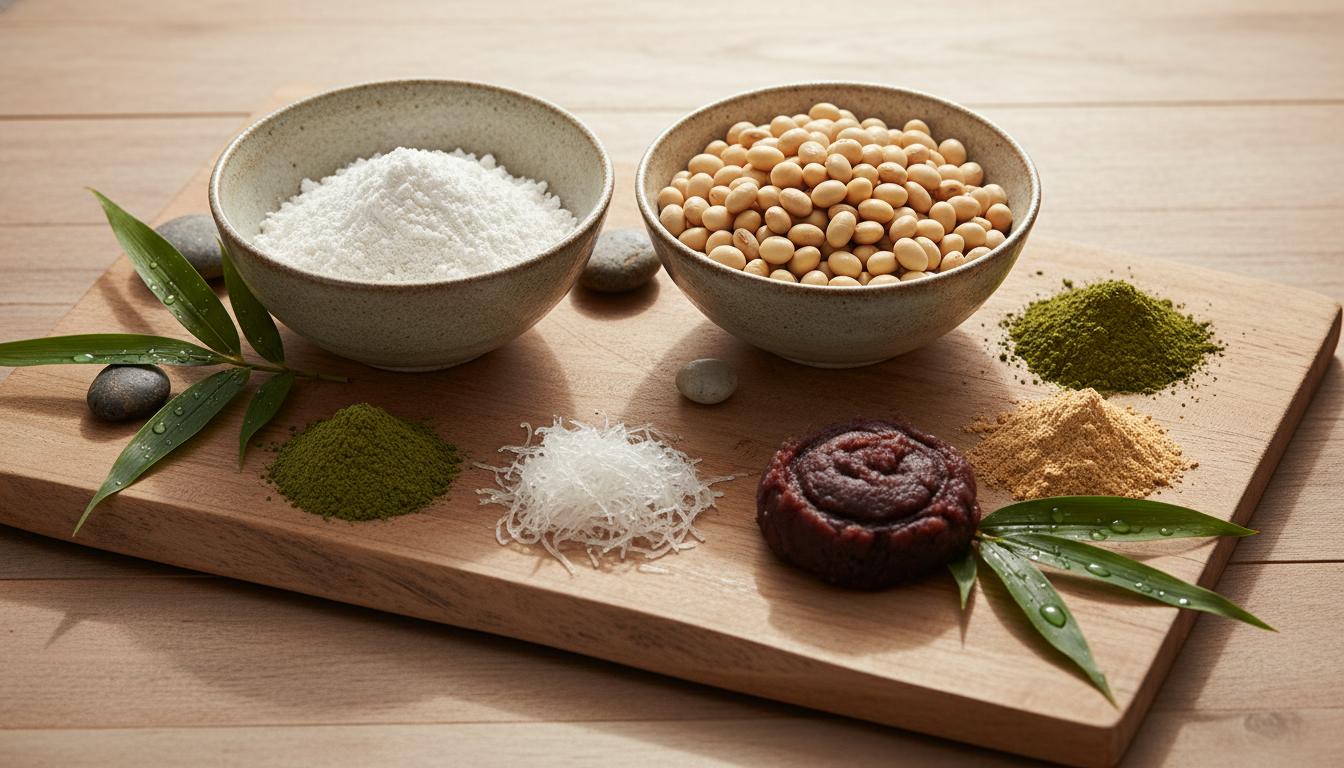
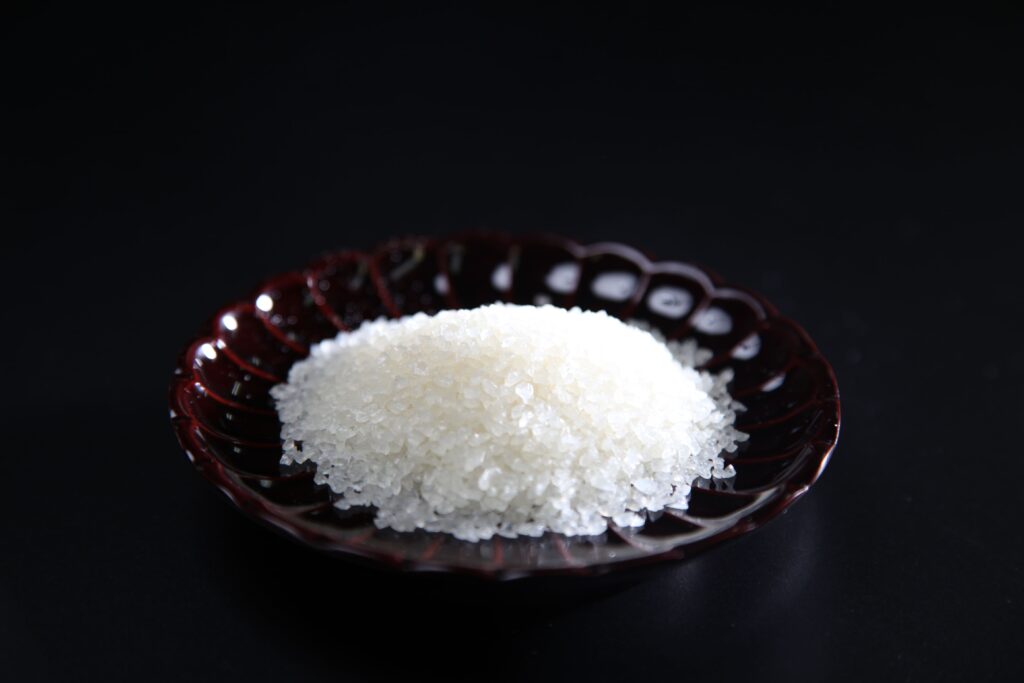
Domyoji is a processed rice for wagashi made from glutinous rice (mochi rice). The mochi rice is first steamed, then dried, and coarsely crushed to produce a granular ingredient. Its greatest characteristic is that it retains grains rather than being milled into powder; re-steaming it produces a distinctive texture that combines both graininess and stickiness. Among wagashi raw materials, it can be described as an ingredient with a clearly designed appearance and texture.
Rather than processing raw mochi rice as is, the step of steaming it once and then drying it alters the starch structure of the rice. Domyoji that has gone through this process readily reabsorbs moisture and tends not to leave a hard core when re-steamed. The relatively even rehydration of each grain, which helps suppress variation during production, is an important factor for a commercial-use ingredient.
Why It Has Long Been Used for Sakura Mochi
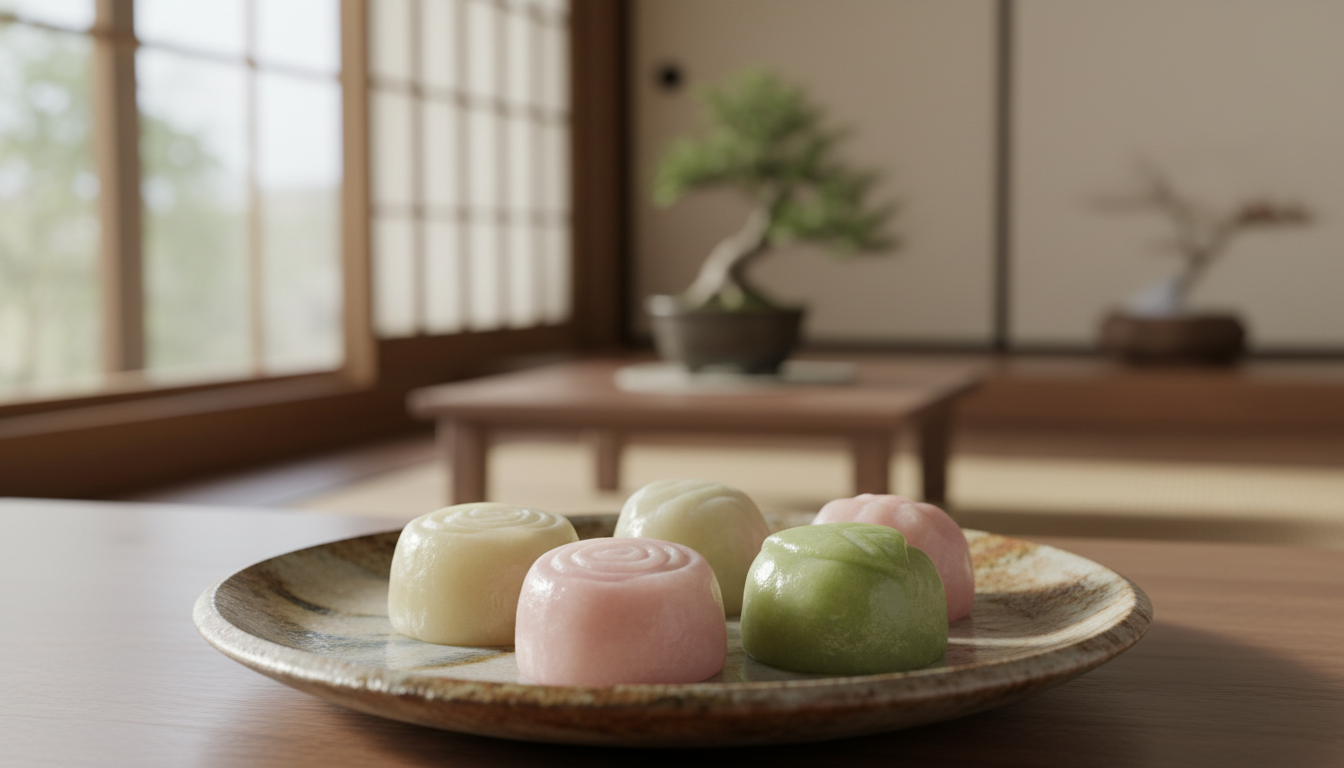
The reasons domyoji has long been used for sakura mochi are not merely tradition and custom. Although sakura mochi is a confection that wraps an, its outer dough is also expected to have texture and presence. Domyoji has a sense of grains while still holding together as a whole, and it does not become too heavy when combined with an. The texture—where the grains loosen the moment you bite in and then mix with the an with a slight time lag—fits well with the very structure of sakura mochi as a confection.
Such a stepwise texture is difficult to achieve with a uniform dough made from powdered ingredients. The graininess of domyoji also gives visual character, conveying the "sakura mochi feel" even before you eat it. Domyoji has been chosen for sakura mochi because the structure of the confection and the properties of the ingredient meshed together.
Ease of Handling When Viewed as an Ingredient
From the perspective of the production floor, domyoji is also an easy ingredient to handle. Compared with powders, it is less prone to scattering and results in less loss during preparation—points that cannot be overlooked in day-to-day production. The re-steaming step is also relatively stable and not heavily dependent on experience, making it well suited to sites where multiple people handle production or where continuous quality control is required.
In addition, domyoji shows relatively gentle changes in texture after it cools. When quality is considered not just fresh out of production but through the time until sale and the state after display, it is an easy ingredient to handle. It is also suited to product designs that assume a certain passage of time, such as seasonal or event confections.
For this reason, one of the reasons domyoji continues to be used on the production floor is that the finish can be adjusted simply by changing the ingredient under the same production conditions, from everyday staple products to seasonal confections. There are not many ingredients that let you control texture and appearance without major changes to the process, making it a practical option in situations that demand both production stability and product-range flexibility.
Domyoji Products Handled by Minoyo
・Hoso Domyoji (5-Split) 20kg
・Chu-ara Domyoji (3-Split) 20kg
・Atama Domyoji (8-Split) 20kg
・Whole-Grain Domyoji 20kg
・Yaki Domyoji 7kg
・Shosetsu-ko 20kg
All are grain-flour processed products that can be used selectively according to the desired texture and appearance of the finished product and the production conditions.
The Value of Domyoji Beyond Sakura Mochi
Domyoji is not an ingredient exclusively for sakura mochi. Its applications are expanding to include mochi confections and steamed confections that make use of its graininess, as well as wagashi where you want to add variation in texture. By adjusting how the grains are split and rehydrated, you can make the mouthfeel softer or emphasize the graininess. The ability to vary the character from product to product while using the same ingredient is a major advantage for a production floor developing a range of products.
道明寺は万能な原料ではありません。なめらかさを最優先する菓子や、完全な均一性が求められる製品には向きません。それでも今なお使われ続けているのは、粒感、粘り、見た目、作業性、時間経過への耐性といった要素を、実用レベルで兼ね備えているからです。桜餅に使われ続けてきた背景には、地域の慣習に加えて、原料としての扱いやすさがあります。
View the Domyoji Product Category Page Here
Please feel free to consult us about commercial procurement and sample requests
美濃与は京都に拠点を置く京菓子原材料の専門商社です。本記事で取り上げた原料の業務用調達や、お試しサンプル、ロット・規格のご相談など、和菓子製造の現場に寄り添った提案を行っています。
For Minoyo's business and strengths, please see Our Business & Why We Are Chosen . For the actual flow of doing business, see Ordering Process & How to Order; for questions, we have compiled them at Frequently Asked Questions . For individual consultations, please use Contact or material download to get in touch.