What Is Potato Starch? Essential Knowledge Every Wagashi Artisan Should Know
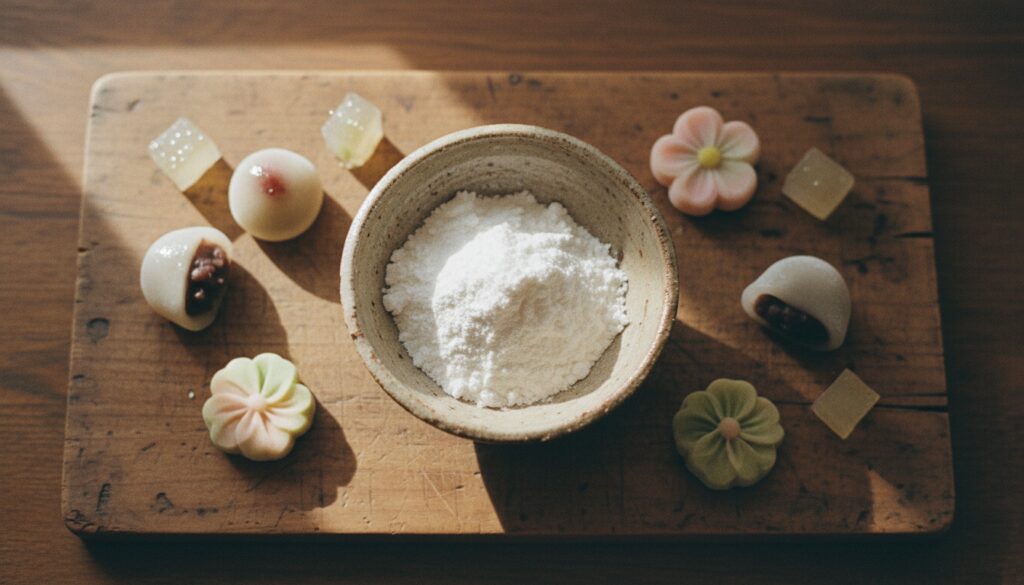
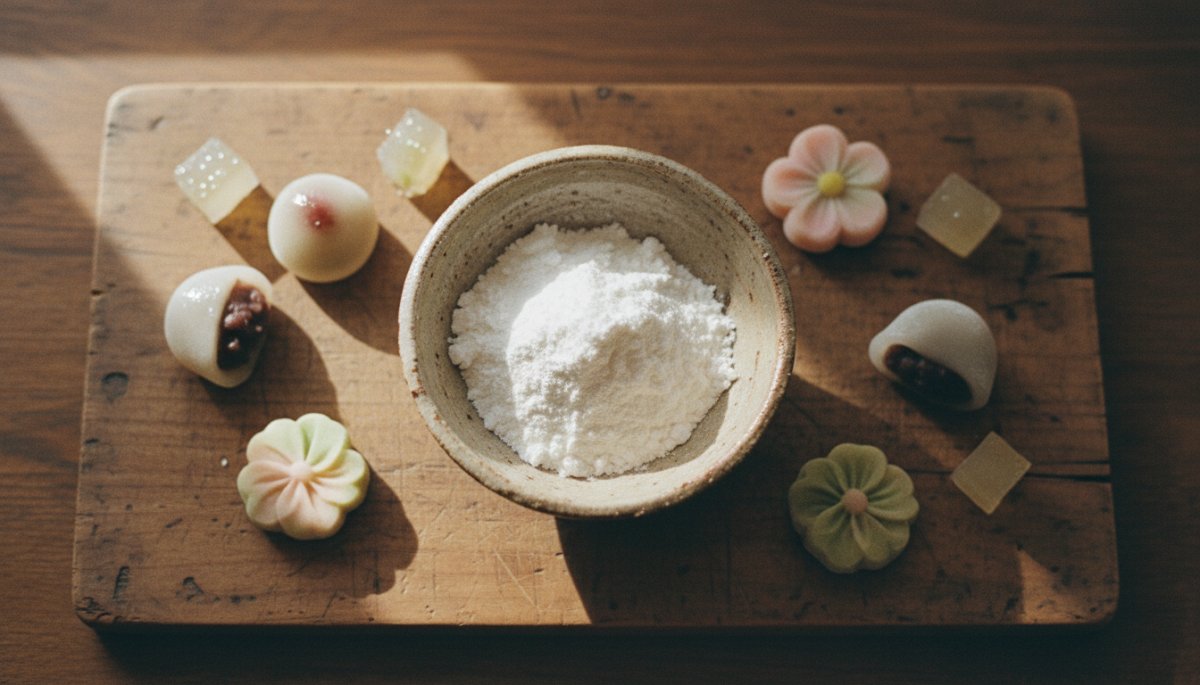
Potato starch is a starch extracted from potatoes, generally known as "katakuriko."
In the world of wagashi, it has long been prized as a valuable material that produces a beautifully translucent finish and a distinctive chewy texture.Genuine warabi starchCompared with hon-kuzu, it is easier to obtain and offers excellent cost performance, so many wagashi artisans use it on a daily basis.
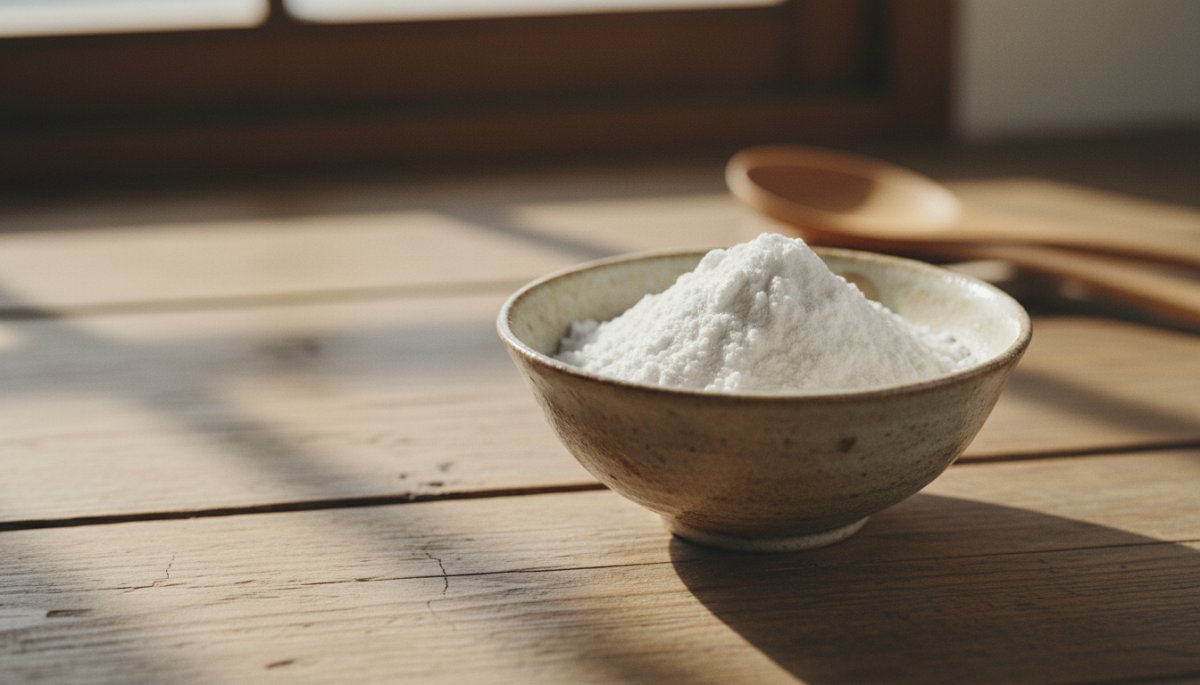
The greatest characteristic of potato starch is that gelatinization begins at the relatively low temperature of 60 degrees. This reduces the risk of failure in wagashi making, where delicate temperature control is required. In addition, it has high translucency after gelatinization and is not prone to clouding even when chilled, making it ideal for wagashi that leverage translucency, such as mizu-gashi (water sweets) and kuzu-manju.
Understanding the Difference from Katakuriko: The Properties of Potato Starch
A question many people have is: "Are katakuriko and potato starch the same thing?"
実は現代の片栗粉のほとんどが馬鈴薯澱粉で作られています。かつて片栗粉はカタクリという植物の根から作られていましたが、原料の希少性から、現在では馬鈴薯澱粉が主流となっているのです。美濃与では馬鈴薯澱粉を25kgの業務用規格で取り扱っています。
馬鈴薯澱粉は、コーンスターチや小麦澱粉と比較して、粘度が高く弾力のあるゲルを形成します。この特性が、わらび餅や葛餅のようなもちもちとした食感を生み出す秘訣となっています。ただし糊化した馬鈴薯澱粉は冷蔵で置くと硬くなりやすいため、日持ちを求める商品では保存温度と配合を試作で確かめてください。
See Minoyo's Product List Here
Types of Wagashi Where Potato Starch Shines
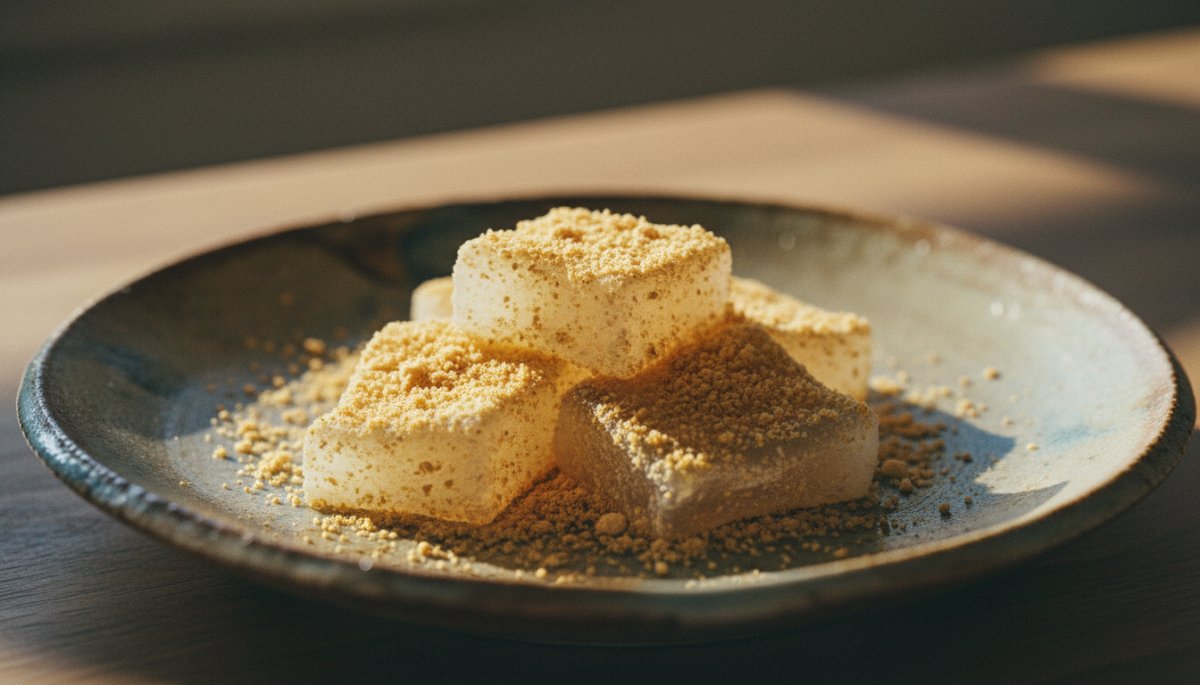
Mizu-gashi That Leverage Translucency
The field in which potato starch excels most is mizu-gashi that leverage translucency.
わらび餅、葛餅、水まんじゅうなど、涼やかな見た目が求められる夏の和菓子で、本蕨粉や本葛の代わり、または併用として使われます。馬鈴薯澱粉は糊化後の透明度が非常に高く、中に入れた餡や果物が美しく透けて見えるため、視覚的な魅力を最大限に引き出すことができます。美濃与のオリジナル商品「水まんじゅうの友」は、水と砂糖を加えて加熱すると生地ができるミックス粉です。
餅菓子の取り粉として
羽二重餅や求肥などの餅菓子では、成形するときに生地がくっつかないようにする取り粉として馬鈴薯澱粉が使われ、べたつきを抑えます。
Application to Steamed Confections
蒸しようかんなど、蒸して作る和菓子にも使われます。美濃与の「蒸しようかんの友」は、こし餡・寒天と併用して使う蒸しようかん用の配合用原料です。
配合と加熱で見るところ
配合比率の決め方
馬鈴薯澱粉を使った和菓子作りでは、澱粉の濃度で食感が変わります。
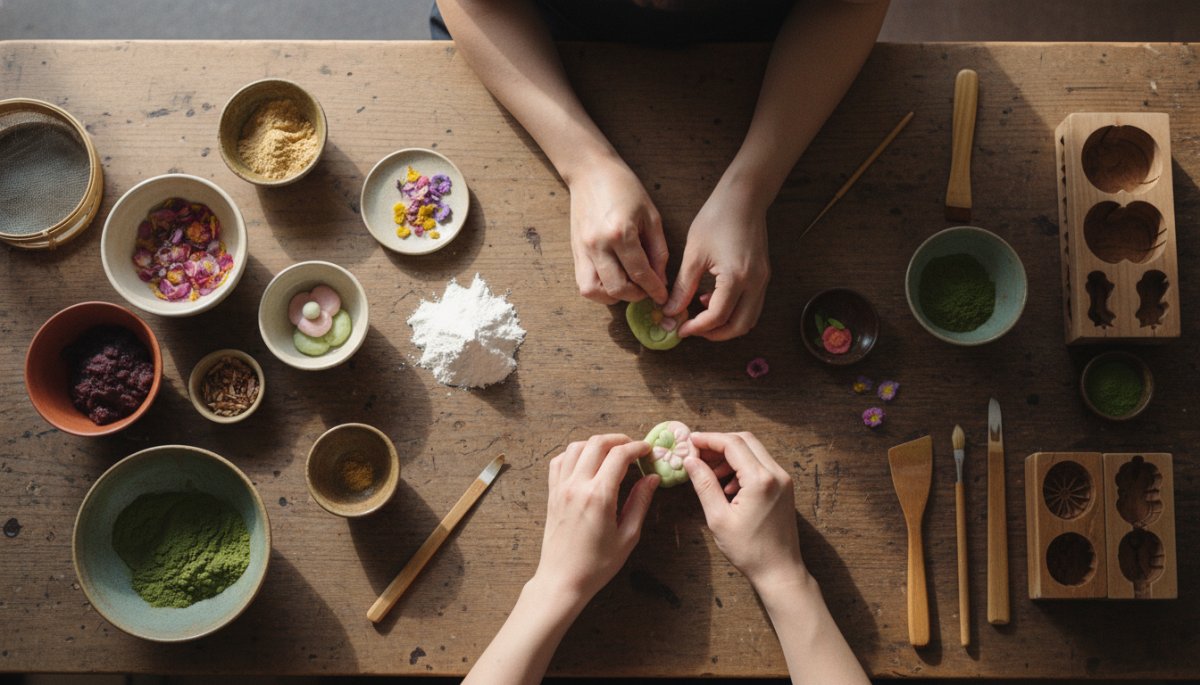
使用する澱粉、糖の量、狙う食感によって適した濃度は異なるため、規格書を確認したうえで試作で決めてください。水は一度に大量に加えず、少しずつ加えながら混ぜます。
Managing the Gelatinization Temperature
馬鈴薯澱粉は60度前後から糊化が始まります。
The key to success is to keep the heat at medium to low and to heat while stirring constantly. Rapid heating produces uneven partial gelatinization and causes lumps, so caution is needed. When translucency appears and the whole develops a sheen, that is the sign that gelatinization is complete.
Techniques for Combining with Other Starches
馬鈴薯澱粉は、他の澱粉と組み合わせて食感を調整することもあります。本蕨粉と併用する例もありますが、割合と仕上がりは試作で確認してください。小麦澱粉(浮粉)を加えると透明度は下がりますが、歯切れのよい食感に寄せられます。
Combining with tapioca starch is effective when you want to emphasize chewiness.
Points to Note for Avoiding Failure, and Troubleshooting
Common Mistakes and How to Handle Them
The most common mistake in wagashi making with potato starch is "lumps forming."
これは澱粉が水に均一に分散していない状態で加熱したことが原因です。加熱前に澱粉と水をよく混ぜ、沈んだ粉がない状態にしてから火にかけてください。また、「透明感が出ない」という失敗は、加熱温度が不足しているか、加熱時間が短すぎることが原因です。全体が透明になりツヤが出るまで、混ぜながら加熱を続けてください。
Storage and Quality Control
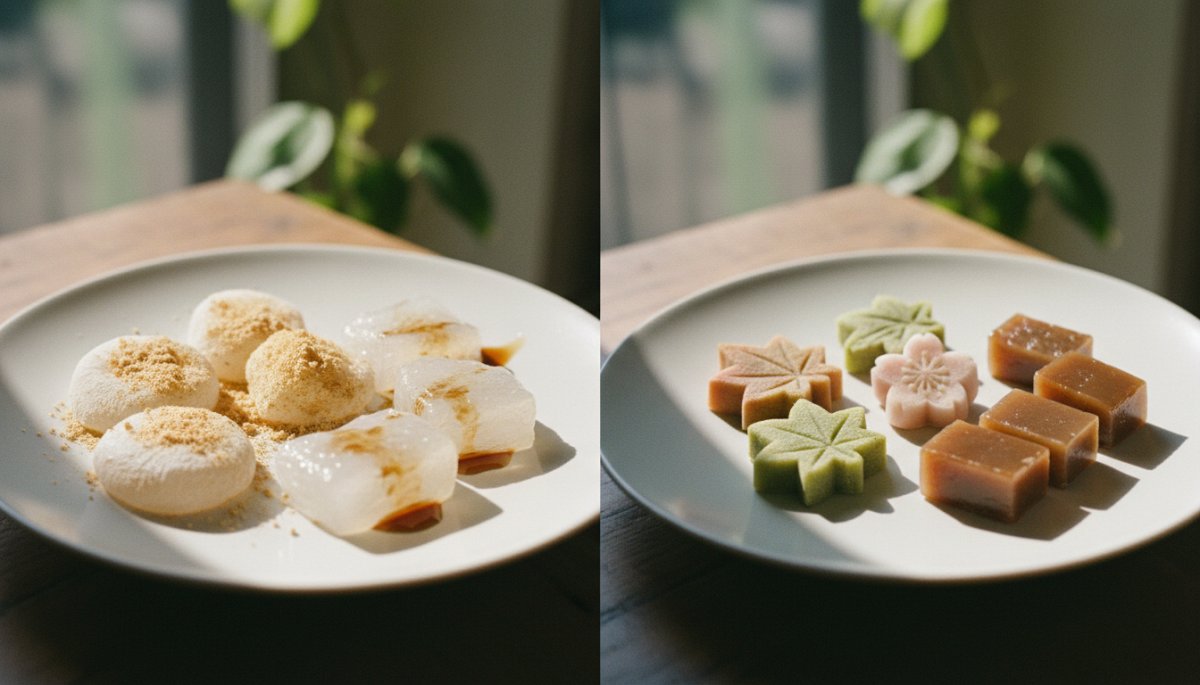
Because potato starch dislikes moisture, the basic rule is to store it in an airtight container in a cool, dark place. If it absorbs moisture it hardens and becomes prone to lumping when used. As for storing the finished wagashi, mizu-gashi made with potato starch can be refrigerated, but chilling for a long time tends to make the texture firm.
日持ちを設定する商品では、保存温度ごとの食感の変化を試作で確認してください。
室温・湿度に応じた工程管理
糊化の進み方は、気温ではなく生地の温度と加熱の条件で決まります。季節による差は、原料と水の温度、加熱中の蒸発量、粉の吸湿状態を測って調整してください。湿度の高い梅雨時期は、澱粉が湿気を吸いやすいため、開封後は特に密閉保存を徹底しましょう。
Summary: Expanding the Possibilities of Wagashi with Potato Starch
馬鈴薯澱粉は、透明感のある水菓子や、餅菓子の取り粉などに使われる澱粉です。
60度前後から糊化が始まる特性と糊化後の透明度の高さが特徴です。一方で冷蔵では硬くなりやすいため、保存条件の確認が要ります。本蕨粉や本葛と比べて入手しやすく、コストパフォーマンスにも優れているため、日常的な和菓子製造から高級和菓子まで幅広く活用できます。
濃度は求める食感に応じて試作で決めます。他の澱粉との組み合わせ技術を習得すれば、さらに独自性の高い和菓子を生み出すことができるでしょう。
失敗を防ぐポイントは、加熱前に澱粉を水に十分分散させること、適切な温度管理、そして絶えず混ぜ続けることです。美濃与では、馬鈴薯澱粉をはじめとする各種澱粉類や、配合済みの「友」シリーズなど、和菓子製造をサポートする幅広い原料を取り揃えています。
See Minoyo's Product List Here
📦 Related Minoyo Products
Please feel free to consult us about commercial procurement and sample requests
美濃与は京都に拠点を置く京菓子原材料の専門商社です。本記事で取り上げた原料の業務用調達や、お試しサンプル、ロット・規格のご相談など、和菓子製造の現場に寄り添った提案を行っています。
For Minoyo's business and strengths, please see Our Business & Why We Are Chosen . For the actual flow of doing business, see Ordering Process & How to Order; for questions, we have compiled them at Frequently Asked Questions . For individual consultations, please use Contact or material download to get in touch.