The appeal of seasonal materials that color spring wagashi making
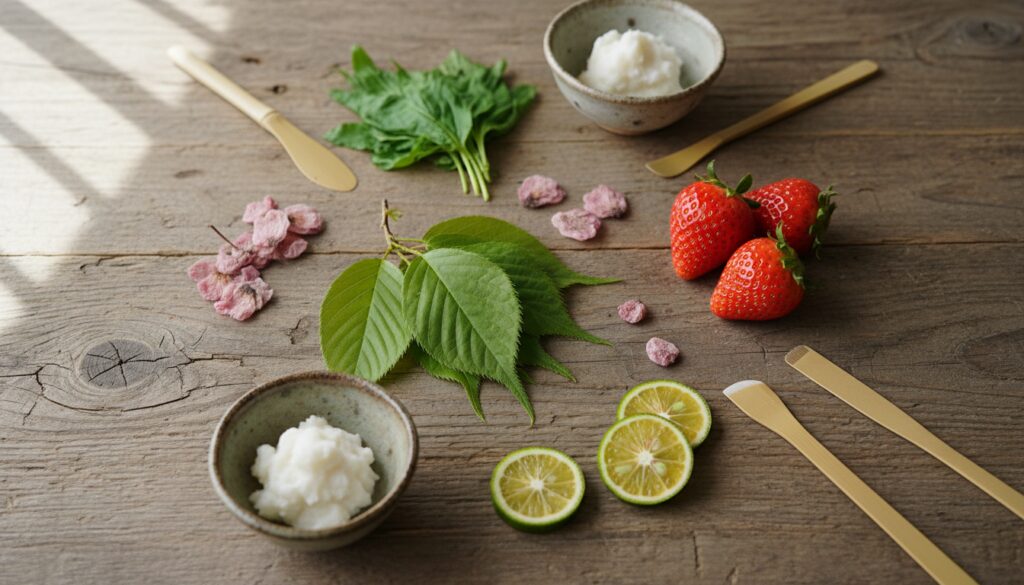
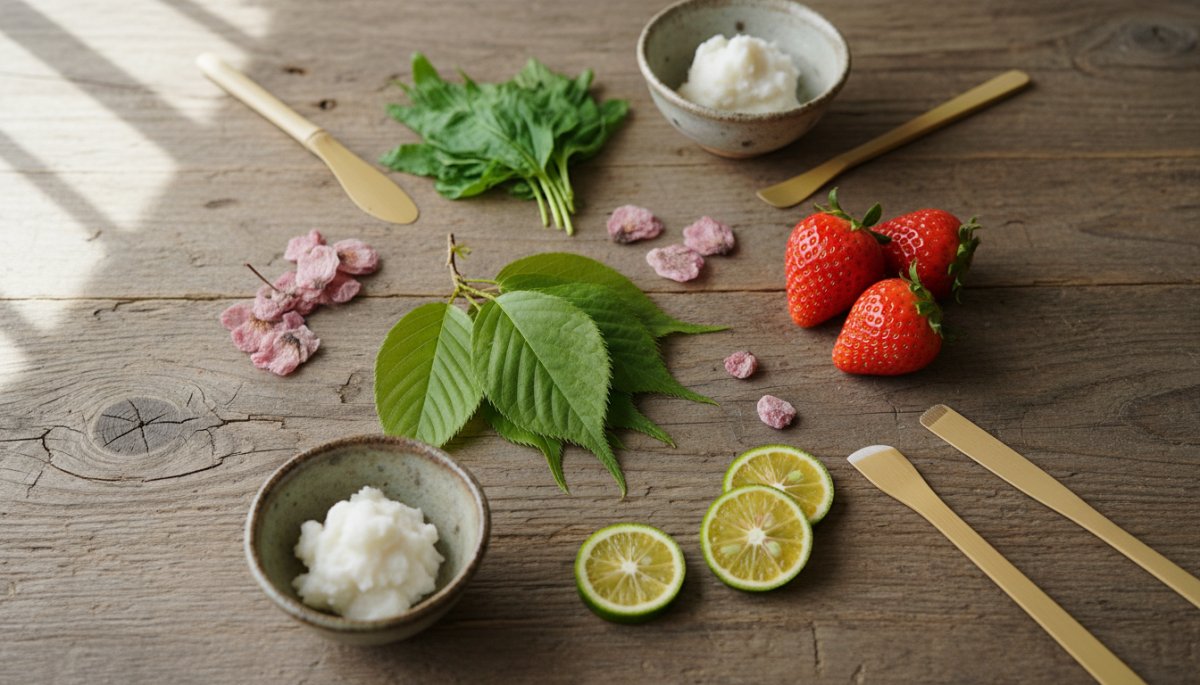
Spring—when cherry blossoms bloom and fresh greenery buds. There are wagashi ingredients you can enjoy precisely because of this season. Cherry leaves, cherry blossoms, mugwort, strawberries, and other spring-only materials bring vibrant color and fragrance to wagashi.
Wagashi is a traditional culture that evokes Japan's four seasons, expressing a food culture rooted in each season. In making spring wagashi, drawing on seasonal materials lets you convey a spring feel in both appearance and taste.
本記事では、春の原料の種類と使い方、保存方法を整理します。
Basic knowledge of wagashi raw materials using cherry blossom
The characteristics of salt-pickled cherry leaves and how to choose them
The cherry leaf, essential to sakura mochi, is an important material that adds a distinctive aroma and flavor to wagashi.
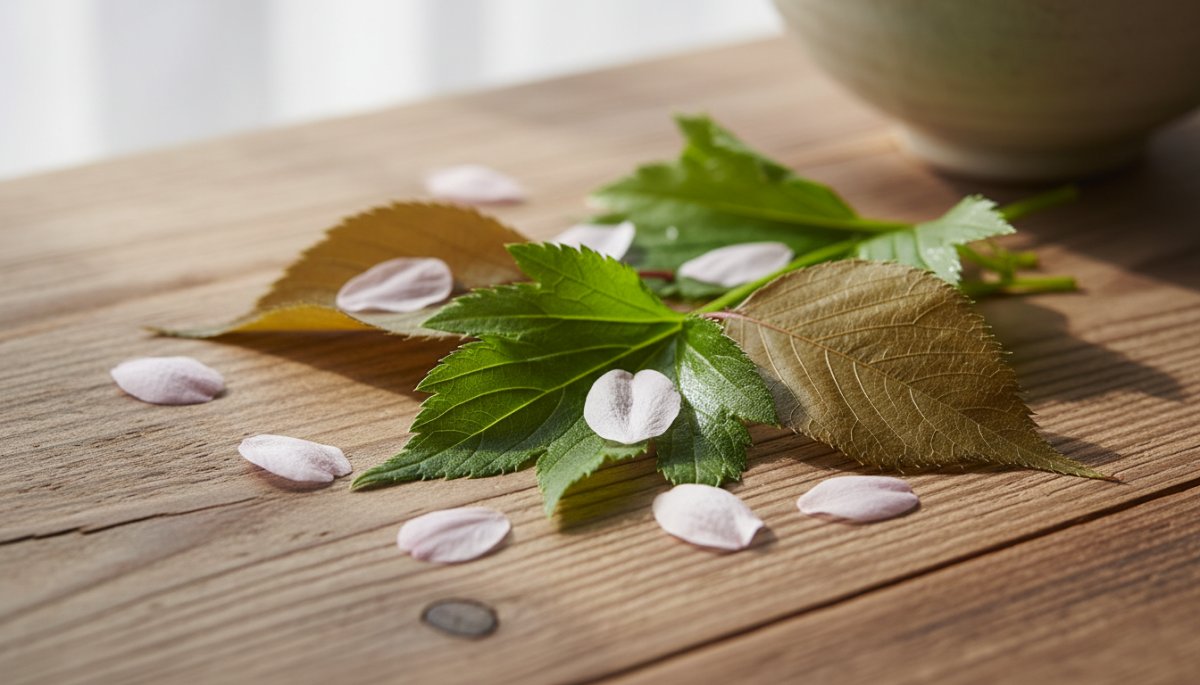
Cherry leaves are used in both the Kanto-style sakura mochi "Chomeiji" and the Kansai-style "Domyoji." The salt-pickled leaf brings out the sweetness of the an, and you can enjoy the gorgeous aroma of cherry blossom.
Main types of cherry leaf
- Sakura ao-ba (green leaves): Characterized by vivid green color and a strong aroma (50 leaves × 100 bundles specification)
- Sakura cha-ba (brown leaves): Leaves that have turned brown, rich in flavor (50 leaves × 100 bundles specification)
The point when choosing is to select leaves with even color, no tears, and a good salt-pickling condition. Before use, desalt them in water to draw out the cherry blossom aroma.
How to use salt-pickled cherry blossoms
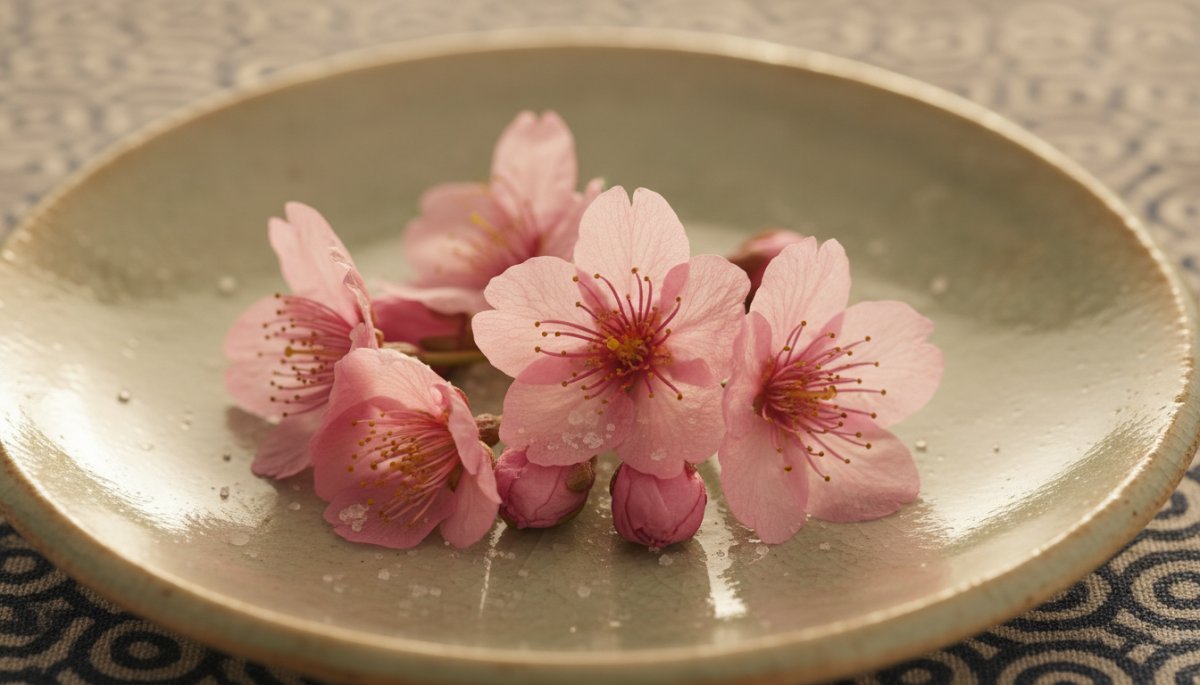
Salt-pickled cherry blossoms are a traditional wagashi material essential as decoration for spring fresh confections and sakura mochi. Minoyo offers them in a 1kg×10 specification, ensuring sufficient quantity for commercial use.
Desalting in water revives the beautiful pink color and delicate aroma of the cherry blossom petals. They can be used not only as a topping for sakura mochi but also to decorate nerikiri and yokan.
桜あんの配合と色の付け方
桜あんは白餡に桜の花や桜葉を混ぜた餡です。美濃与の晒餡(特一号晒餡・冨士印晒餡・白晒餡、各12kg)を原料に用いる場合は、形態と使用方法を規格書で確認してください。
Basic Blending Ratios
- 白餡:ベースになる餡
- Salt-pickled cherry blossoms: Add color and aroma (chop and mix in an appropriate amount after desalting)
- Neri Hon-beni (paste red): A coloring that produces a beautiful pink (150g and 600g specifications)
桜あんの色合いは、液体桃色(練花紅)や桜花紅(花紅)などの着色料で調整します。淡いピンク色が春らしさを演出し、見た目にも華やかな和菓子に仕上がります。
Spring wagashi raw materials using mugwort (yomogi)
よもぎの特徴
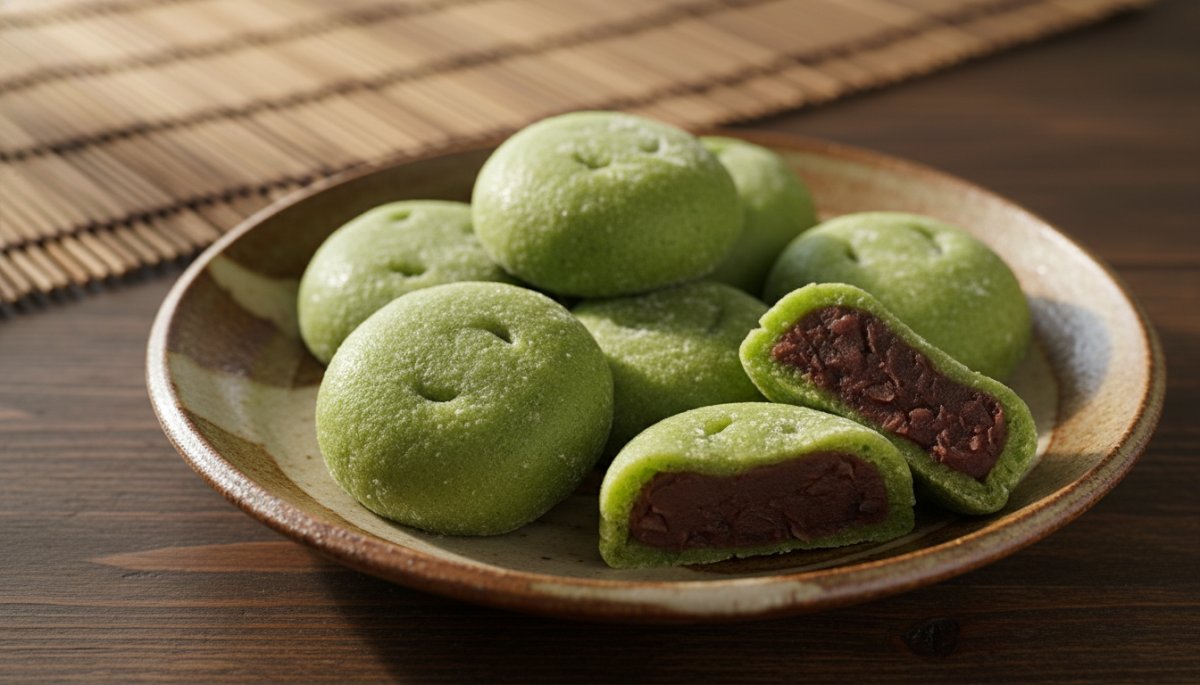
Mugwort, which sprouts in spring, is eaten as young shoots that appear around March to May. It is a perennial of the aster family that grows wild in mountains and fields across Japan, bringing wagashi a distinctive flavor and vivid green color.
Long enjoyed as mugwort mochi and kusa dango, it is made by mixing freshly picked mugwort into mochi or dango. It is characterized by the faint bitterness unique to mugwort and the refreshing quality of the grass.
How to store mugwort and prepare it
新鮮なよもぎは、摘み取ったらすぐに下処理します。
Basic preparation steps
- Wash the mugwort well in water to remove dirt
- Boil in boiling water for 2 to 3 minutes
- Rinse in cold water to remove bitterness
- Wring out the water and chop finely
- For freezer storage, portion it out into airtight containers
冷凍保存したよもぎは、和菓子作りの際に必要な分だけ解凍して使用できます。美濃与では、よもぎを冷凍品と乾燥品(1kg×10P)で扱っており、季節を問わず使えます。
Variations of wagashi using mugwort
よもぎは餅・団子・饅頭・羊羹に使われます。
Representative mugwort wagashi
- Kusa dango: Mochi kneaded with mugwort, wrapping adzuki-bean an
- よもぎ大福:餅粉や大福粉の生地によもぎを混ぜて作る
- よもぎ饅頭:ミックス粉によもぎを練り込む
- よもぎ羊羹:こし餡と寒天に蒸しようかんの友を合わせ、よもぎを加える
友シリーズのミックス粉は水と砂糖を加えて加熱すれば生地ができるため、そこによもぎを加えてアレンジできます。
Wagashi raw materials using spring fruits
The possibilities of wagashi using strawberry
Strawberry, a representative spring fruit, is also being actively incorporated into wagashi.
いちごの鮮やかな赤色と甘酸っぱい風味は、白餡や求肥とよく合います。いちご大福は、求肥でいちごと白あんを包んだ人気の春和菓子として定着しています。
白あんの原料としては、美濃与の晒餡(特一号晒餡・白晒餡など、各12kg規格)も候補になります。
Spring uses of citrus such as yuzu
Yuzu, which can be enjoyed into early spring, brings a refreshing aroma and acidity to wagashi.
Minoyo's yuzu-related products
- Yuzu slices (refrigerated, 11kg specification): For topping yokan and fresh confections
- Yuzu jam (refrigerated, 2kg and 20kg specifications): Mix into an to add flavor
- Fresh yuzu paste (refrigerated, 11kg specification): Achieves an authentic yuzu flavor
- Yuzu juice (frozen, 2kg×6 bottles): A fresh flavor available for use anytime
Yuzu's refreshing aroma adds a cool, clean feel to spring wagashi and becomes an important element that evokes the changing of the seasons.
See Minoyo's Product List Here
Choosing raw materials for Momo no Sekku wagashi
Ideal raw-material combinations for Hinamatsuri
For Momo no Sekku on March 3, gorgeous, spring-like wagashi are called for.
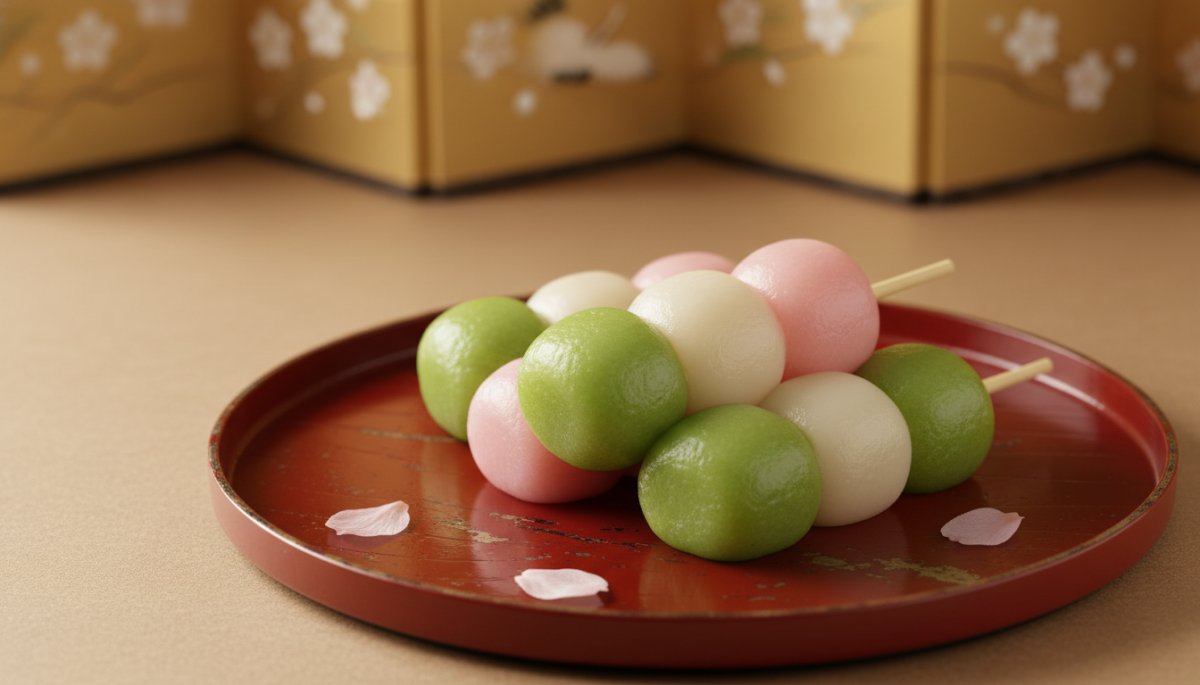
For Hinamatsuri wagashi, a color scheme based on the three colors of pink, white, and green is traditional. These three colors represent peach blossoms, snow, and fresh greenery.
Raw-material composition of three-color wagashi
- ピンク層:桜あん(白餡+煉本紅+桜の花塩漬)
- 白層:白餡
- 緑層:よもぎ餡(白餡+よもぎ+特製草青色)
各層の配合は試作で調整します。
How to make hishi-mochi-style wagashi
Hishi mochi is a representative Hinamatsuri wagashi. It is a diamond-shaped three-color mochi, characterized by its auspicious shape and spring-like color scheme.
もち米や餅粉でつくった生地を三色に色付けし、層を重ねて菱形に切り分けます。各層に桜の花塩漬、よもぎ、着色料を適切に配合することで、伝統的な菱餅を再現できます。
By using mix powders such as Mizu Manju Tomo and Kuzu Confectionery Tomo, you can also make modern-style hishi-mochi-style wagashi with transparency.
Devising colors that stand out for Momo no Sekku
For Hinamatsuri wagashi, gorgeous appearance is also an important element.
Minoyo's coloring lineup
- Neri Hon-beni (paste red): Paste type in 150g and 600g specifications
- Liquid pink (neri hana-beni): Easy to use in a 200g specification
- Special kusa green color (kusa-iro): Expresses a vivid green
- Sakura hana-beni (hana-beni): For a delicate expression of cherry-blossom color
着色料は添加物として表示が必要です。原材料表示もあわせて確認してください。練りタイプと粉末タイプは、仕上げたい色調に合わせて使い分けます。
Starches useful for making spring wagashi
Using hon-warabi-ko and kuzu-ko appropriately
For making transparent spring water confections, high-quality starches are essential.
Genuine warabi starch(10kg規格)は、わらび餅に使う澱粉です。本蕨粉を使ったわらび餅は、独特の透明感と弾力のある食感に仕上がります。
Meanwhile, hon-kuzu (kudzu starch) (5kg×4 specification) andZuiichi Hon-kuzu(5kg×3 specification) are characterized by a beautiful, transparent finish and a smooth, elegant texture. Used in wagashi such as kuzu mochi and kuzukiri, they are ideal for cool spring wagashi.
How to choose the best starch for spring water confections
春から初夏にかけて人気の水菓子は、菓子の種類によって向く澱粉が変わります。
Choosing starch by purpose
- Warabi mochi: Hon-warabi-ko or bekkuchi warabi-ko (10kg specification)
- Kuzu mochi: Zuiichi Hon-kuzu or hon-kuzu (5kg×3 to 4 specification)
- Mizu manju: Mizu Manju Tomo (1kg and 10kg specifications)
- Kuzu yokan: Kuzu Yokan Tomo (1kg and 10kg specifications)
By using Minoyo's original Tomo Series, you can simplify wagashi production and achieve consistent quality.
Blending techniques for achieving transparency
The transparency required of spring wagashi is determined by starch selection and blending technique.
本葛や本蕨粉は、透明度と弾力性に優れています。水の量や加熱温度、練り方によって食感が大きく変わるため、経験と技術が必要です。
Also, by combining starches suited to the purpose, such as lotus starch (20kg specification) and alpha starch (20kg specification), you can create your own distinctive texture and transparency.
Storage and quality control of spring wagashi raw materials
Appropriate storage methods for seasonal materials
春の和菓子原料は、素材ごとに保存方法が異なります。
Basics of storage methods
- Cherry leaves and salt-pickled cherry blossoms: Store in a cool, dark place; after opening, keep refrigerated
- Mugwort: Freezer storage is the basic approach; portion it out into airtight containers
- Yuzu products: Require refrigeration or freezing (varies by product)
- 晒餡:保存条件は規格書で確認する
- Starches: Store in a cool, dark place away from moisture
美濃与の商品は業務用の容量での提供が中心のため、開封後の保存場所と使い切るまでの期間を決めてから発注してください。
Ways to preserve freshness
Freshness is everything for spring materials. In particular, for plant materials such as cherry leaves and mugwort, color and aroma serve as indicators of quality.
Desalting cherry leaves in water before use revives the cherry blossom aroma. Adjust the desalting time according to the condition of the leaves, and it is important to gauge the balance between aroma and saltiness.
By freezing mugwort, you can enjoy its vivid green color and refreshing aroma in seasons other than spring. Natural thawing is the basic approach, and avoiding sudden temperature changes helps preserve quality.
季節原料と通年原料で発注の組み方を分ける
For wagashi shops and confectionery businesses, raw-material inventory management is an important element of operations.
Because many of Minoyo's products come in large-volume specifications such as 12kg, 10kg, and 20kg, planned ordering that takes into account usage frequency and expiration dates is necessary.
季節商品である桜関連原料やよもぎは、春の需要期に合わせて必要な量を早めに確保しておきます。一方で、晒餡や澱粉類などの通年使用する原料は、安定した在庫を維持することで、品質の均一性を保てます。
See Minoyo's Product List Here
Summary: Product development that makes the most of spring wagashi raw materials
Spring wagashi raw materials are abundant in seasonal ingredients such as cherry leaves, cherry blossoms, mugwort, strawberry, and yuzu. By appropriately choosing, storing, and blending these materials, you can make gorgeous, spring-like wagashi.
美濃与では、晒餡から季節の果実加工品、葉類、澱粉類まで、和菓子製造に必要な原料を幅広く提供しています。業務用大容量パッケージでの提供により、プロの和菓子職人のニーズに応えています。
桃の節句向けの三色和菓子や菱餅、桜餅、よもぎ餅など、春の行事に合わせた和菓子は、原料選びと配合で仕上がりが変わります。美濃与のオリジナル「友」シリーズを活用すれば、和菓子製造を簡便化し、安定した品質を実現できます。
Make the most of spring wagashi raw materials and create beautiful wagashi that evoke the changing of the seasons.
📦 Related Minoyo Products
Please feel free to consult us about commercial procurement and sample requests
美濃与は京都に拠点を置く京菓子原材料の専門商社です。本記事で取り上げた原料の業務用調達や、お試しサンプル、ロット・規格のご相談など、和菓子製造の現場に寄り添った提案を行っています。
For Minoyo's business and strengths, please see Our Business & Why We Are Chosen . For the actual flow of doing business, see Ordering Process & How to Order; for questions, we have compiled them at Frequently Asked Questions . For individual consultations, please use Contact or material download to get in touch.


