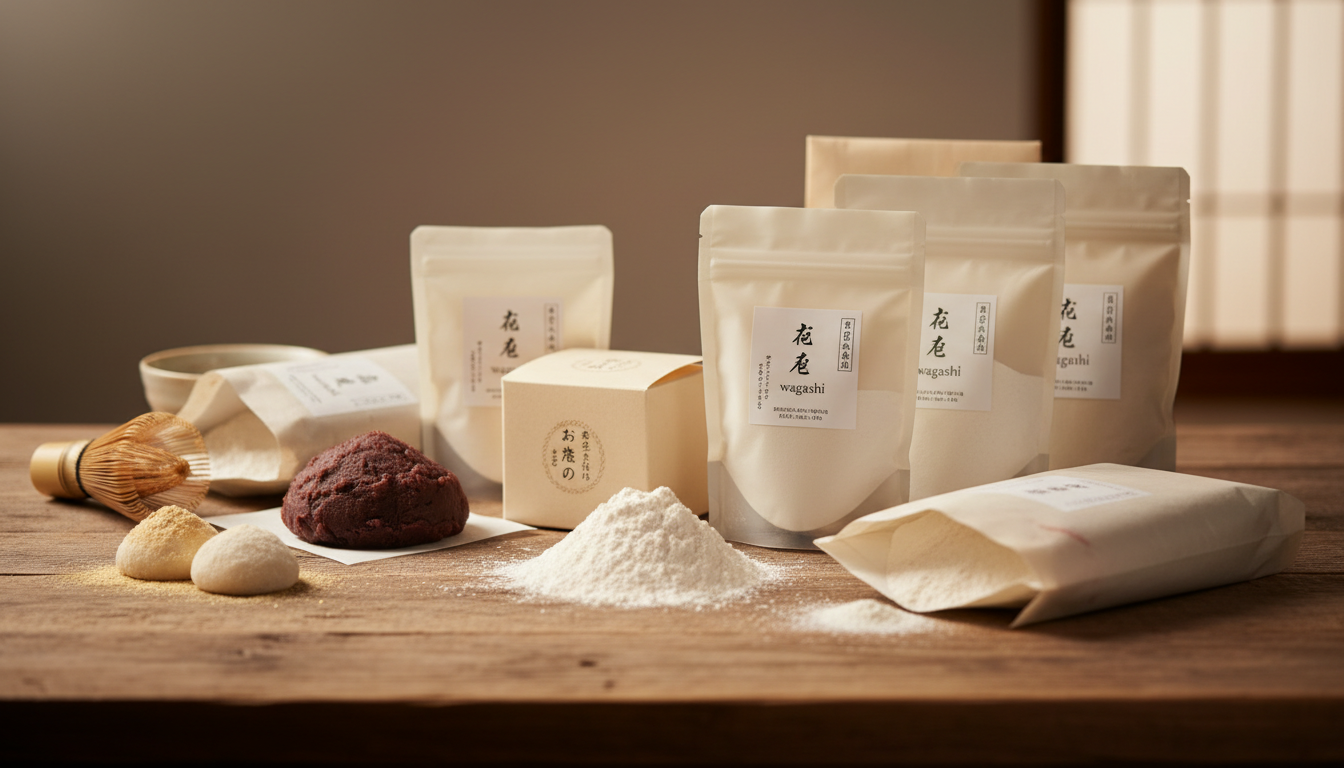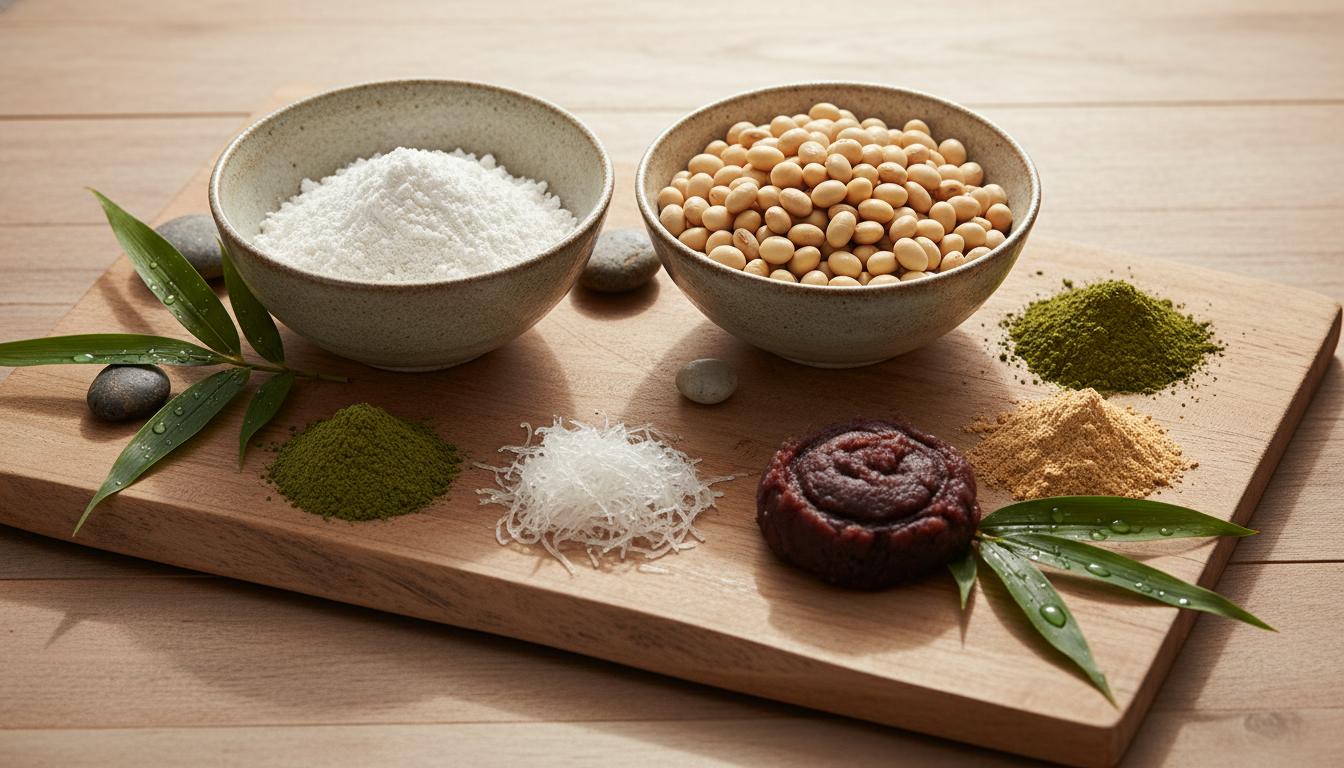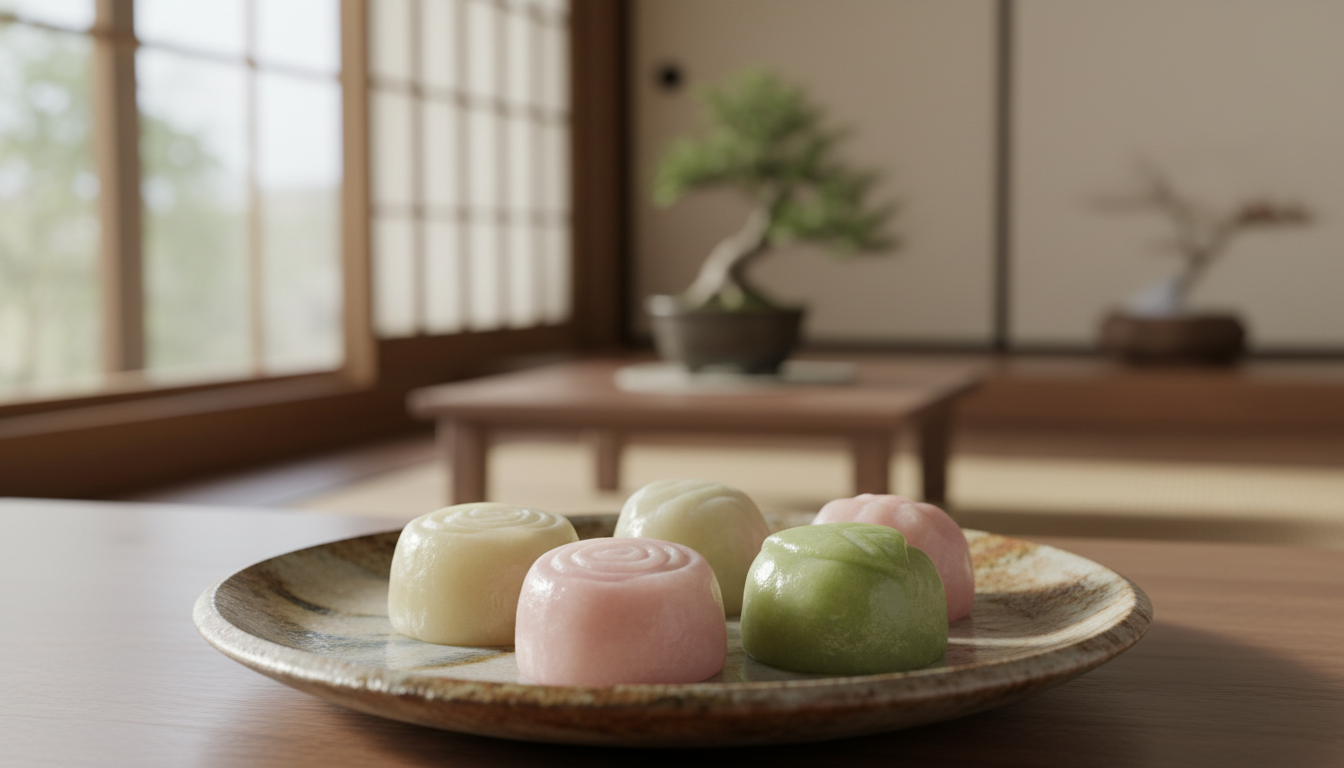
In making wagashi, selecting raw materials is not merely a task of deciding taste and texture.
Which raw materials you use determines whether a confection becomes something that "adorns a special day" or something that is "eaten repeatedly in everyday life." Ceremonial confections and everyday confections differ in the roles required of them and in the very approach to production. Choosing raw materials with an understanding of that difference leads to consistent product development.

Ceremonial Confections and Everyday Confections Have Different Premises
Ceremonial confections are those offered with a specific timing and meaning, such as New Year's, seasonal festivals, the equinox, and other observances. Everyday confections, on the other hand, are products meant to be eaten repeatedly in daily life. This difference is not merely a matter of when they are sold.
For ceremonial confections, "being special" becomes the value, while for everyday confections, "being sustainable" is the value. As a result, the conditions required of the raw materials naturally change as well.
行事菓子ではどんな原料が選ばれるか
Ceremonial confections are made on the premise of being eaten on a "special day." For that reason, the raw materials call fora clear presenceandand an expression that carries meaning.are required.
What matters first is a raw material that can convey a "festive character" through appearance and texture. For example, in sakura-mochi and seasonal-festival confections, materials with a distinct graininess such as Whole-Grain Domyoji 20kg or Atama Domyoji (8-Split) 20kg are sometimes used. Because the grains themselves are visible and the texture changes when bitten, they are raw materials that make it easy to give the confection a sense of specialness.
Also, for ceremonial confections, being able to speak to the "background of the raw material" is valued. Jouyo-ko (yam flour) used in jouyo confections, Fundo-jirushi Jouyo-ko 22kg and hon-kuzu powder used in equinox and festival confections, Hon-kuzu Powder 20kg and the like evoke quality and tradition through the very name of the raw material. Even if they take somewhat more effort to handle, the resulting dignity and persuasiveness take priority — this is a characteristic of ceremonial confections.
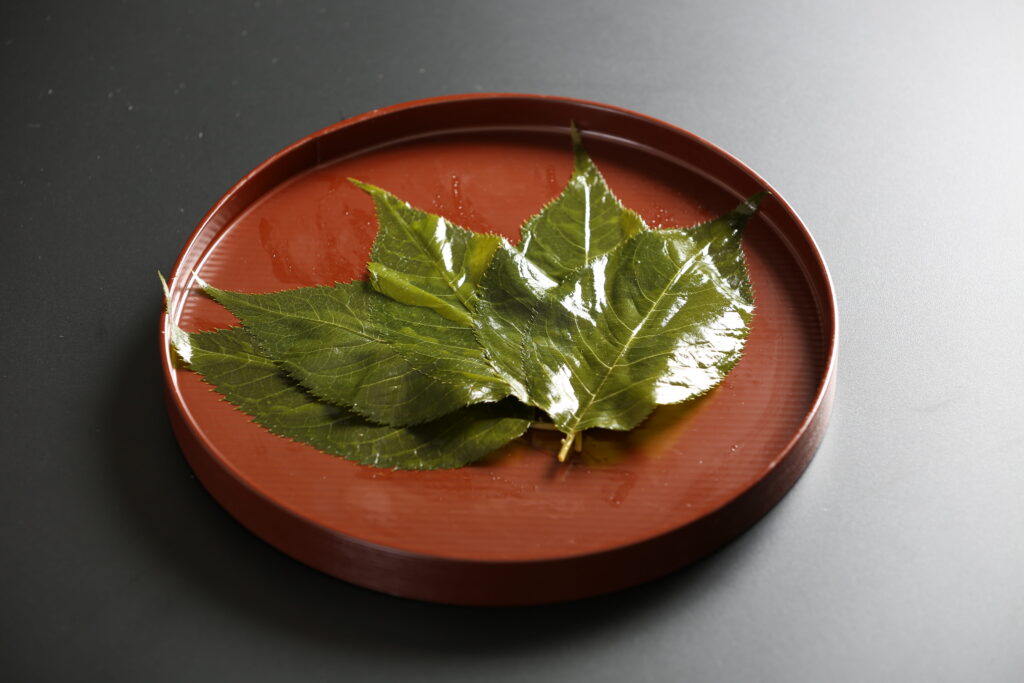
Furthermore, in seasonal-festival confections such as kashiwamochi,dried kashiwa leaves or premium fresh green kashiwa leaves and other "raw materials whose very substance carries meaning" become indispensable. In ceremonial confections, the raw material often bears the season or meaning directly, and another characteristic is that it is hard to substitute.
日常菓子ではどんな原料が選ばれるか
Everyday confections, on the other hand, are premised on "being eaten repeatedly." For that reason, the raw materials strongly call forstabilityandand ease of handling.are strongly required.
たとえば、桜餅や餅菓子を定番商品として日常的に製造する場合、粒が細かく成形しやすい Hoso Domyoji (5-Split) 20kg become easier to use. Retaining the character of domyoji while making it easier to suppress variation in preparation and shaping is a trait suited to everyday confections.
粉類では、上新粉やもち粉など、毎日の仕込みで扱い慣れた米粉類が日常菓子のベース原料になります。使い慣れた原料を軸にすることで、毎日の製造でも品質を揃えやすくなります。
In addition, for everyday confections, cost and yield also become important judgment criteria.Tamba Dainagon Adzuki Beans 30kg or Tamba Dainagon Adzuki Kanoko Beans and the like are used in situations where uniform grains and stable cooking results are prioritized over showy appearance.
The Same Raw Material Changes Role Depending on How It Is Used
Ceremonial confections and everyday confections do not necessarily require completely separating the raw materials. Even the same raw material can change its role by changing the particle size, degree of roasting, or processing method. For example, domyoji with emphasized graininess suits ceremonial confections, while a finely ground version becomes easier to use even in everyday confections.
原料名だけで決めず、どう使うかまで含めて選んでください。原料の特性を理解したうえで使い分けることで、商品設計の幅は広がります。
行事菓子に向く原料、日常菓子に向く原料を考えることは、単なる素材選びではありません。どのような場面で、誰に、どんな価値を届けたいのかを整理する作業です。原料を見直すことで、商品の立ち位置や製造の考え方が明確になります。行事菓子か日常菓子かを先に決め、その用途に合う粒度や形態の原料を選んでください。
Please feel free to consult us about commercial procurement and sample requests
美濃与は京都に拠点を置く京菓子原材料の専門商社です。本記事で取り上げた原料の業務用調達や、お試しサンプル、ロット・規格のご相談など、和菓子製造の現場に寄り添った提案を行っています。
For Minoyo's business and strengths, please see Our Business & Why We Are Chosen . For the actual flow of doing business, see Ordering Process & How to Order; for questions, we have compiled them at Frequently Asked Questions . For individual consultations, please use Contact or material download to get in touch.